

Custom Pressure Tanks for Industrial Use
Custom pressure tanks are engineered vessels used to store and dispense liquids, adhesives, and chemicals under controlled pressure. They are widely applied in manufacturing, coating, and fluid handling systems where standard tanks do not meet specific process requirements. A custom design allows you to specify capacity, material, port configuration, and pressure rating to match your production line.
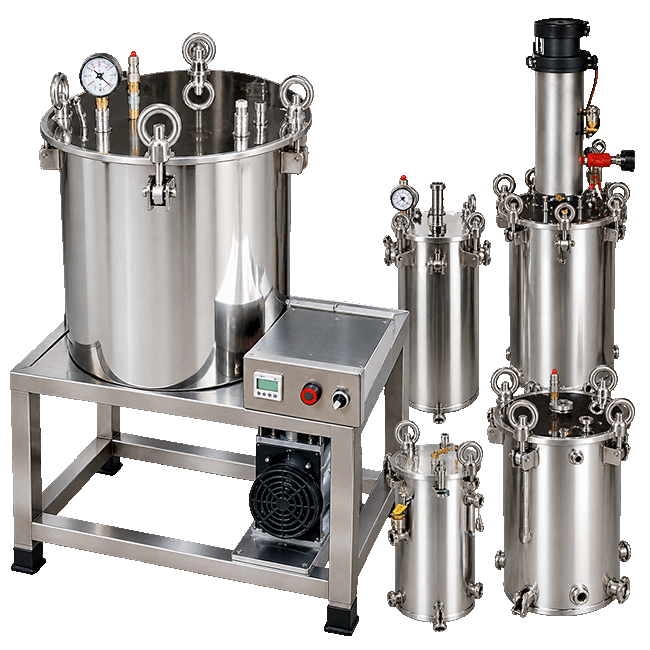
Common Applications
These tanks serve a range of industrial functions:
- Adhesive dispensing: Holding and pressurizing adhesives for automated application.
- Chemical storage: Containing compatible liquids under pressure for dosing or transfer.
- Coating systems: Supplying paint or coating material to spray equipment.
- Process vessels: Acting as accumulators or reactors in controlled environments.
Material and Construction Options
Material selection depends on the stored media and operating conditions. Common choices include:
- Stainless steel: Preferred for corrosion resistance and cleanability, especially in food, pharmaceutical, or aggressive chemical service.
- Carbon steel: A cost-effective option for non-corrosive fluids, often with internal coatings.
- Alloy steels: Used when higher strength or specific chemical compatibility is required.
Vessels can be fabricated with welded or bolted closures, sanitary fittings, and various port sizes. Pressure ratings are typically designed to ASME or other recognized codes, but certification must be confirmed for each project.
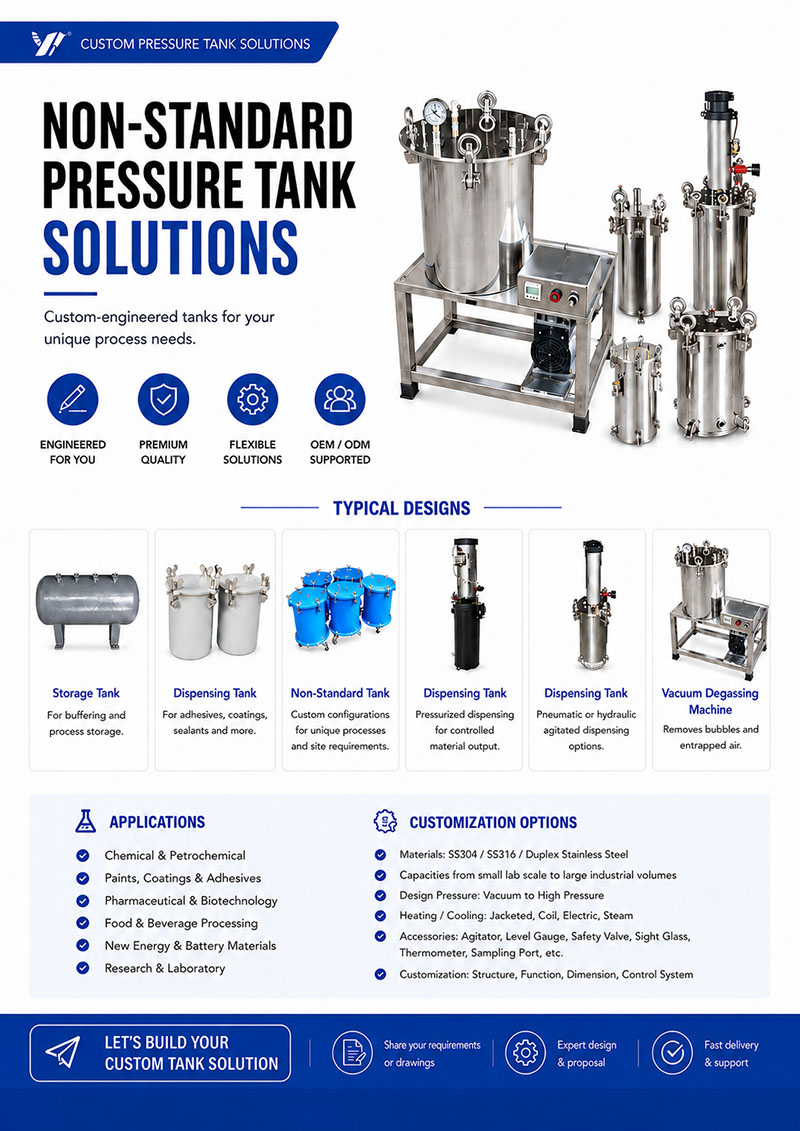
Selection Considerations
When specifying a custom pressure tank, evaluate these factors:
- Working pressure and temperature: Define maximum and minimum operating conditions.
- Capacity: Choose volume based on batch size and refill frequency.
- Media compatibility: Verify material resistance to the stored fluid.
- Ports and connections: Determine inlet, outlet, vent, and instrumentation needs.
- Mounting and mobility: Consider fixed installation, skid mounting, or portable designs.
Maintenance and Safety
Regular inspection and maintenance are essential for safe operation. Follow these practices:
- Inspect welds, seals, and pressure relief devices periodically.
- Clean interior surfaces according to the media and process requirements.
- Verify pressure gauges and safety valves are functional.
- Follow all local regulations and manufacturer guidelines for pressure equipment.
Frequently Asked Questions
What pressure rating can custom tanks achieve?
Pressure ratings vary by design and code. Common ratings range from atmospheric to several hundred psi, but each vessel must be engineered for its specific duty.
Can the tank be designed for sanitary applications?
Yes, stainless steel tanks with polished interiors and sanitary fittings can be supplied for food, beverage, or pharmaceutical use, subject to applicable standards.
How do I determine the right material?
Material selection depends on the chemical composition, temperature, and pressure of the stored fluid. Consult with a materials engineer or the tank manufacturer.
Are custom tanks certified to ASME or other codes?
Certification is optional and must be specified. Many fabricators can provide ASME U-stamp or other code stamps when required.
What information is needed for a quote?
Provide capacity, working pressure, temperature, media, port sizes, and any special requirements such as coatings or insulation.
How long does custom fabrication take?
Lead times depend on complexity, materials, and certification. Typical ranges are several weeks to a few months; confirm with the manufacturer.
For more information on custom pressure tanks, visit our Custom Pressure Tank page or explore another custom pressure tank option.