

Custom Pressure Tanks for Industrial Fluid Handling
Custom pressure tanks provide controlled storage and dispensing of fluids such as adhesives, glues, and other industrial liquids. They are built to match specific process requirements, including capacity, pressure rating, material compatibility, and connection types. This page outlines common configurations, application considerations, and maintenance practices to help you evaluate a custom pressure tank for your operation.
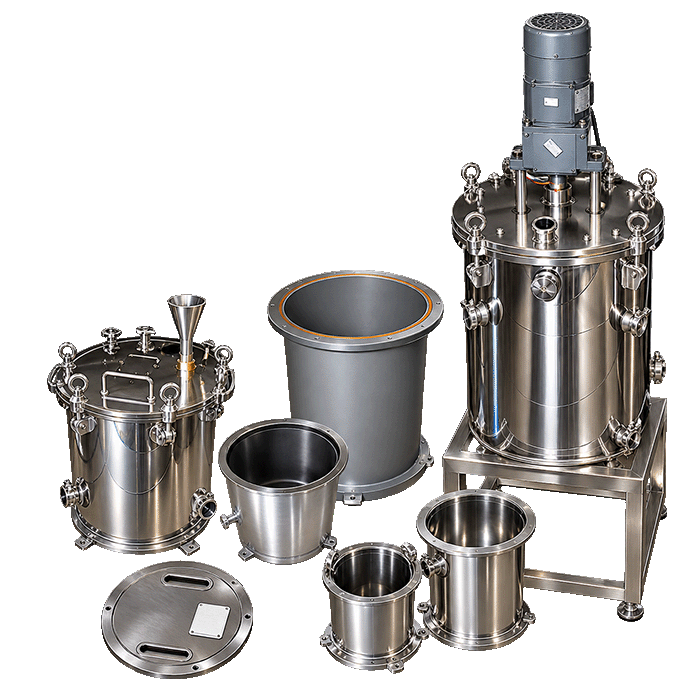
Typical Configurations
Pressure tanks can be supplied in vertical or horizontal orientations, with top or bottom outlets, and with a range of closure styles. Common options include:
- Carbon steel or stainless steel construction
- ASME or non-ASME code design
- Internal agitation or mixing provisions
- Heating or cooling jackets
- Custom nozzle and fitting layouts
Because each process has different requirements, the tank is usually configured after reviewing the fluid properties, operating pressure, temperature, and dispensing method.
Common Industrial Applications
Custom pressure tanks are used where fluids must be stored under pressure and delivered at a controlled rate. Typical applications include:
- Adhesive and glue dispensing systems
- Sealant and coating supply
- Lubricant and chemical feed systems
- Pilot plants and small-batch production
In these settings, the tank helps maintain a steady supply to downstream equipment such as spray guns, extrusion heads, or metering pumps.
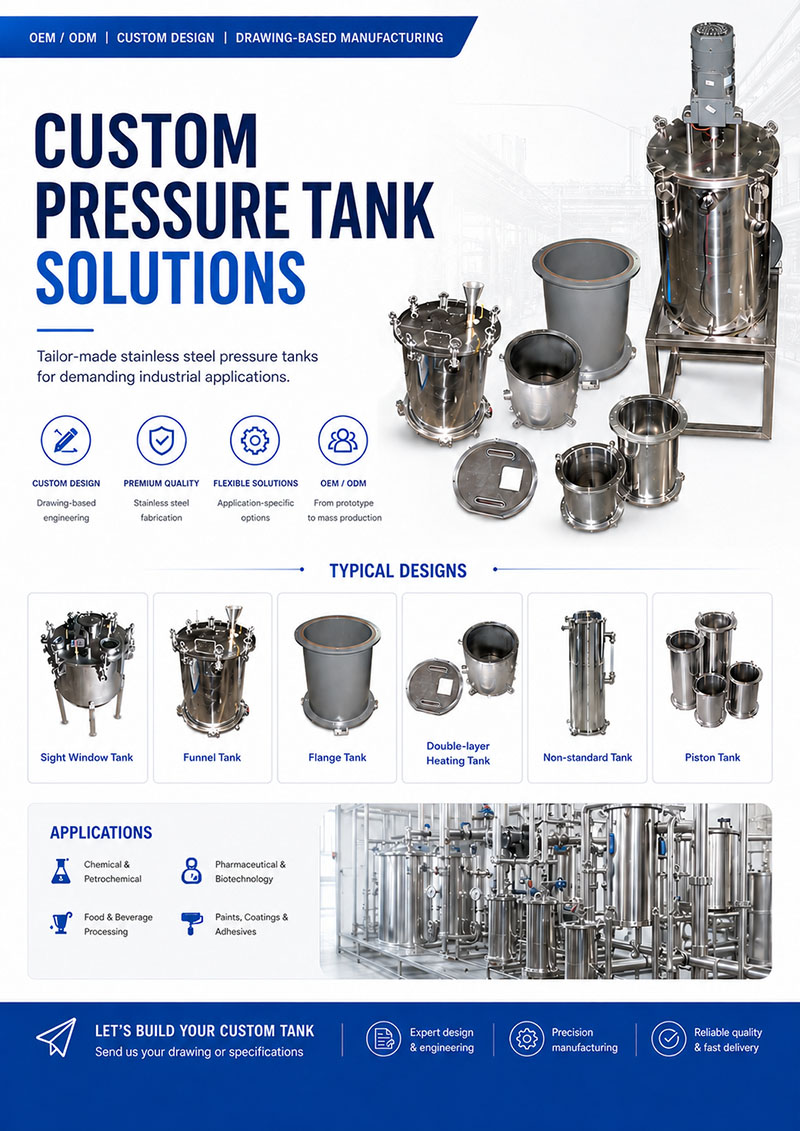
Selection Considerations
When specifying a custom pressure tank, review the following factors with your supplier:
- Working pressure and temperature: Confirm the maximum operating conditions and whether code compliance is required.
- Fluid compatibility: Select materials and seals that resist corrosion or chemical attack from the stored fluid.
- Capacity and footprint: Match the tank volume to batch size and available floor space.
- Ports and accessories: Define inlet, outlet, vent, drain, and instrumentation connections.
- Cleaning and inspection: Consider access openings for maintenance and internal inspection.
Maintenance and Safety
Regular inspection and maintenance help ensure safe and reliable operation. Follow the manufacturer’s instructions and applicable regulations for pressure equipment. Key practices include:
- Periodic inspection of welds, seals, and pressure relief devices
- Cleaning internal surfaces to prevent buildup or contamination
- Checking gaskets and fasteners for wear or loosening
- Verifying pressure gauges and controls for accuracy
Always depressurize and isolate the tank before performing any maintenance work.
Frequently Asked Questions
What fluids can be stored in a custom pressure tank?
The tank can be designed for a wide range of fluids, including adhesives, glues, sealants, lubricants, and other industrial liquids. Material selection depends on the fluid’s chemical properties.
Can the tank be built to ASME code?
Yes, many custom pressure tanks can be supplied with ASME code design and documentation when required by the application or local regulations.
What information is needed for a quote?
Typically, you need to provide the fluid type, operating pressure and temperature, required capacity, connection sizes, and any special features such as heating or agitation.
How is the tank cleaned?
Cleaning methods depend on the design and fluid. Access openings, drain connections, and surface finish can be specified to facilitate cleaning.
Can accessories like agitators or level sensors be added?
Yes, many custom tanks can include agitators, level sensors, pressure gauges, and other instrumentation based on your process needs.