

Pneumatic Piston Pressure Tank for Industrial Fluid Handling
Pneumatic piston pressure tanks are engineered to store and dispense fluids under controlled air pressure, making them a practical choice for industrial processes that require consistent output and minimal pulsation. These tanks use a piston driven by compressed air to pressurize the fluid, separating the air supply from the liquid medium. This design helps maintain fluid purity and supports precise pressure control in applications such as adhesive dispensing, coating, lubrication, and chemical transfer.
Design and Operating Principle
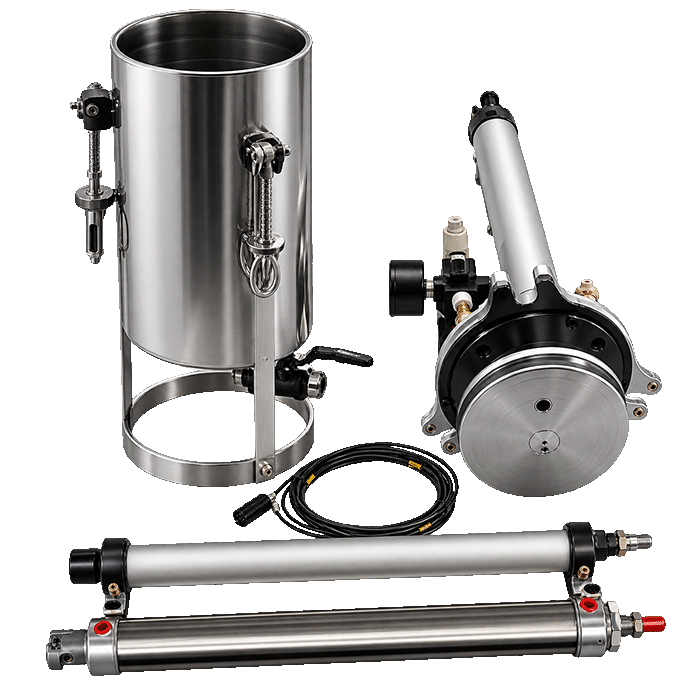
A pneumatic piston pressure tank typically consists of a cylindrical vessel, an internal piston, air inlet and outlet ports, and a fluid outlet. Compressed air enters the chamber behind the piston, pushing it forward to displace the fluid. Because the piston acts as a physical barrier, the air and fluid do not mix, which reduces the risk of contamination and allows the tank to handle a wide range of viscosities. Pressure regulation is achieved by adjusting the air supply, giving operators fine control over dispensing rates.
Common Industrial Applications
These tanks are used across industries where controlled fluid delivery is essential. Typical applications include:
- Applying adhesives and sealants in assembly lines
- Dispensing lubricants in automotive and machinery maintenance
- Supplying coatings and paints in finishing operations
- Transferring chemicals in processing plants
Selection Considerations
When choosing a pneumatic piston pressure tank, evaluate the following factors:
- Fluid compatibility: Ensure tank materials and seals are suitable for the fluid’s chemical properties.
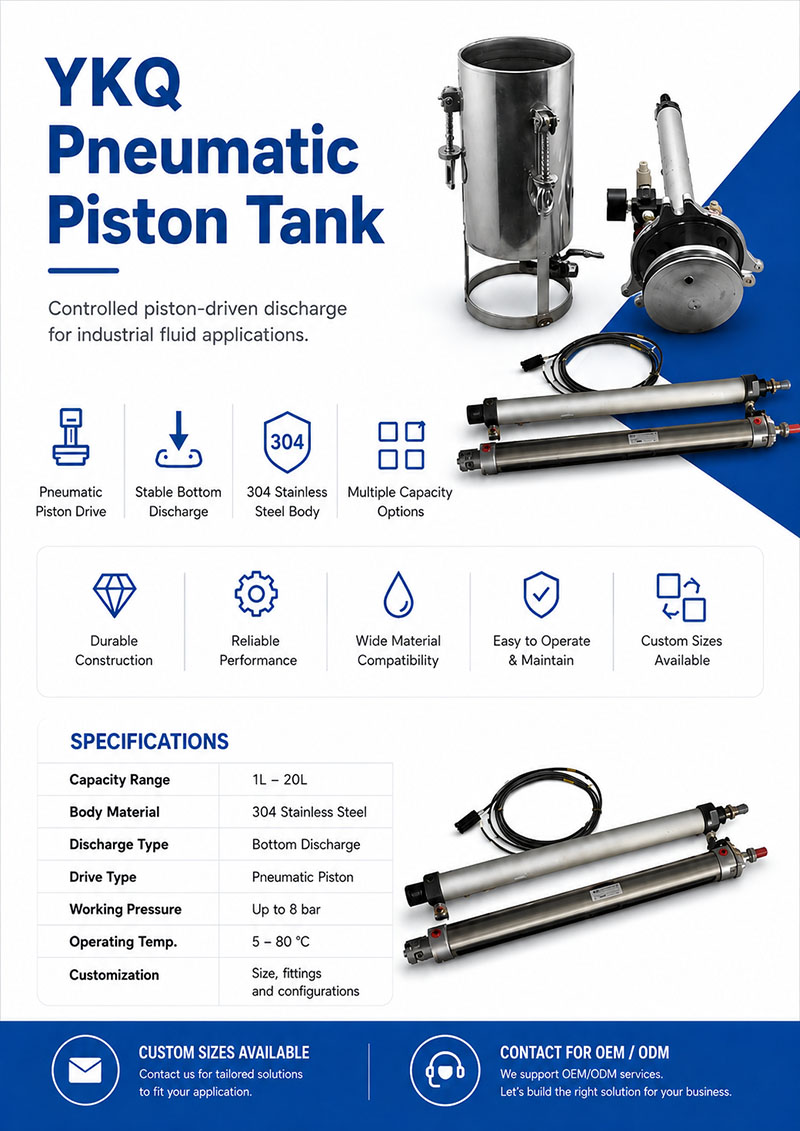
- Capacity and pressure rating: Match tank volume and maximum working pressure to your process requirements.
- Port size and connections: Confirm that inlet and outlet fittings align with existing piping or dispensing equipment.
- Piston seal type: Select seals that can withstand operating temperatures and fluid abrasiveness.
Maintenance and Safety Guidelines
Regular maintenance helps extend service life and ensure safe operation. Follow these practices:
- Inspect piston seals and O-rings periodically for wear or damage.
- Drain and clean the tank before changing fluids to prevent cross-contamination.
- Verify that the air pressure regulator and relief valve are functioning correctly.
- Follow manufacturer instructions for lubrication of moving parts, if applicable.
- Never exceed the rated working pressure of the tank.
Frequently Asked Questions
What is the main advantage of a piston pressure tank over a direct air-pressure tank?
The piston separates air from the fluid, preventing air absorption and contamination, and allows more consistent pressure control for sensitive fluids.
Can these tanks handle high-viscosity fluids?
Yes, piston pressure tanks are often suitable for high-viscosity materials, but the specific capability depends on the piston design and available air pressure.
How do I determine the right tank size?
Consider your fluid consumption rate, batch size, and available space. A larger tank reduces refill frequency but may require more floor space.
What maintenance is required for the piston seal?
Inspect the seal regularly for wear and replace it according to the manufacturer’s schedule or when leakage or pressure loss is observed.
Are these tanks suitable for food-grade applications?
Only if the tank materials and seals are certified for food contact. Verify compliance with relevant food safety standards before use.