

Double Acting Dispensing Valve | Industrial Dispensing Solutions
What Is a Double Acting Dispensing Valve?
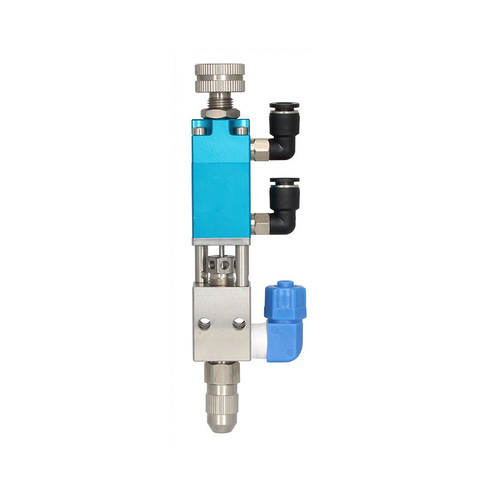
A double acting dispensing valve is a fluid control device that uses an actuator powered in both directions to operate the valve mechanism. In a common pneumatic design, compressed air drives the actuator in one direction to open the valve and in the opposite direction to close it.
Unlike a typical spring-return single acting valve, a double acting dispensing valve uses pneumatic force for both actuator movements. This provides active control over the opening and closing strokes, making it suitable for applications that require controlled valve movement and repeatable dispensing cycles.
Depending on its design, the valve can dispense compatible adhesives, sealants, lubricants, pastes, and other industrial fluids. It is commonly used in automated assembly, electronics manufacturing, industrial bonding, and precision fluid application.
For manufacturers seeking dependable valve operation and flexible automation control, selecting the right double acting dispensing valve helps match fluid delivery to production requirements.
How Does a Double Acting Dispensing Valve Work?
A double acting dispensing valve typically uses a pneumatic actuator with two pressure chambers. Compressed air is directed to the appropriate chamber to move the actuator in either direction.
A typical dispensing cycle involves four stages:
1. Fluid Supply: A compatible reservoir, cartridge, pump, or pressure-fed system delivers material to the valve.
2. Opening Stroke: Compressed air drives the actuator in the direction required to open the fluid passage.
3. Controlled Dispensing: Material flows through the valve outlet or nozzle toward the target component or surface.
4. Closing Stroke: Air pressure is redirected to drive the actuator in the opposite direction, closing the valve according to its design.
The actuator’s air pressure and the fluid supply pressure perform different functions. Actuation pressure moves the valve mechanism, while fluid pressure delivers material through the fluid passage.
Actual dispensing performance depends on valve construction, actuator response, fluid viscosity, supply stability, nozzle geometry, and control timing. A double acting mechanism does not automatically guarantee a fixed dispensing volume; precise dosing may require an appropriate metering system.
Key Benefits of Double Acting Dispensing Valves
1. Active Opening and Closing Control
Pneumatic force operates both actuator strokes, allowing the control system to command opening and closing rather than relying solely on a spring-return movement.
2. Repeatable Dispensing Cycles
A properly configured double acting dispensing valve can support consistent opening and closing sequences, helping standardize repetitive material application.
3. Flexible Automation Integration
These valves can be integrated into compatible pneumatic circuits, programmable controllers, robotic workstations, and automated assembly equipment.
4. Adaptability to Industrial Materials
Depending on the valve design and wetted materials, double acting dispensing valves can handle compatible adhesives, sealants, lubricants, and other process fluids.
5. Controlled Valve Movement
The actuator’s movement in both directions can be coordinated with the production sequence. Actual response and shutoff performance depend on the valve design, pneumatic circuit, and operating conditions.
Industrial Applications of Double Acting Dispensing Valves
Double acting dispensing valves are used in manufacturing processes that require controlled fluid delivery and repeatable valve operation.
- Electronics manufacturing: Applying compatible adhesives and protective compounds to electronic components.
- Automotive production: Dispensing bonding agents, sealants, and other suitable process materials.
- Industrial bonding: Delivering adhesives to metal, plastic, and composite components.
- LED manufacturing: Applying compatible bonding and encapsulation materials.
- Machinery assembly: Dispensing grease, lubricants, and functional fluids.
- Automated production lines: Coordinating repeated dispensing operations with robotic movement and programmable control systems.
The appropriate valve depends on fluid properties, required dispensing volume, operating pressure, cycle frequency, and the production environment.
How to Choose the Right Double Acting Dispensing Valve
Selecting a double acting dispensing valve requires evaluating both the pneumatic actuator and the fluid delivery mechanism.
Actuation pressure: Confirm the required air pressure for both opening and closing strokes, following the manufacturer’s specifications.
Fluid viscosity: Ensure that the valve can handle the material’s flow characteristics under actual operating conditions.
Dispensing volume: Define the required shot size, droplet volume, or bead dimensions. A separate metering mechanism may be necessary for precise volumetric dosing.
Material compatibility: Check that the valve body, seals, and other wetted components are compatible with the fluid’s chemical properties.
Response and cycle frequency: Evaluate opening and closing response, operating frequency, and repeatability at the intended production speed.
Pneumatic control requirements: Confirm that the control circuit can supply and switch air pressure appropriately for both actuator directions.
Operating pressure: Check fluid supply pressure separately from pneumatic actuation pressure.
Maintenance requirements: Consider seal wear, cleaning access, replacement parts, and the risk of material buildup inside the fluid passage.
Before requesting a quotation, provide your supplier with the fluid type, viscosity, required dispensing volume, operating pressures, cycle rate, and application details.
Double Acting vs. Single Acting Dispensing Valves
The main difference is how the actuator returns after the dispensing stroke.
A single acting dispensing valve typically uses compressed air for one stroke and a spring or another return mechanism for the opposite stroke.
A double acting dispensing valve uses a powered actuator stroke in both directions, commonly through alternating pneumatic pressure.
Single acting designs can simplify the return mechanism, while double acting designs provide active control of both movements. The better option depends on the required response, control arrangement, valve structure, and application.
Neither design automatically guarantees better dispensing accuracy. Fluid supply stability, valve construction, and correct system configuration remain essential.
Why Choose a Professional Double Acting Dispensing Valve Manufacturer?
A professional double acting dispensing valve manufacturer should provide clear technical specifications, pneumatic connection details, material compatibility guidance, and application-specific support.
When comparing suppliers, review actuator design, operating pressure ranges, valve configurations, manufacturing quality, customization options, and after-sales service.
For demanding applications, testing the valve with the actual fluid and control system can help verify response, shutoff behavior, and dispensing consistency before full-scale production.
The right solution should balance operating reliability, process control, maintenance requirements, and long-term production costs.
Frequently Asked Questions
What is a double acting dispensing valve used for?
It controls the delivery of compatible adhesives, sealants, lubricants, and other fluids in industrial dispensing and automated assembly applications.
How does a double acting pneumatic dispensing valve operate?
Compressed air drives the actuator in one direction to operate one stroke and in the opposite direction to operate the return stroke. The exact opening and closing arrangement depends on the valve design.
Does a double acting dispensing valve use a return spring?
A typical double acting pneumatic actuator does not rely on a spring for its normal return stroke. Both movements are powered, although the specific valve construction should always be checked.
Can a double acting dispensing valve handle high-viscosity adhesives?
Some models are suitable for high-viscosity materials. Suitability depends on the valve mechanism, flow passage dimensions, fluid supply system, and adhesive properties.
What information is needed to select a double acting dispensing valve?
Provide the fluid type, viscosity, required dispensing volume, actuation pressure, fluid supply pressure, cycle frequency, and application requirements.
Find the Right Double Acting Dispensing Valve for Your Application
Reliable fluid application starts with the right combination of valve design, pneumatic control, material compatibility, and process configuration.
Whether you need controlled adhesive delivery, industrial fluid dispensing, or integration with automated assembly equipment, a suitable double acting dispensing valve can help support repeatable operation and efficient manufacturing.
Contact an experienced double acting dispensing valve supplier to discuss your application, confirm technical compatibility, and identify a solution tailored to your production requirements.