

What Is a Pressure Pot? A Practical Guide for Industrial Fluid
A pressure pot is a sealed, pressure-rated vessel that holds a fluid and uses compressed gas—usually air or nitrogen—to push that fluid through a hose or pipe to a dispensing point. It is commonly used in adhesive, sealant, coating, and lubrication processes where a consistent, adjustable supply pressure is needed without a mechanical pump in the fluid path.
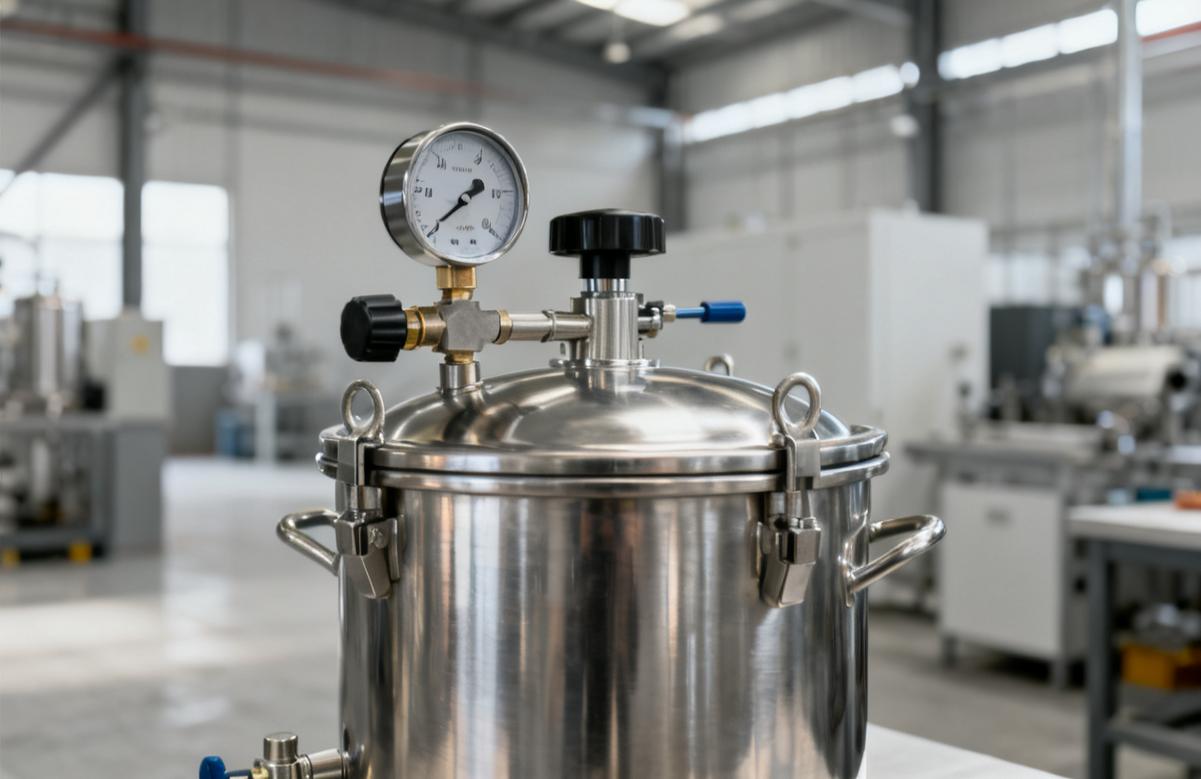
How a Pressure Pot Works
The basic principle is simple: regulated gas pressure applied to the liquid surface forces fluid out of the tank. A pressure regulator controls the gas input, and a fluid outlet feeds the dispensed material. Key components typically include:
- Pressure vessel with a fluid chamber and gas connection.
- Pressure regulator and gauge to set and monitor gas pressure.
- Safety relief valve to protect against overpressure.
- Fluid outlet connected to a hose, valve, or dispensing gun.
- Fill port and lid for replenishing material.
Because the gas is not in direct contact with the fluid (in most designs), the system can handle a wide range of viscosities and chemistries. The output pressure is generally proportional to the gas pressure applied, but actual flow depends on fluid viscosity, hose size, and the dispensing valve.
When to Use a Pressure Pot—and When Not To
Pressure pots are well suited to:
- Medium-to-high viscosity fluids that are difficult to pump.
- Processes requiring steady, low-to-moderate pressure.
- Applications where pulsation-free delivery is important.
- Small-to-medium batch dispensing where a centralized pump is not justified.
They may be less suitable when:
- Very high pressures are needed (specialized pressure vessels or pumps may be required).
- Fluid must be continuously circulated or kept under high shear.
- Quick color or material changes demand easy cleaning—pot design affects this.
- The material is sensitive to gas contact or moisture (consider sealed or bladder designs).
Pressure pots are not a substitute for a metering pump when precise shot sizes or mixing ratios are critical; they provide supply pressure, not volumetric metering.
Key Selection Criteria
Choosing the right pressure pot requires matching the vessel to the fluid, process, and environment. Consider these factors:
1. Fluid Compatibility
The wetted materials (tank, seals, hoses, fittings) must be compatible with the fluid. Solvents, acids, and reactive adhesives can degrade unsuitable materials. Verify chemical compatibility with the manufacturer and consider stainless steel or coated interiors where appropriate.
2. Pressure Requirements
Determine the maximum dispensing pressure your process needs. The pressure pot’s rated pressure must exceed your highest operating pressure, with a safety margin. Never rely on a generic rating—check the nameplate and manufacturer documentation for the specific model.
3. Capacity
Capacity affects refill frequency and downtime. Choose a size that balances production run length with handling and floor space. For high-throughput lines, a larger tank or multiple tanks may be needed.
4. Ports and Fittings
Inlet/outlet sizes, thread types, and valve connections should match your existing dispensing equipment. Custom port configurations are often available but should be specified clearly.
5. Cleaning and Maintenance
Consider how easily the tank can be opened, drained, and cleaned. Quick-release lids, smooth interior surfaces, and removable liners can simplify changeovers and reduce downtime.
6. Environmental and Safety Features
Look for pressure relief devices, locking mechanisms, and grounding provisions for flammable fluids. Local regulations may impose additional requirements; always confirm compliance with a qualified engineer.
Installation and Operation Basics
Proper installation ensures safe and reliable performance:
- Verify the nameplate. Confirm the maximum allowable working pressure and temperature before use.
- Mount securely. Place the tank on a stable surface or cart, following the manufacturer’s instructions.
- Connect gas supply. Use a regulator and filter suitable for the gas and pressure.
- Connect fluid line. Route hoses to avoid kinks and excessive length; verify compatibility with the fluid.
- Test with water or appropriate fluid. Never pressurize with gas before checking for leaks.
- Set pressure slowly. Adjust the regulator to the required dispensing pressure and monitor the gauge.
During operation, keep the lid secured and never exceed the rated pressure. Depressurize completely before opening.
Maintenance and Safety
Regular maintenance extends service life and reduces risk:
- Inspect seals, gaskets, and hoses for wear or chemical attack.
- Clean the tank interior according to the fluid manufacturer’s recommendations.
- Test safety relief valves periodically.
- Store the tank depressurized and clean when not in use.
- Train operators on safe handling and emergency depressurization.
Because pressure pots are pressure-containing equipment, they must be selected and operated according to the actual nameplate, manufacturer documentation, and applicable local requirements. Do not modify or repair a pressure vessel without qualified engineering review.
Buyer Checklist: Information to Provide a Supplier
To get an accurate quotation and suitable configuration, prepare the following:
- Fluid type, viscosity, and any chemical compatibility concerns.
- Required dispensing pressure and flow rate.
- Desired capacity and refill frequency.
- Port sizes and connection types.
- Environmental conditions (temperature, washdown, hazardous area).
- Any cleaning or changeover requirements.
- Applicable local regulations or standards (to be verified, not assumed).
Quotation factors typically include vessel material, size, pressure rating, fittings, and customization; prices vary by specification and should be confirmed with the manufacturer.
Customization and Integration
Pressure pots can be customized with agitators, level sensors, heating/cooling jackets, and multiple outlets. For automated lines, integration with dispensing valves and controls is common. Discuss your process needs with the supplier to ensure the tank, regulator, and valve work together as a system.
Remember that a pressure pot is only one part of the fluid delivery system. Its performance depends on proper sizing of the entire system, including hoses, valves, and dispensing equipment.
Frequently Asked Questions
What is the difference between a pressure pot and a pressure tank?
The terms are often used interchangeably. Both refer to a pressure-rated vessel that holds fluid and uses gas pressure to deliver it. However, some suppliers use 'pressure tank' for vessels in closed-loop systems or with bladders. Always check the specific design and intended use with the manufacturer.
Can a pressure pot be used for flammable fluids?
Yes, but only with proper grounding, bonding, and explosion-proof components as required by local regulations. The vessel and fittings must be suitable for the fluid and environment. Consult a qualified engineer and the manufacturer for guidance.
How do I determine the right size pressure pot?
Consider your fluid consumption rate, available floor space, and acceptable refill frequency. Larger tanks reduce refills but are heavier and take more space. Calculate the volume needed for a production shift or batch, then choose a standard size that fits your workflow.
What maintenance does a pressure pot require?
Regularly inspect seals, gaskets, hoses, and the pressure relief valve. Clean the interior after each material change or as recommended. Depressurize before opening, and have the vessel inspected periodically according to local codes.
Can I use a pressure pot with high-viscosity adhesives?
Pressure pots can handle high-viscosity fluids, but flow may be limited by hose size and valve design. For very thick materials, a follower plate or heated tank may be needed. Discuss your material's viscosity with the supplier to ensure proper configuration.
What safety features should a pressure pot have?
At minimum, a pressure relief valve, a secure lid with locking mechanism, and a pressure gauge. For flammable fluids, grounding provisions are essential. Confirm that the vessel is rated for the intended pressure and that all components are compatible.
Company Information and Technical Inquiries
Company: Hejikang (Guangdong) Metal Surface Treatment Co., Ltd.
Address: No. 3, Liuhua Industrial Road, Dongcheng Subdistrict, Dongguan, Guangdong, China
Phone: +8613253611781
Email: 847317465@qq.com
