

How to Select an Industrial Pressure Tank for Reliable Fluid Supply
An industrial pressure tank is a vessel that holds a fluid—such as adhesives, sealants, paints, coatings, or other industrial liquids—under controlled pressure to supply a consistent flow to downstream equipment like dispensing valves, spray guns, or metering systems. Its primary use case is to provide a steady, pressurized fluid supply where gravity feed is insufficient or where precise pressure regulation is required for consistent dispensing results.
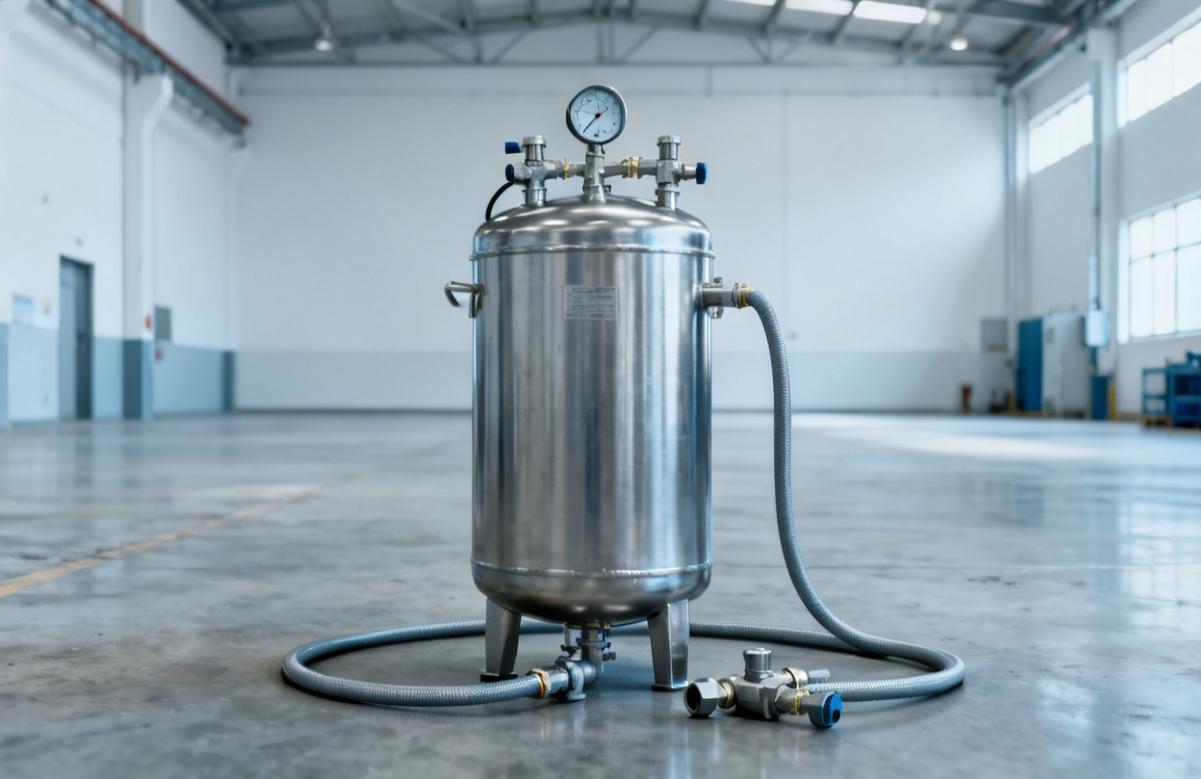
Understanding the Role of a Pressure Tank in a Fluid System
A pressure tank is not a pump, metering unit, or dispensing valve. It stores fluid and applies pressure to it, typically using compressed air or a mechanical means, to push the fluid through lines to the point of use. The tank itself does not generate flow; it enables flow by maintaining pressure. This distinction is important when specifying a system: the tank’s pressure rating, capacity, and materials must suit the fluid and the process, while the dispensing valve or pump controls the actual flow rate and pattern.
Pressure tanks are commonly used in adhesive and sealant applications, paint and coating supply systems, and general industrial fluid transfer where a reliable, pulsation-free supply is needed. They can also serve as buffer vessels in systems with varying demand.
Key Design Factors for Pressure Tank Selection
Selecting the right pressure tank involves several interrelated factors. The following sections outline the main considerations.
1. Fluid Characteristics and Material Compatibility
The tank’s wetted materials must be compatible with the fluid being handled. Consider corrosiveness, viscosity, temperature, and whether the fluid contains abrasive particles or solvents. Common materials include carbon steel, stainless steel, and plastic, but the specific grade and construction must be confirmed with the manufacturer based on the actual fluid. For adhesives and coatings, stainless steel is often preferred for corrosion resistance and cleanability, but not all stainless grades perform equally—verification with the supplier is essential.
2. Pressure Requirements
The tank must be rated for the maximum operating pressure of the system, with an appropriate safety margin. Pressure ratings are typically stated on the nameplate and in the manufacturer’s documentation. Never exceed the rated pressure. The required pressure depends on the fluid viscosity, line length, elevation changes, and the pressure drop across the dispensing valve or nozzle. Work with a qualified engineer to determine the necessary supply pressure and ensure the tank’s rating meets or exceeds it.
3. Capacity and Geometry
Tank capacity affects how long the system can run between refills and how stable the pressure remains as fluid is consumed. Too small a tank may require frequent refilling and cause pressure fluctuations; too large a tank may be unnecessary and costly. The shape and internal geometry also influence fluid agitation and drainage. For fluids that tend to settle or cure, consider whether the tank design allows for easy cleaning and whether agitation is needed.
4. Pressure Source and Regulation
Most industrial pressure tanks use compressed air to pressurize the fluid, but some designs use a piston or diaphragm. Air-driven tanks require a regulated air supply and proper ventilation. The pressure regulation method affects accuracy and responsiveness. Ensure the tank is equipped with the necessary pressure relief devices, gauges, and controls as specified by the manufacturer and applicable codes.
5. Integration with Dispensing Equipment
The tank must interface correctly with downstream components such as hoses, fittings, and dispensing valves. Consider connection sizes, thread types, and the compatibility of seals and gaskets. The tank’s outlet design should prevent air entrapment and ensure smooth fluid delivery. If the system includes multiple dispensing points, the tank’s pressure stability under varying flow demand becomes critical.
Comparison of Common Pressure Tank Types
| Type | Typical Use | Considerations |
|---|---|---|
| Air-pressurized tank | General fluid supply, adhesives, coatings | Requires clean, dry air; pressure limited by air supply and tank rating |
| Piston-driven tank | High-pressure or precise metering | More complex; may introduce pulsation; higher maintenance |
| Diaphragm tank | Contamination-sensitive fluids | Separates fluid from pressurizing gas; limited capacity and pressure range |
Note: The suitability of each type depends on the specific application and must be confirmed with the manufacturer.
Installation and Maintenance Best Practices
Proper installation is critical for safety and performance. Follow the manufacturer’s instructions and applicable local regulations. Key steps include:
- Verify that the tank’s pressure rating and materials are suitable for the fluid and process conditions.
- Install pressure relief devices and gauges as specified.
- Ensure proper ventilation if using air-pressurized tanks.
- Connect hoses and fittings securely, using compatible seals.
- Perform a leak test before operation.
- Establish a regular inspection and maintenance schedule, including checking for corrosion, wear, and pressure integrity.
Never modify a pressure tank or its components without consulting the manufacturer and a qualified engineer.
When a Pressure Tank May Not Be Suitable
Pressure tanks are not ideal for all fluids or processes. They may be unsuitable for:
- Fluids that cure or solidify in the tank, unless cleaning is frequent and easy.
- Applications requiring very high pressures beyond the tank’s rating.
- Systems where precise metering is needed—in such cases, a metering pump or dispense valve with closed-loop control may be more appropriate.
- Hazardous fluids that require specialized containment not available in standard tanks.
Always evaluate the entire system and consult with equipment suppliers.
Information to Provide to a Supplier
When inquiring about a pressure tank, provide the following details to receive an accurate recommendation and quotation:
- Fluid type, viscosity, temperature, and chemical compatibility requirements.
- Required supply pressure and flow rate.
- Desired capacity and refill frequency.
- Available utilities (air pressure, electrical).
- Connection sizes and types.
- Environmental conditions and any regulatory requirements.
- Integration needs with existing dispensing equipment.
Quotation factors typically include materials, capacity, pressure rating, customization, and quantity. Lead times vary based on these factors and should be confirmed with the supplier.
Supplier Evaluation Criteria
When selecting a supplier, consider:
- Experience with your industry and fluid type.
- Availability of technical documentation, including pressure ratings and material certificates.
- Compliance with relevant standards (verify certificates directly).
- Customization capabilities and engineering support.
- Warranty terms and after-sales service.
- References or case studies (verify independently).
Do not rely solely on marketing claims; request evidence and speak with technical staff.
Conclusion
Selecting an industrial pressure tank requires a clear understanding of the fluid, pressure, and integration requirements. By focusing on material compatibility, pressure rating, capacity, and proper installation, buyers can ensure safe and reliable operation. Always verify specifications with the manufacturer and consult qualified engineering resources for pressure-containing equipment.
Frequently Asked Questions
What is the difference between a pressure tank and a pressure pot?
The terms are often used interchangeably in industrial contexts. Generally, a pressure tank is a vessel that holds fluid under pressure for supply purposes, while a pressure pot may refer to a specific style of tank often used for adhesives or coatings. The key is to verify the actual design, pressure rating, and intended use with the manufacturer.
Can I use a pressure tank for both adhesive and paint?
It depends on the tank's materials and design. Some tanks are compatible with multiple fluids, but adhesives and paints can have different viscosities, solvent content, and cleaning requirements. You must confirm compatibility with the manufacturer and ensure proper cleaning between uses to avoid cross-contamination.
How do I determine the correct pressure rating for my application?
The required pressure depends on fluid viscosity, line length, elevation, and the pressure drop across dispensing equipment. Calculate the maximum system pressure and select a tank with a rated pressure that exceeds it, following the manufacturer's guidelines and applicable codes. A qualified engineer should review the calculation.
What maintenance does a pressure tank require?
Regular maintenance includes inspecting for corrosion or wear, checking pressure relief devices and gauges, testing for leaks, and cleaning the tank interior as needed for the fluid. Always follow the manufacturer's maintenance schedule and never exceed the rated pressure.
Are pressure tanks certified for use with flammable fluids?
Certification depends on the specific tank and local regulations. Some tanks are designed and certified for flammable fluids, but this must be verified with the manufacturer and the relevant authorities. Never assume a standard tank is suitable for flammable materials without proper documentation.
Can I customize a pressure tank for my specific process?
Many manufacturers offer customization options such as capacity, materials, connections, and agitation. Provide detailed requirements to the supplier, who can advise on feasibility and any engineering considerations. Custom designs should be reviewed by qualified personnel.
Company Information and Technical Inquiries
Company: Hejikang (Guangdong) Metal Surface Treatment Co., Ltd.
Address: No. 3, Liuhua Industrial Road, Dongcheng Subdistrict, Dongguan, Guangdong, China
Phone: +8613253611781
Email: 847317465@qq.com
