

YKPT Flat Lid Pressure Tank for Industrial Fluid Dispensing
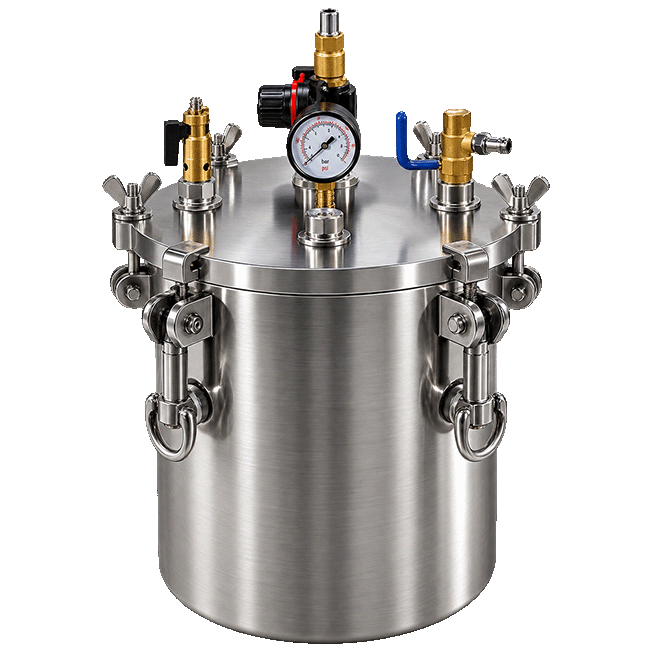
The YKPT flat lid pressure tank is an industrial vessel intended for pressurized fluid handling, particularly in glue dispensing systems. Its flat lid design provides a stable top surface and is often selected for applications where space is limited or where a low-profile closure is preferred. This page outlines general characteristics, application considerations, and maintenance practices based on typical industrial pressure tank configurations.
Typical Applications
Flat lid pressure tanks are commonly used in manufacturing environments where controlled fluid delivery is required. Typical applications include:
- Adhesive and glue dispensing in assembly lines
- Sealant application for automotive or electronic components
- Transfer of low- to medium-viscosity fluids under regulated pressure
- Pilot-scale batching or material conditioning before dispensing
Design and Configuration
The YKPT series is generally offered as a customizable pressure vessel. While specific dimensions and materials must be confirmed with the manufacturer, common industrial configurations include:
- Flat lid with bolted or clamped closure for easy access
- Inlet and outlet ports for air and fluid lines
- Pressure relief and gauge connections for safe operation
- Optional internal liners or coatings for chemical compatibility
Selection Considerations
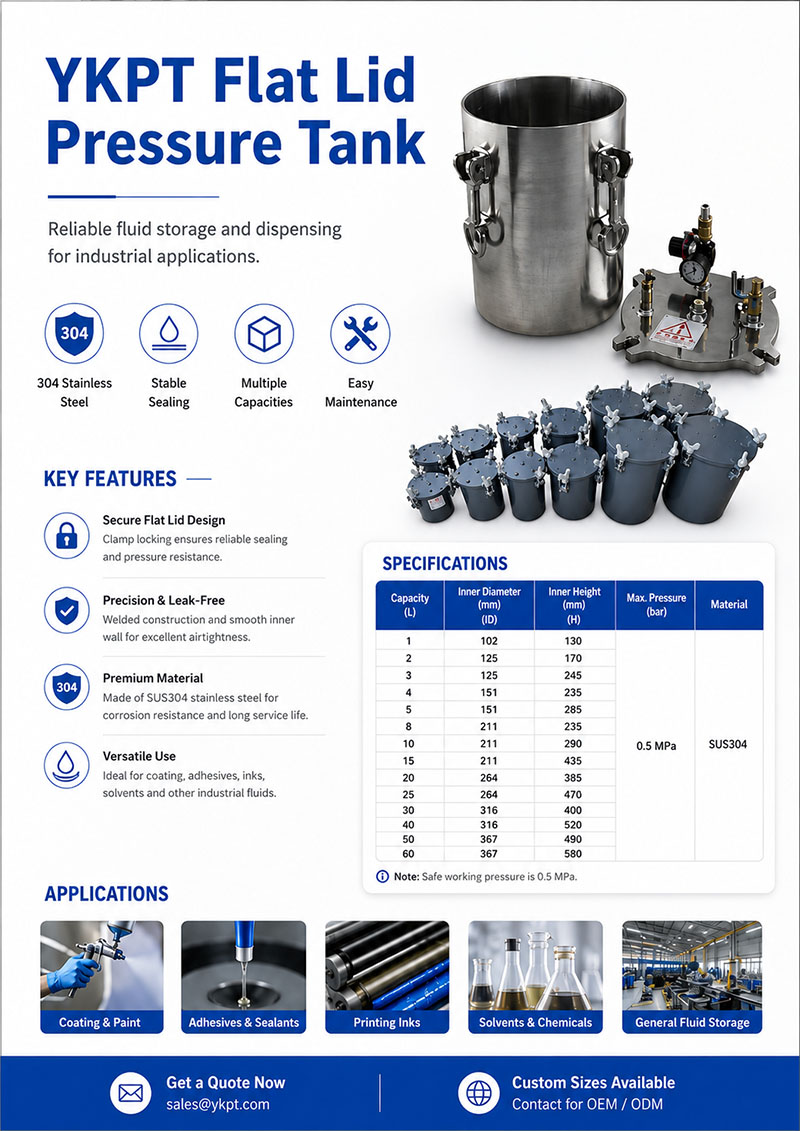
When selecting a flat lid pressure tank for a dispensing application, evaluate the following factors:
- Working pressure and temperature: Ensure the tank rating matches your process requirements.
- Fluid compatibility: Verify that wetted materials are suitable for your adhesive or chemical.
- Capacity and footprint: Choose a size that balances batch volume with available floor space.
- Port configuration: Confirm inlet, outlet, and accessory port sizes and locations.
- Regulatory compliance: Check for applicable pressure vessel codes or certifications in your region.
Maintenance and Safety
Proper maintenance helps ensure reliable operation and extends service life. Recommended practices include:
- Inspect lid gaskets and seals regularly for wear or chemical attack.
- Verify pressure relief devices are functional and not obstructed.
- Clean interior surfaces after each batch to prevent material buildup.
- Follow lockout/tagout procedures before opening the tank.
- Keep a maintenance log for inspections, repairs, and part replacements.
Frequently Asked Questions
What fluids can be used in a YKPT flat lid pressure tank?
Fluid compatibility depends on the tank’s wetted materials and any optional liners. Always confirm with the manufacturer for your specific adhesive, sealant, or chemical.
Is the YKPT pressure tank customizable?
Yes, the YKPT series is typically offered as a customizable pressure tank. Port sizes, capacity, and material options may be tailored to application needs.
What safety features should a flat lid pressure tank include?
Common safety features include a pressure relief valve, pressure gauge, and secure lid closure. Additional features may be available depending on configuration.
How do I determine the correct tank size for my dispensing system?
Consider your required batch volume, available floor space, and dispensing cycle frequency. Consult with the manufacturer to match capacity to your production rate.
What maintenance is required for a flat lid pressure tank?
Regular inspection of seals, relief devices, and interior cleanliness is recommended. Follow the manufacturer’s maintenance schedule and safety guidelines.
Related Reading
- 50L 120W Industrial Stainless Steel 304 Pressure Vessel with Electric Mixer New Version Industrial Electric Mixer
- 40L 120W Professional Duty 304 Stainless Steel Vertical Pressure Vessel Tank Electric Mixer 0.5MPa Design Pressure -20 180C
- Glue Pressure Tank| Reliable Adhesive Feeding for Industrial Dispensing Systems