

Adhesive Supply Tank | Reliable Material Feeding for Industrial Dispensing Systems
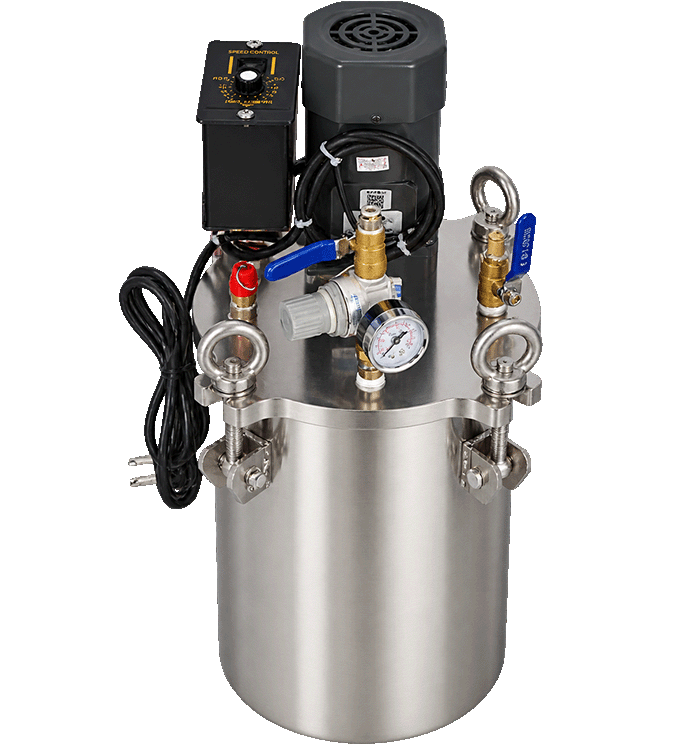
In modern manufacturing, consistent adhesive delivery is critical for production stability, bonding quality, and dispensing accuracy. An Adhesive Supply Tank is designed to store and continuously feed adhesive materials to dispensing valves, metering systems, robotic equipment, and automatic production lines.
Compared with small bottles, cartridges, or open containers, an adhesive supply tank can provide a larger material reserve and more stable feeding conditions. It is widely used in electronics, automotive components, LED lighting, battery manufacturing, household appliances, filters, packaging, and other industrial assembly applications.
For manufacturers that require continuous adhesive dispensing, choosing the right Adhesive Supply Tank can help reduce downtime, simplify material handling, and improve production efficiency.
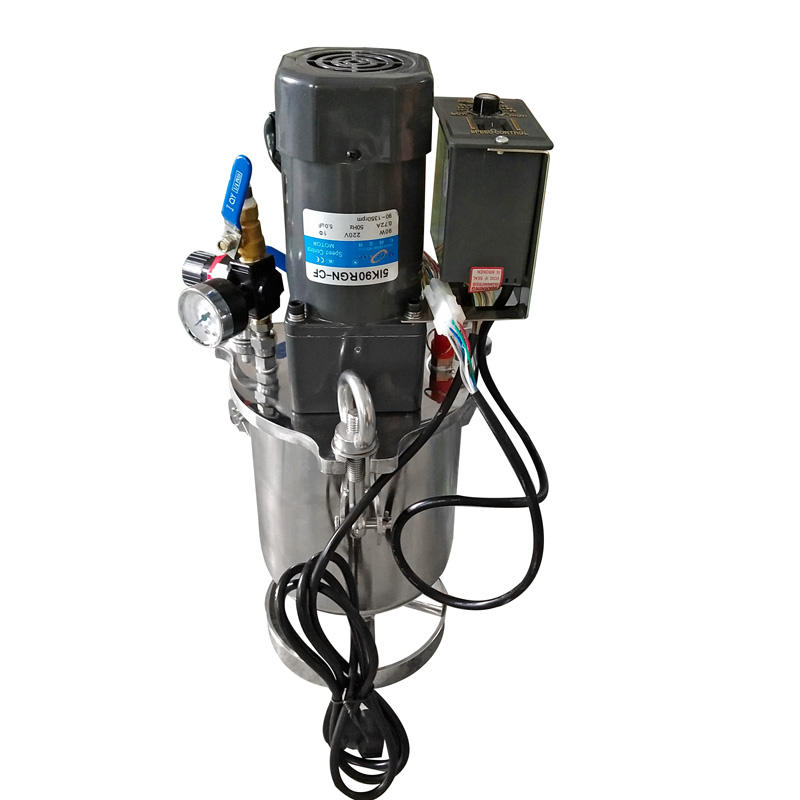
What Is an Adhesive Supply Tank?
An Adhesive Supply Tank is a sealed container used to store and deliver glue or adhesive to downstream dispensing equipment.
In pneumatic systems, regulated compressed air enters the tank and creates controlled internal pressure. The pressure pushes the adhesive through the fluid outlet, hose, and dispensing valve.
A typical industrial adhesive supply tank may include:
- Stainless steel tank body
- Stainless steel tank lid
- Pressure regulator
- Pressure gauge
- Safety relief valve
- Compressed air inlet
- Adhesive outlet
- Fluid delivery pipe
- Sealing components
- Optional pneumatic or electric agitator
Depending on the application, the tank can work with manual dispensing guns, automatic glue dispensers, metering equipment, robotic systems, and coating machines.
Why Use an Adhesive Supply Tank?
Stable material feeding is an important part of any adhesive dispensing system.
When adhesive is supplied from a small container, frequent refilling can interrupt production. Changes in material pressure may also influence dispensing consistency.
An Industrial Adhesive Supply Tank provides a larger material reservoir and allows the adhesive to be fed under controlled conditions.
This can offer several practical advantages:
- Continuous adhesive supply
- Reduced refill frequency
- Stable material feeding
- Better support for automatic dispensing
- Cleaner material storage
- Easier production management
- Flexible capacity options
- Convenient system integration
For high-volume production lines, reducing the number of material changes can help improve equipment utilization and operator efficiency.
Stainless Steel Adhesive Supply Tank
Stainless steel is commonly used for industrial adhesive tanks because of its durability, strength, corrosion resistance, and ease of cleaning.
A 304 Stainless Steel Adhesive Supply Tank can be suitable for many industrial materials when compatibility has been confirmed.
Typical materials may include:
- UV adhesive
- Epoxy adhesive
- Silicone
- Sealant
- Water-based glue
- Industrial assembly adhesive
- Resin
- Coating materials
- Lubricants
The smooth internal surface of stainless steel can make cleaning easier, especially when changing adhesive types or performing routine maintenance.
Because different adhesives have different chemical properties, customers should confirm compatibility with the tank body, seals, hoses, fittings, and dispensing components before use.
Common Applications of Adhesive Supply Tanks
An Adhesive Feeding Tank can be integrated into many manufacturing processes.
Electronics Manufacturing
Adhesive supply tanks can support PCB bonding, component fixing, potting, encapsulation, sealing, and coating applications.
Automotive Components
They can be used for automotive lighting, sensors, electronic modules, interior parts, motors, and other adhesive assembly processes.
LED and Lighting Production
Stable glue feeding is useful for LED bonding, sealing, thermal material dispensing, and lighting assembly.
Battery Manufacturing
Adhesive tanks can supply materials used for battery bonding, sealing, insulation, and related production processes.
General Industrial Assembly
Other applications include speakers, household appliances, filters, furniture, packaging equipment, and industrial automation.
Choosing the Right Adhesive Supply Tank Capacity
Adhesive supply tanks are available in different sizes to match different production volumes.
Common capacities include:
2L, 4L, 5L, 10L, 15L, 20L, 30L, 40L, and 50L.
A compact 5L Adhesive Supply Tank is suitable for smaller dispensing machines, laboratory production, low material consumption, or applications where adhesives are changed frequently.
Larger tanks are more suitable for continuous manufacturing and higher adhesive consumption.
When selecting capacity, buyers should consider:
- Daily adhesive consumption
- Material viscosity
- Production speed
- Refill frequency
- Adhesive working life
- Installation space
- Cleaning frequency
The correct capacity should support production requirements without storing unnecessary amounts of material for extended periods.
Adhesive Supply Tank with Agitator
Some adhesives contain fillers, pigments, or particles that may settle during storage.
For these materials, an Adhesive Supply Tank with Agitator can help keep the material more uniform before it reaches the dispensing equipment.
Common options include:
- Pneumatic agitator
- Electric agitator
- Adjustable mixing speed
- Customized mixing shaft
- Customized mixing blade
Agitation can be useful for filled adhesives, coatings, resins, and other materials that require continuous or periodic mixing.
For homogeneous adhesives that remain stable during storage, a standard tank without an agitator may be sufficient.
Custom Adhesive Supply Tank Solutions
Different production machines have different installation, connection, and material requirements. For this reason, customization is important for many industrial projects.
A professional Adhesive Supply Tank Manufacturer can customize:
- Tank capacity
- Tank diameter and height
- Working pressure
- Fluid inlet and outlet size
- Thread specifications
- Number of adhesive outlets
- Pressure regulator
- Pressure gauge
- Safety components
- Agitator configuration
- Mounting brackets
- Custom lid design
- OEM branding
Before placing an order, customers should provide information about the adhesive type, viscosity, required capacity, operating pressure, hose connection, dispensing equipment, and installation dimensions.
Why Choose Yakoo Adhesive Supply Tanks?
Yakoo provides stainless steel pressure tanks and adhesive feeding solutions for industrial dispensing applications.
Our Adhesive Supply Tanks are available in multiple capacities and can be configured for manual, semi-automatic, and fully automatic dispensing systems.
Depending on customer requirements, Yakoo can customize tank dimensions, pressure control components, fluid outlets, fittings, agitation systems, and OEM configurations.
Whether you need a compact tank for precision dispensing or a larger material supply tank for continuous production, the configuration can be matched to your equipment and application requirements.
Conclusion
A reliable Adhesive Supply Tank is an important component in an efficient industrial dispensing system. It can provide continuous material feeding, reduce refill frequency, support stable dispensing conditions, and improve production efficiency.
When choosing a tank, buyers should consider adhesive viscosity, capacity, working pressure, tank material, outlet size, connection specifications, and whether agitation is required.
For manufacturers looking for a Stainless Steel Adhesive Supply Tank, Adhesive Feeding Tank, or customized adhesive dispensing solution, Yakoo offers flexible tank capacities and configurations for a wide range of industrial applications.