

High Precision Adhesive Dispensing Valve | Industrial Solutions
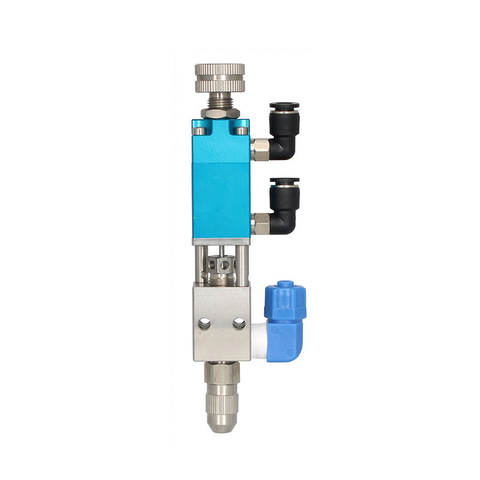
What Is a High Precision Adhesive Dispensing Valve?
A high precision adhesive dispensing valve is a specialized fluid control device designed to deliver adhesive materials accurately and consistently to specific locations. It is used in manufacturing processes where controlled glue placement, repeatable deposit size, and reliable bonding are essential.
Depending on its design, the valve can dispense small droplets, controlled shots, fine adhesive beads, or other defined application patterns. Compatible materials may include epoxy, silicone, polyurethane, and other industrial adhesives.
In precision manufacturing, excessive glue can contaminate adjacent components, while insufficient adhesive may compromise bonding performance. A properly selected dispensing valve helps manufacturers control material application and establish a more repeatable production process.
For companies producing electronic assemblies, automotive components, sensors, and precision equipment, high precision adhesive dispensing technology can contribute to better process control and more efficient material use.
How Does a High Precision Adhesive Dispensing Valve Work?
A high precision adhesive dispensing valve regulates adhesive flow through an internal mechanism that opens, closes, or controls the fluid passage. Depending on the model, actuation may be pneumatic, electric, or based on a specialized jetting mechanism.
A typical dispensing system includes a fluid supply, dispensing valve, controller, and suitable nozzle or outlet.
The process follows four main steps:
1. Adhesive Supply: A compatible cartridge, reservoir, pump, or pressure-fed system delivers adhesive to the valve.
2. Dispensing Control: The controller activates the valve according to the required timing and production sequence.
3. Precision Application: Adhesive passes through the outlet and is deposited onto the target component or bonding area.
4. Controlled Shutoff: The valve stops material delivery at the end of the dispensing cycle, according to its design.
The resulting deposit depends on valve construction, adhesive viscosity, supply stability, nozzle geometry, temperature, and control parameters. Applications requiring tightly controlled volumes may also need a dedicated metering system.
Key Benefits of High Precision Adhesive Dispensing
1. Consistent Adhesive Placement
A suitable dispensing valve helps maintain repeatable adhesive placement across production cycles. This is particularly important when bonding small components or applying glue near sensitive electronic parts.
2. Better Control of Adhesive Consumption
Controlled dispensing helps reduce excessive glue application, overflow, and unnecessary material consumption. The actual savings depend on adhesive properties and process configuration.
3. Support for Miniaturized Components
Precision dispensing valves can support applications involving small bonding areas and limited installation space, provided the selected valve and outlet match the required deposit dimensions.
4. Integration with Automated Manufacturing
Many high precision adhesive dispensing valves can be integrated into robotic workstations, programmable assembly equipment, and automated production lines.
5. Improved Process Repeatability
When the valve, adhesive supply, and operating parameters are properly matched, the dispensing process becomes easier to standardize and monitor.
Industrial Applications
High precision adhesive dispensing valves are used in manufacturing processes where adhesive placement and consistency directly affect assembly quality.
- Electronics manufacturing: Applying adhesive to circuit boards, connectors, sensors, and compact electronic assemblies.
- Semiconductor and microelectronics assembly: Depositing compatible materials in small or precisely defined areas.
- Automotive manufacturing: Applying bonding agents and compatible sealing materials to components.
- LED production: Dispensing suitable bonding and encapsulation compounds.
- Medical device manufacturing: Applying compatible adhesives under the required manufacturing conditions.
- Precision equipment assembly: Bonding small components where controlled adhesive placement is important.
Each application has different requirements for adhesive chemistry, deposit size, production speed, and operating conditions. The valve should be selected according to the actual process rather than the industry name alone.
How to Choose the Right High Precision Adhesive Dispensing Valve
Choosing the right valve requires evaluating the adhesive and the complete dispensing process.
Adhesive viscosity: Confirm that the valve can handle the material’s flow characteristics. Thick adhesives may require specialized mechanisms or a suitable fluid delivery system.
Required deposit size: Define the target droplet volume, bead width, bonding area, and acceptable variation between dispensing cycles.
Dispensing repeatability: Review available technical specifications and test data under conditions relevant to your application.
Actuation method: Compare pneumatic, electric, and jet dispensing technologies according to production speed, control requirements, and equipment compatibility.
Material compatibility: Check the chemical compatibility of the valve body, seals, nozzle, and other wetted components.
Curing characteristics: Fast-curing or moisture-sensitive adhesives may require special fluid-path designs, appropriate cleaning intervals, and controlled shutdown procedures.
Maintenance requirements: Consider nozzle replacement, cleaning access, spare parts, and the risk of adhesive buildup.
Before requesting a quotation, provide the supplier with the adhesive type, viscosity, target deposit size, required cycle rate, operating conditions, and application drawings where available.
How to Improve Adhesive Dispensing Accuracy
Even a high-quality valve cannot compensate for every problem in the dispensing system. Stable operating conditions are essential for repeatable results.
Maintain consistent adhesive supply pressure, select a suitable nozzle, and optimize dispensing time according to the material’s flow behavior. Monitor temperature where it affects viscosity, and inspect the fluid path for contamination or wear.
For applications requiring very small deposits, validate the process using the actual adhesive and target component. Measure deposit consistency across repeated cycles rather than relying on a single successful dispense.
This approach helps identify whether variations originate from the valve, fluid supply, material properties, or control settings.
Why Choose a Professional High Precision Adhesive Dispensing Valve Manufacturer?
A professional manufacturer should provide clear technical specifications, material compatibility guidance, product documentation, and application support.
When comparing suppliers, evaluate manufacturing quality, available valve configurations, customization options, maintenance requirements, and after-sales service.
For demanding applications, ask whether the supplier can evaluate the valve using your actual adhesive and dispensing conditions. Practical testing helps verify suitability before full-scale production.
The best dispensing solution is one that meets your application requirements while balancing repeatability, material efficiency, maintenance needs, and total operating cost.
Frequently Asked Questions
What is a high precision adhesive dispensing valve used for?
It controls the application of compatible adhesives in precision assembly, electronics manufacturing, automotive production, and other industrial bonding processes.
What affects adhesive dispensing accuracy?
Adhesive viscosity, supply pressure, nozzle geometry, valve design, temperature, control timing, and equipment condition can all influence dispensing consistency.
Can a high precision adhesive dispensing valve handle high-viscosity glue?
Some models are designed for high-viscosity adhesives. Suitability depends on the valve mechanism, outlet design, material properties, and fluid supply conditions.
Does a precision dispensing valve guarantee a fixed glue volume?
Not necessarily. A valve controls fluid release, but the delivered volume may vary with material and operating conditions. Applications requiring precise volume control may need a suitable metering mechanism and process validation.
How do I select a reliable dispensing valve supplier?
Compare technical specifications, material compatibility, documented performance, customization capabilities, and technical support. Testing with the intended adhesive is recommended for demanding applications.
Find the Right High Precision Adhesive Dispensing Valve
Precision bonding starts with the right combination of valve design, adhesive compatibility, and process control.
Whether you manufacture electronic components, automotive assemblies, or specialized industrial products, a suitable high precision adhesive dispensing valve can help improve adhesive placement, reduce unnecessary material consumption, and support consistent production.
Contact an experienced dispensing valve manufacturer to discuss your adhesive requirements, evaluate suitable configurations, and find a solution tailored to your manufacturing process.
