

Needle Dispensing Valve | Precision Adhesive Dispensing
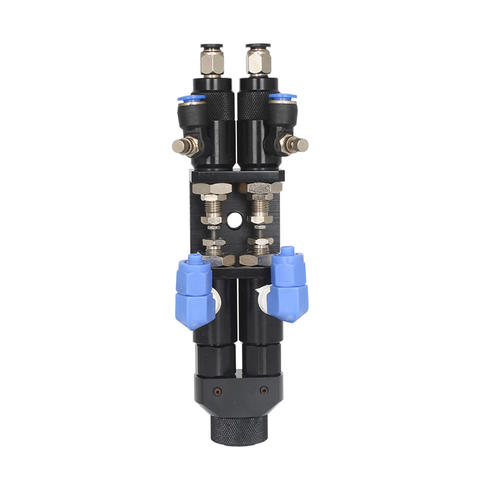
What Is a Needle Dispensing Valve?
A needle dispensing valve is a precision fluid control device that uses a needle and a corresponding opening or seat to regulate material delivery. It is designed for applications requiring controlled placement of liquids, adhesives, lubricants, sealants, and other compatible materials.
Unlike spray dispensing valves that distribute fluid over a wider area, a needle dispensing valve directs material through a relatively small outlet. This makes it suitable for localized application, fine adhesive lines, and controlled deposits on small components.
Depending on its design, a needle dispensing valve can be used with different fluid viscosities and dispensing volumes. Common applications include electronics assembly, precision bonding, sensor manufacturing, industrial lubrication, and automated component assembly.
For manufacturers seeking greater control over adhesive placement and fluid consumption, choosing a suitable needle dispensing valve can help improve process consistency and reduce unnecessary material application.
How Does a Needle Dispensing Valve Work?
A needle dispensing valve controls fluid flow through the movement of a needle relative to its seat or opening. Depending on the model, the needle may be actuated pneumatically or electrically.
A typical dispensing cycle includes four steps:
1. Fluid Supply: A compatible cartridge, reservoir, pump, or pressure-fed system delivers material to the valve.
2. Needle Activation: The control system activates the valve mechanism, moving the needle to permit fluid flow.
3. Controlled Dispensing: Material passes through the valve outlet and nozzle to reach the target surface or component.
4. Flow Shutoff: The needle returns to its closing position to stop material delivery.
The final deposit depends on needle travel, nozzle dimensions, fluid viscosity, supply pressure, dispensing time, and the material’s flow characteristics. A suitable fluid supply system and stable operating conditions are essential for repeatable results.
Key Advantages of Needle Dispensing Valves
1. Accurate Localized Application
A needle dispensing valve directs material toward a specific target area. This is particularly useful when adhesive must be applied to small components or confined spaces.
2. Controlled Deposit Size
By adjusting dispensing time and other operating parameters, manufacturers can control the amount of material delivered. Applications requiring highly accurate volumes may also need a dedicated metering system.
3. Reduced Excessive Application
Localized dispensing can help reduce adhesive overflow and unnecessary material consumption when the valve and nozzle are correctly matched to the process.
4. Flexible Nozzle Selection
Different needle diameters and outlet configurations accommodate different material flow characteristics and application geometries. The correct nozzle helps balance flow resistance, placement accuracy, and dispensing speed.
5. Automation Compatibility
Many needle dispensing valves can be integrated into robotic workstations, automated assembly machines, and programmable production lines for repeatable dispensing operations.
Industrial Applications of Needle Dispensing Valves
Needle dispensing valves are used in manufacturing processes where controlled fluid placement is important.
- Electronics assembly: Applying adhesives to connectors, circuit boards, sensors, and electronic components.
- Automotive manufacturing: Depositing compatible bonding agents, sealants, and lubricants in designated areas.
- LED production: Applying suitable bonding and encapsulation materials.
- Medical device manufacturing: Dispensing compatible adhesives in processes that meet applicable manufacturing requirements.
- Industrial machinery: Applying grease and other functional fluids to specific components.
- Precision assembly: Delivering small amounts of material to defined bonding or lubrication points.
The best valve configuration depends on the fluid, required deposit size, component geometry, and production cycle.
How to Choose the Right Needle Dispensing Valve
Selecting the right needle dispensing valve requires evaluating the material and application together.
Needle diameter: A smaller outlet can support finer deposits, but it also increases flow resistance and may be unsuitable for thicker materials or fluids containing particles.
Fluid viscosity: Confirm that the valve can handle the material’s viscosity and flow behavior. High-viscosity adhesives may require a larger outlet or a specialized dispensing mechanism.
Material compatibility: Check that the valve body, seals, needle, seat, and other wetted components are compatible with the fluid’s chemical properties.
Dispensing volume: Define the required deposit size, dispensing frequency, and acceptable variation between cycles.
Operating pressure: Verify the fluid supply pressure and the valve’s actuation requirements according to the manufacturer’s specifications.
Automation requirements: Consider response time, cycle frequency, control interfaces, and compatibility with existing equipment.
Maintenance and cleaning: Evaluate nozzle replacement, needle wear, material buildup, and the adhesive’s curing characteristics.
Before requesting a quotation, provide the supplier with the fluid type, viscosity, required dispensing volume, target application area, and operating conditions. For demanding applications, testing with the actual material is recommended.
How to Reduce Needle Clogging and Adhesive Stringing
Needle clogging and adhesive stringing are common challenges in precision dispensing. Both can affect deposit consistency and interrupt production.
To reduce clogging, select an appropriate needle diameter, maintain clean fluid supply conditions, and follow the material manufacturer’s storage and handling recommendations. Adhesives that cure quickly or react with moisture may require special attention to fluid-path compatibility and cleaning intervals.
To reduce stringing, optimize the dispensing pressure, valve closing behavior, nozzle distance, and dispensing parameters. Some applications may benefit from a valve with a suck-back or anti-drip function, if compatible with the material and process.
The most effective solution depends on the adhesive’s rheology, curing characteristics, and the specific valve design.
Why Choose a Professional Needle Dispensing Valve Manufacturer?
A reliable needle dispensing valve manufacturer should provide clear technical specifications, consistent product quality, and application support.
When comparing suppliers, review needle and nozzle options, wetted materials, operating parameters, customization capabilities, and after-sales service.
For critical applications, ask whether the supplier can test the valve with your actual fluid and target component. This helps verify dispensing behavior before integrating the equipment into a full production line.
The right valve should meet your technical requirements while balancing accuracy, cycle time, maintenance needs, and long-term operating costs.
Frequently Asked Questions
What is a needle dispensing valve used for?
A needle dispensing valve controls the localized application of compatible fluids, including adhesives, sealants, lubricants, and other industrial materials. It is commonly used in electronics assembly and precision manufacturing.
How do I choose the correct dispensing needle size?
Consider fluid viscosity, required deposit dimensions, flow rate, and the presence of particles. A smaller needle does not automatically produce better results if the material cannot flow consistently through the outlet.
Can a needle dispensing valve handle high-viscosity adhesives?
Some models can handle thicker adhesives, but suitability depends on valve construction, needle diameter, supply pressure, and material properties. Confirm compatibility with the manufacturer.
What causes inconsistent dispensing?
Common causes include unstable supply pressure, changing fluid viscosity, partial nozzle blockage, worn components, and unsuitable dispensing parameters.
Can a needle dispensing valve be automated?
Yes. Many models can be integrated with programmable controllers, robotic equipment, and automated assembly systems, depending on their actuation and control interfaces.
Find the Right Needle Dispensing Valve for Your Application
Reliable precision dispensing starts with the correct combination of valve design, needle geometry, fluid compatibility, and process control.
Whether you need fine adhesive deposits, localized lubrication, or controlled fluid application on small components, a suitable needle dispensing valve can help improve production consistency and material utilization.
Contact an experienced needle dispensing valve supplier to discuss your fluid requirements, compare available configurations, and find the right solution for your manufacturing process.
