

Paint Pressure Tank for Efficient Industrial Spray Painting
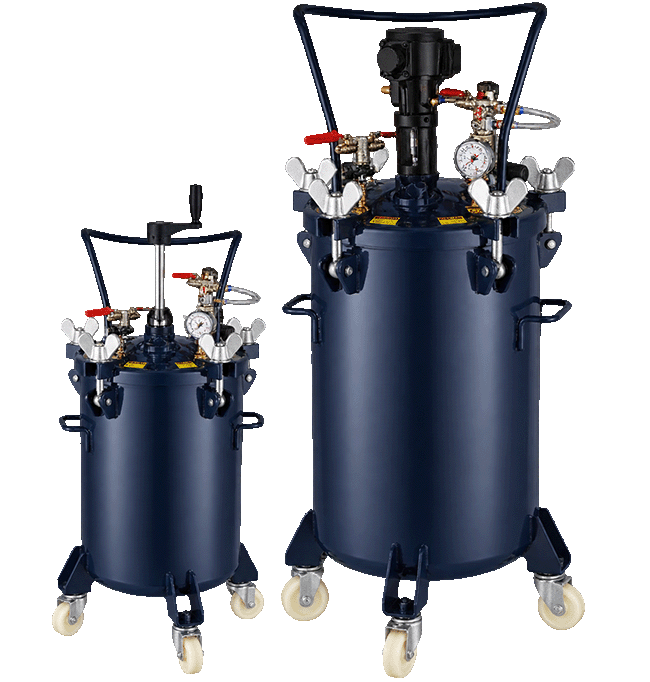
In modern industrial manufacturing, surface coating quality is a key factor in product appearance, durability, and competitiveness. Whether in automotive repair, metal fabrication, furniture manufacturing, machinery production, shipbuilding, or industrial equipment coating, achieving a smooth, uniform, and efficient painting process requires more than a spray gun—a stable paint supply system is equally important.
A paint pressure tank, also known as a paint pressure pot, is a professional pressure-fed solution designed to deliver coating materials continuously and evenly to spray guns. By using compressed air to push paint from the tank to the spray equipment, it significantly improves spraying efficiency, reduces material waste, and ensures consistent coating quality.
What Is a Paint Pressure Tank?
A paint pressure tank is a pressurized container used to store and supply paint, coatings, adhesives, primers, and other liquids during spraying. Unlike traditional containers that rely on spray gun suction, a pressure feed tank uses compressed air to create internal pressure, pushing material through a hose directly to the spray gun for continuous, stable delivery.
The basic working process includes:
- Paint or coating material is filled into the pressure tank.
- The tank lid is securely sealed.
- Compressed air enters the tank through the air inlet.
- Internal pressure forces the paint through the fluid outlet.
- The spray gun atomizes the coating into a fine, even spray pattern.
This pressure feeding method allows operators to achieve better spraying performance, especially with high-viscosity coatings or large-area surfaces.
Why Choose a Paint Pressure Tank?
Stable Paint Supply for Continuous Operation
A pressure feed paint tank provides a continuous paint supply, eliminating frequent refills that interrupt production. It can store larger amounts of coating material and supply the spray gun continuously, which is valuable for automotive painting workshops, industrial production lines, metal structure coating, furniture finishing, and large equipment spraying.
Improved Spray Quality and Uniform Coating
Coating consistency is critical in professional painting. A high-quality industrial paint pressure tank maintains stable pressure, ensuring consistent paint flow. Compared with gravity-feed systems, pressure-fed systems provide more uniform paint flow, better atomization, reduced coating thickness variation, and smoother surface finishing.
Higher Efficiency and Reduced Paint Waste
Material efficiency directly affects production costs. A paint pressure pot tank reduces waste by delivering coating materials efficiently, with less material lost compared to manual methods. Benefits include lower paint consumption, reduced overspray waste, faster spraying speed, and increased worker productivity.
Applications of Paint Pressure Tanks
Automotive Coating Industry
Paint pressure tanks are commonly used for vehicle body repair, automotive refinishing, primer spraying, clear coat application, and industrial vehicle coating. The continuous supply capability allows technicians to achieve professional-level finishes with fewer interruptions.
Metal Fabrication and Machinery Manufacturing
Industrial paint pressure tanks are used for steel structure coating, machinery painting, equipment protection, and industrial anti-corrosion applications. Stable coating pressure helps achieve stronger adhesion and consistent surface coverage.
Furniture and Wood Coating
A pneumatic paint pressure tank provides smooth finishing, faster production cycles, and better coverage on complex surfaces, making it ideal for professional woodworking and furniture factories.
Shipbuilding and Heavy Equipment Painting
Paint pressure tanks are suitable for marine coating, heavy machinery painting, construction equipment finishing, and large industrial projects. Their durable construction and continuous operation capability make them suitable for demanding environments.
Key Features of a High-Quality Paint Pressure Tank
Durable Tank Construction
A quality pressure tank should feature strong metal body construction, high-pressure resistance, long service life, and stable sealing performance. Durable materials ensure safe operation and reduce maintenance requirements.
Precision Pressure Control
Professional pressure tanks are equipped with pressure regulators, pressure gauges, air control valves, and safety protection components, allowing operators to adjust pressure according to different coatings and spraying requirements.
Easy Operation and Maintenance
Important design features include quick opening lid structure, easy cleaning system, reliable sealing gasket, and convenient material filling. Simple maintenance helps reduce downtime and improves production efficiency.
How to Select the Right Paint Pressure Tank
Tank Capacity Selection
Common industrial capacities include 5L, 10L, 20L, 30L, 40L, and 60L. Small tanks are suitable for repair workshops and small projects, while larger tanks are better for continuous industrial production.
Consider the Coating Material
Before selecting a pressure tank, consider paint type, material viscosity, spraying distance, and required output volume. Thicker coatings may require stronger pressure feeding capability and larger fluid passages.
Choose a Reliable Manufacturer
A professional paint pressure tank manufacturer can provide better product quality, customization options, and technical support. When selecting a supplier, consider manufacturing experience, product quality control, OEM capability, international export experience, and after-sales service.
Frequently Asked Questions
What is the difference between a paint pressure tank and a regular paint cup?
A paint pressure tank uses compressed air to push paint to the spray gun, allowing continuous supply and handling of larger volumes, while a regular paint cup relies on gravity or suction and requires frequent refilling.
Can a paint pressure tank handle high-viscosity coatings?
Yes, pressure-fed systems are well suited for high-viscosity coatings because the internal pressure helps move thicker materials through the hose to the spray gun.
How do I maintain a paint pressure tank?
Regularly clean the tank, check and replace sealing gaskets as needed, inspect pressure gauges and regulators, and follow the manufacturer’s safety guidelines for operation and maintenance.
What size paint pressure tank do I need?
Choose based on your application: smaller tanks (5L–10L) for small projects and repair work, larger tanks (20L–60L) for continuous industrial production and large-scale coating.
Are paint pressure tanks safe to use?
When operated according to manufacturer instructions and equipped with proper safety components such as pressure relief valves and gauges, paint pressure tanks are safe for industrial use.