

Pneumatic Paint Pressure Tank for Industrial Spray Systems
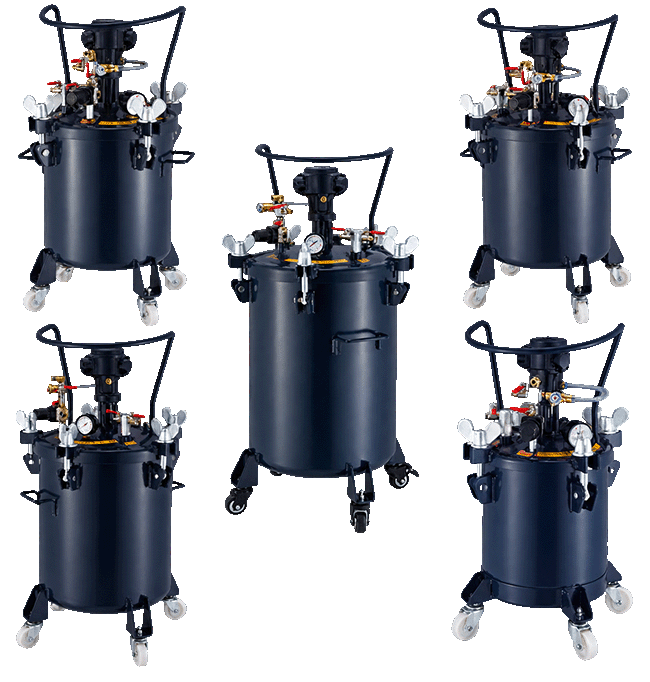
In modern manufacturing, coating quality directly affects product appearance, durability, and corrosion resistance. Professional painting operations require more than a spray gun; they need a stable and efficient paint supply system. A pneumatic paint pressure tank is a proven solution that uses compressed air to deliver coating materials continuously and evenly to spray guns, helping operators achieve consistent results while improving productivity.
What Is a Pneumatic Paint Pressure Tank?
A pneumatic paint pressure tank is a professional coating supply device that uses compressed air pressure to transport paint, coatings, primers, adhesives, and other liquid materials to spray equipment. Unlike gravity-feed systems, it creates a sealed pressurized environment. Compressed air enters the tank, pushing the coating through a fluid outlet directly to the spray gun. The working process includes filling the tank, sealing the lid, introducing compressed air, and delivering a continuous, stable coating supply for uniform atomization.
Why Pneumatic Paint Pressure Tanks Improve Industrial Painting
Continuous Paint Delivery Boosts Efficiency
Traditional paint cups require frequent refilling, causing downtime and inconsistent coating. A pneumatic pressure tank offers larger storage capacity and continuous delivery, enabling longer spraying time, reduced downtime, improved production speed, and lower labor requirements. This is essential for automotive repair, metal manufacturing, and industrial equipment coating.
Stable Air Pressure Ensures Uniform Quality
Fluctuating paint supply can cause uneven layers, inconsistent spray patterns, surface defects, and material waste. A high-quality pneumatic pressure tank maintains stable internal pressure, resulting in consistent atomization, smooth surface finishing, uniform coating thickness, and improved product appearance.
Handles Various Coating Materials
Industrial painting involves coatings with different viscosities. Pneumatic pressure tanks can handle automotive paint, industrial coatings, primers, epoxy coatings, protective paints, varnishes, and adhesives. The compressed air system provides sufficient pressure to transport thicker materials that are difficult to spray with conventional methods.
Reduces Paint Waste and Controls Costs
Controlled paint delivery directly to the spray gun minimizes excessive consumption, unnecessary refilling, overspray loss, and material waste. Better paint utilization lowers operating costs and improves profitability, especially for large-scale coating projects.
Applications of Pneumatic Paint Pressure Tanks
These tanks are widely used in automotive painting for vehicle bodies, auto repair, primer application, clear coat spraying, and refinishing. In industrial equipment and machinery coating, they apply protective coatings to steel structures, machinery, and metal surfaces. Furniture and woodworking manufacturers use them for wood coating, lacquer spraying, cabinet finishing, and decorative surface treatment. Construction equipment and marine coating applications include construction machinery, agricultural equipment, ship surfaces, and heavy-duty industrial protection.
Key Features of a High-Quality Pneumatic Paint Pressure Tank
When selecting a tank, consider durable pressure-resistant construction with a strong steel body, high-pressure resistance, excellent sealing, and long service life. A professional pressure regulation system should include a pressure gauge, air regulator, safety valve, air inlet control, and fluid outlet control. Easy operation and maintenance features such as a quick-opening lid, easy paint filling, simple cleaning, replaceable sealing parts, and convenient inspection structure help reduce downtime.
How to Choose the Right Pneumatic Paint Pressure Tank
Select the Correct Tank Capacity
Common capacities include 5L, 10L, 20L, 30L, 40L, and 60L. Small-capacity tanks suit workshops and repair applications, while larger tanks are better for industrial production lines.
Consider Material Compatibility
Different coatings require different pressure settings. Before selecting a tank, evaluate paint viscosity, chemical properties, required spraying volume, and working environment to ensure optimal performance and equipment life.
Choose a Professional Manufacturer
A reliable manufacturer should offer advanced manufacturing technology, strict quality inspection, OEM customization services, technical support, and stable international supply capability. Working with an experienced supplier ensures consistent product quality and reliable after-sales service.
Related Resources
- Paint Sprayer Pressure Tank | The Professional Solution for Efficient and High-Quality Spray Painting
- Air Powered Paint Tank | The Efficient Pressure-Fed Solution for Professional Spray Painting Applications
- Paint Tank with Spray Gun | The Complete Solution for Efficient and Professional Spray Painting Applications
- Industrial Paint Pressure Pot | The Reliable Solution for High-Efficiency Industrial Coating Applications
- Spray Paint Pressure Tank | The Advanced Solution for Efficient and Professional Spray Painting Systems
- Paint Pressure Pot | The Professional Painting Solution for High-Efficiency Industrial Coating Applications
- Paint Pressure Tank | The Professional Solution for Efficient Industrial Spray Painting Applications
- Glue Pressure Tank| Reliable Adhesive Feeding for Industrial Dispensing Systems
Frequently Asked Questions
What is a pneumatic paint pressure tank?
A pneumatic paint pressure tank is a sealed container that uses compressed air to push paint or coating material through a hose to a spray gun, providing a continuous and stable supply.
What are the benefits of using a pneumatic paint pressure tank?
Benefits include continuous paint delivery, stable pressure for uniform coating, ability to handle various materials, and reduced paint waste, leading to improved efficiency and cost control.
What tank capacities are available?
Common capacities include 5L, 10L, 20L, 30L, 40L, and 60L. Choose based on your application scale, with smaller tanks for workshops and larger tanks for industrial production.
Can pneumatic paint pressure tanks handle thick coatings?
Yes, the compressed air system provides sufficient pressure to transport thicker materials like epoxy coatings and adhesives that may be difficult to spray with conventional methods.
How do I maintain a pneumatic paint pressure tank?
Regular maintenance includes cleaning after use, inspecting seals and valves, and replacing worn parts. Features like quick-opening lids and replaceable sealing parts simplify the process.
What should I consider when choosing a manufacturer?
Look for advanced manufacturing technology, strict quality inspection, OEM customization services, technical support, and stable international supply capability to ensure product quality and after-sales service.