

Industrial Paint Pressure Pot for Efficient Coating
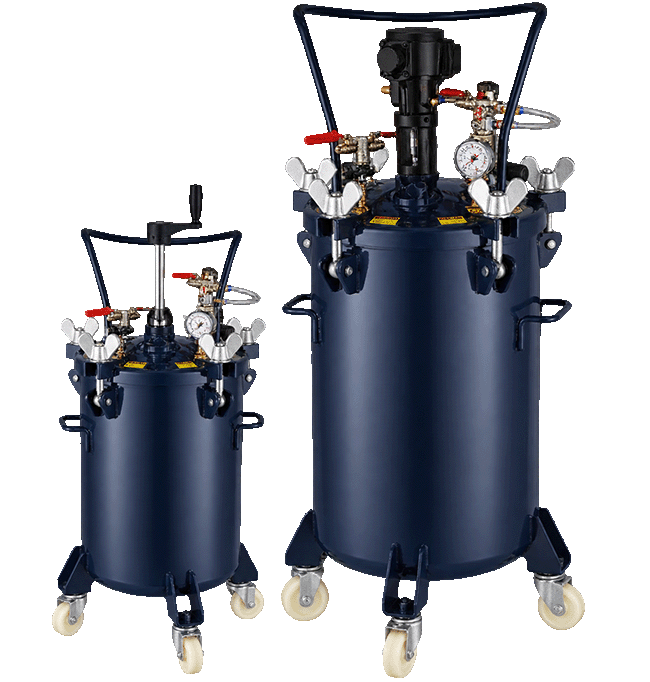
In modern industrial manufacturing, surface coating affects product durability, appearance, corrosion resistance, and overall value. Industries such as automotive, metal fabrication, machinery, furniture, and heavy equipment require painting systems that deliver consistent quality and efficiency. Traditional methods often suffer from unstable paint supply, frequent refilling, uneven coating, and waste. Industrial paint pressure pots address these challenges by providing continuous, pressure-fed paint delivery to spray guns.
What Is an Industrial Paint Pressure Pot?
An industrial paint pressure pot is a sealed pressure container that stores and supplies paint, coatings, primers, adhesives, and other liquids during spray operations. Unlike gravity or suction feed systems, it uses compressed air to pressurize the tank, pushing material through a fluid hose to the spray gun. The process involves filling the tank, sealing the lid, supplying compressed air, adjusting pressure, and delivering paint continuously for a stable spray pattern.
Key Benefits for Industrial Coating
Continuous Paint Supply
Pressure pots offer larger capacity than traditional cups, reducing interruptions for refilling. This is critical for coating large surfaces like vehicle bodies, machinery parts, and steel structures. Benefits include reduced downtime, higher efficiency, lower labor requirements, and improved workflow stability.
Stable Pressure Control
Consistent internal pressure ensures uniform paint flow, preventing uneven thickness, inconsistent appearance, poor atomization, and excess material use. This results in smooth finishes, uniform coverage, better adhesion, and improved product appearance.
Material Versatility
These pots handle automotive paints, industrial coatings, epoxy, primers, protective paints, varnishes, adhesives, and high-viscosity materials. Pressure feeding efficiently transports thicker coatings for demanding environments.
Cost Efficiency
Controlled delivery reduces paint waste, overspray, refilling time, and unnecessary consumption, lowering production costs and improving profitability.
Common Applications
- Automotive: vehicle body painting, repair coating, primer, protective coating, clear coat.
- Metal Fabrication: steel structures, metal equipment, machinery finishing, component protection.
- Machinery and Heavy Equipment: construction, agricultural, mining equipment, industrial machine protection.
- Furniture and Wood: furniture coating, cabinet finishing, decorative painting, lacquer spraying.
- Marine and Large Equipment: ship coating, marine maintenance, large equipment protection, outdoor structures.
Selecting an Industrial Paint Pressure Pot
Choose tank capacity based on application: 5L–10L for workshops and repairs, 20L–60L for continuous factory production. Consider material viscosity and required spraying distance to determine working pressure. Look for durable steel construction, pressure-resistant design, reliable seals, and professional pressure regulation with gauges, regulators, and safety valves. Easy maintenance features like quick-opening lids and replaceable seals reduce downtime.
Frequently Asked Questions
What is the difference between a pressure pot and a gravity feed spray gun?
A pressure pot uses compressed air to push paint from a separate tank, allowing larger capacity and continuous spraying, while gravity feed relies on gravity from a small cup.
Can industrial paint pressure pots handle high-viscosity coatings?
Yes, pressure feeding provides sufficient force to transport thicker materials efficiently, making them suitable for high-viscosity coatings.
What maintenance is required for an industrial paint pressure pot?
Regular cleaning of the tank and fluid passages, inspection of seals and safety valves, and replacement of worn components are recommended to ensure safe and reliable operation.
How do I choose the right tank capacity?
Consider the size of your typical project and production volume. Smaller pots (5–10L) suit intermittent use, while larger pots (20–60L) are better for continuous production.
Are industrial paint pressure pots safe to use?
When operated according to manufacturer guidelines, with proper pressure regulation and safety valves, they are safe. Always follow safety procedures for compressed air equipment.