

Pressure Tank with Agitator | Reliable Mixing and Fluid Supply for Industrial Dispensing
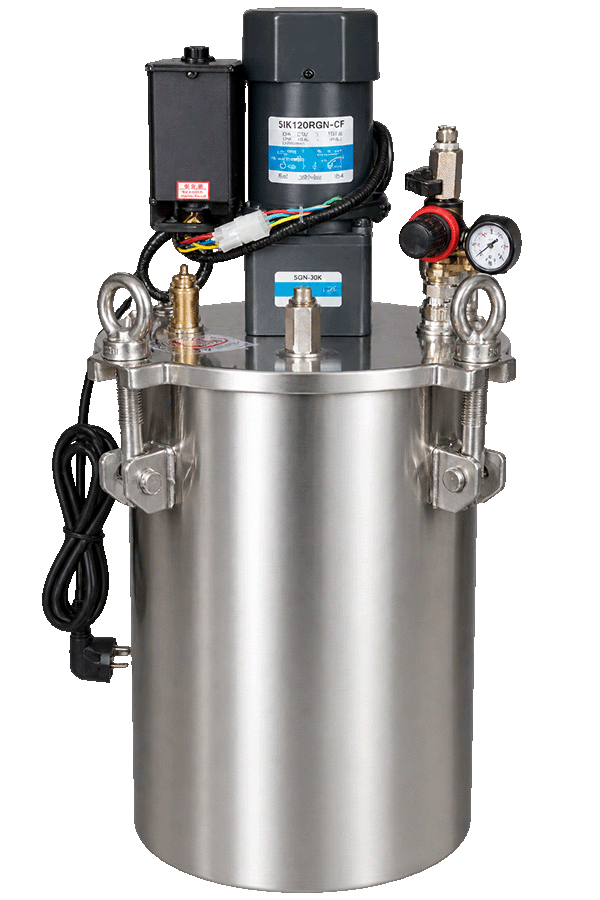
Many industrial liquids need more than simple storage. Adhesives, coatings, paints, resins, inks, sealants, and filled compounds can separate or settle when they remain stationary for long periods. A Pressure Tank with Agitator combines controlled material feeding with continuous or intermittent mixing, helping manufacturers maintain a more uniform fluid condition throughout the production process.
By integrating a pressure vessel and mixing system into one unit, the equipment can continuously supply material to dispensing valves, spray guns, coating equipment, and automated production lines while reducing sedimentation inside the tank.
For factories handling materials containing pigments, fillers, particles, or components with different densities, a properly selected Agitated Pressure Tank can improve process stability and reduce manual mixing requirements.
What Is a Pressure Tank with Agitator?
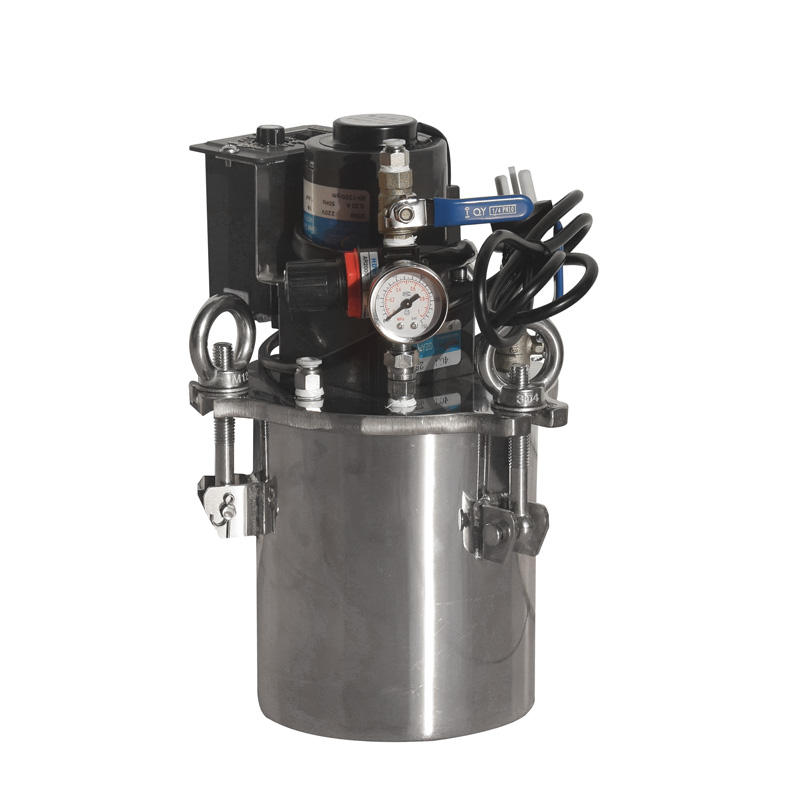
A Pressure Tank with Agitator is a sealed pressure vessel equipped with a mixing shaft and blade. The tank stores the material, while the agitator keeps the liquid moving before it is delivered to downstream equipment.
Compressed air is typically introduced through a pressure regulator. The controlled internal pressure pushes the material through the fluid outlet, while the agitator mixes the contents inside the tank.
A typical system can include:
- Stainless steel tank body
- Stainless steel tank lid
- Pneumatic or electric agitator
- Mixing shaft
- Mixing blade
- Pressure regulator
- Pressure gauge
- Safety relief valve
- Air inlet
- Fluid outlet
- Sealing components
The tank capacity, agitator type, mixing speed, blade structure, and fluid connections can be selected according to the application.
Why Is Agitation Important?
Many industrial materials are not perfectly homogeneous during long-term storage.
Coatings may contain pigments that gradually settle. Filled adhesives can contain particles that move toward the bottom of the container. Some resins or suspensions can also separate when left stationary.
If these materials are supplied directly without mixing, their composition may change during production. This can cause variations in viscosity, coating appearance, dispensing performance, or final product quality.
A Pressure Tank with Mixer helps keep the material circulating inside the vessel and reduces sedimentation before dispensing.
This provides several practical advantages:
- More uniform material consistency
- Reduced particle sedimentation
- Continuous fluid supply
- Less manual stirring
- Improved production continuity
- Better support for automated equipment
- Adjustable mixing configurations
- Reduced interruption during long production cycles
Pneumatic vs. Electric Agitator
Pressure tanks can be equipped with either pneumatic or electric mixing systems.
A Pneumatic Pressure Tank with Agitator uses compressed air to drive the mixing motor. This design is commonly used in industrial environments where compressed air is already available for the dispensing or spraying system.
Pneumatic agitation offers simple operation and flexible speed adjustment depending on the motor configuration.
An Electric Pressure Tank with Agitator uses an electric motor to drive the mixing shaft. Electric systems may be selected when specific speed control, continuous operation, or integration with electrical production equipment is required.
The correct agitator type should be selected according to material characteristics, production environment, mixing requirements, and equipment configuration.
Stainless Steel Pressure Tank with Agitator
Stainless steel is widely used for industrial pressure tanks because it provides strength, corrosion resistance, durability, and easy maintenance.
A 304 Stainless Steel Pressure Tank with Agitator can be suitable for many industrial materials when chemical compatibility has been confirmed.
Typical applications include:
- Glue and adhesives
- Industrial coatings
- Paint
- Ink
- Resin
- Sealant
- Lubricants
- Pigmented liquids
- Suspensions
- Filled compounds
The stainless steel internal surface can also make cleaning easier when changing materials or performing routine maintenance.
Because different chemicals have different compatibility requirements, seals, hoses, fittings, and other wetted components should also be selected carefully.
Applications of Agitated Pressure Tanks
A pressure tank with mixing function can be integrated into various industrial production processes.
Adhesive Dispensing
Filled adhesives and bonding materials may require continuous mixing before they reach the dispensing valve. An agitator helps maintain a more consistent material composition.
Coating and Painting
Paints and industrial coatings often contain pigments that can settle. Continuous agitation helps maintain color and material uniformity during spraying.
Electronics Manufacturing
Pressure tanks can supply potting compounds, resins, coatings, and other materials used for electronic assembly and protection.
Automotive Manufacturing
Agitated pressure tanks may be used to supply adhesives, coatings, sealants, and specialty fluids for automotive components.
Automated Production Lines
The tank can be connected to dispensing valves, spray guns, robots, coating machines, and other automatic fluid handling equipment.
Selecting the Right Tank Capacity
Common tank capacities include:
2L, 4L, 5L, 10L, 15L, 20L, 30L, 40L, and 50L.
Smaller tanks are suitable for precision dispensing, low material consumption, laboratory use, and frequent material changes.
Larger tanks are more suitable for continuous production because they reduce refill frequency.
When selecting a Pressure Tank with Agitator, buyers should consider material consumption, viscosity, settling characteristics, required mixing speed, production duration, available installation space, and cleaning requirements.
Choosing the Right Mixing System
Agitator design should match the material rather than simply using the fastest possible mixing speed.
Important factors include:
- Material viscosity
- Particle or filler content
- Tank capacity
- Required mixing intensity
- Mixing blade diameter
- Shaft length
- Rotation speed
- Continuous or intermittent operation
Excessive mixing may introduce unwanted air into certain adhesives or coatings, while insufficient mixing may not prevent sedimentation. The mixing configuration should therefore be selected according to the actual material.
Custom Pressure Tank with Agitator Solutions
Industrial equipment often requires specific dimensions and connection configurations. A professional Pressure Tank with Agitator Manufacturer can customize the system according to production requirements.
Customization options may include tank capacity, tank diameter, overall height, fluid outlet size, inlet location, thread specifications, pressure regulator, pressure gauge, pneumatic motor, electric motor, mixing shaft, mixing blade, mounting brackets, and OEM branding.
For equipment manufacturers, tanks can also be produced according to machine drawings or installation dimensions.
Why Choose Yakoo Pressure Tanks with Agitators?
Yakoo provides stainless steel pressure tanks for adhesive dispensing, coating, spraying, mixing, and industrial fluid supply applications.
Our Pressure Tanks with Agitators are available in multiple capacities and can be equipped with pneumatic or electric mixing systems according to customer requirements.
Yakoo can customize tank dimensions, working configurations, fluid ports, fittings, mixing shafts, blades, pressure components, and OEM designs for different industrial equipment.
Customers can provide material type, viscosity, required capacity, working pressure, mixing requirements, and connection specifications so that an appropriate tank configuration can be recommended.
Conclusion
A Pressure Tank with Agitator provides both continuous material supply and controlled mixing in one industrial fluid handling system. It is particularly useful for adhesives, paints, coatings, resins, inks, and other materials that may settle or separate during production.
When selecting an agitated pressure tank, buyers should consider tank capacity, fluid viscosity, working pressure, agitator type, mixing speed, blade design, outlet configuration, and material compatibility.
Whether you need a Stainless Steel Pressure Tank with Agitator, Pneumatic Mixing Pressure Tank, Pressure Tank with Mixer, or customized fluid supply solution, Yakoo can provide flexible configurations for industrial dispensing and coating applications.