

Paint Supply System | How to Choose and Set Up a Reliable Industrial Paint Delivery System
Paint Supply System: How to Choose and Set Up a Reliable Industrial Paint Delivery System
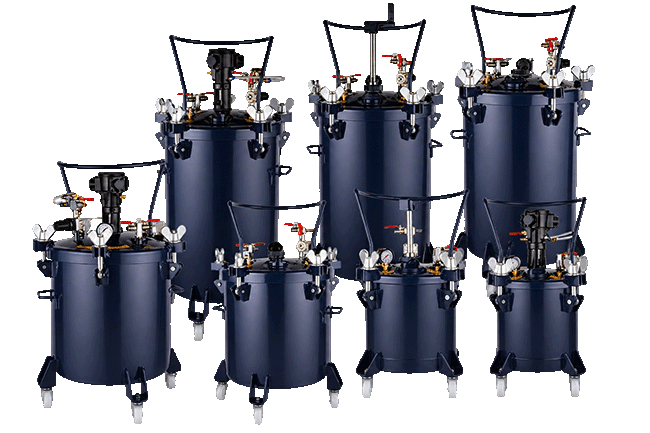
A paint supply system is the equipment setup that stores, pressurizes, and delivers paint or coating material continuously to a spray gun or automatic coating machine. In most industrial workshops, the core of that system is a pressure tank (also called a paint pressure tank or pressure pot), which uses compressed air to push material through a fluid hose at a stable flow rate. Choosing the right configuration depends mainly on your paint type, viscosity, required flow rate, production volume, and whether you need agitation or corrosion resistance.
What a Paint Supply System Includes
A typical paint supply system is made up of several parts working together:
- Pressure tank / pressure pot – the sealed vessel that holds paint or coating under controlled air pressure.
- Air inlet and pressure regulator – controls the internal pressure that pushes material out.
- Pressure gauge – lets the operator monitor and adjust pressure.
- Safety relief valve – releases excess pressure to protect the operator and equipment.
- Fluid outlet and hose – carries material from the tank to the spray gun or dispensing equipment.
- Sealed lid – keeps the tank closed during pressurized operation.
- Optional agitator (manual or pneumatic) – keeps pigments and fillers in suspension for coatings that tend to settle.
- Optional stainless steel inner container – makes cleaning and material changeover easier.
How to Choose the Right Paint Supply System
Selection is usually driven by a few practical questions. Working through them in order helps narrow the options quickly.
1. What material are you supplying?
Paint, coatings, adhesives, and other liquid materials behave differently. Solvent-based and water-based coatings, high-viscosity adhesives, and materials containing fillers all place different demands on the tank. For corrosive or moisture-sensitive materials, a stainless steel tank body is often preferred because it resists chemical corrosion, moisture, oxidation, and industrial contaminants better than carbon steel.
2. What is the material viscosity?
Higher-viscosity materials generally need higher delivery pressure and may benefit from an agitator to keep the material uniform. Lower-viscosity materials are easier to feed but still require stable pressure to avoid uneven flow.
3. How much paint do you need to supply, and for how long?
Tank capacity should match your production cycle. A larger tank lets operators spray for longer periods without stopping to refill, which is important for large workpieces and continuous coating lines. Small gravity-feed cups on the spray gun are only practical for short, low-volume work.
4. Manual or automatic spraying?
Manual spray guns, automatic spray guns, and coating machines all accept material from a pressure tank, but the connection ports, hose size, and pressure control requirements may differ. Confirm the interface with your spray equipment before ordering.
5. Do you need agitation?
If your coating contains pigments or fillers that settle over time, a manual or pneumatic agitator helps maintain consistent material. This directly affects coating thickness and surface quality.
6. What pressure range and safety features are required?
Pressure ratings, regulator type, gauge, and safety relief valve should be specified according to your process and site safety rules. Do not operate a pressure tank without a functioning safety relief valve.
Where Paint Supply Systems Are Used
Pressure-tank-based paint supply systems are common in:
- Industrial spray painting and coating lines
- Furniture finishing
- Automotive coating and refinishing
- Metal fabrication and general finishing
- Adhesive dispensing and glue dispensing equipment
- Chemical material storage and transfer
- Automated production lines and high-viscosity material feeding
In each case, the goal is the same: stable material delivery, better process control, and continuous production without frequent refilling.
Why Use a Pressure Tank Instead of a Small Cup?
The main advantage of a pressure tank is continuous and stable material delivery. With a small spray gun cup, production must stop frequently for refilling, which reduces efficiency on large surfaces or continuous lines. A pressure tank holds a larger volume and feeds paint over a longer production cycle. Stable internal pressure also helps maintain uniform paint flow to the spray gun, which can reduce fluctuations and contribute to more consistent coating thickness and surface quality.
Practical Notes Before You Buy
- Match tank capacity to your production cycle – too small means frequent refills; too large can be unnecessary for low-volume work.
- Confirm material compatibility – check the tank body, seals, and wetted parts against your paint or adhesive.
- Plan for cleaning and changeover – stainless steel inner containers and accessible lids make cleaning easier.
- Check pressure control and safety – regulator, gauge, and safety relief valve are not optional.
- Verify connections – air inlet, fluid outlet, and hose connections must match your spray gun or automatic system.
- Consider customization – connection ports, agitator type, and capacity can often be adapted to specific production requirements.
About DGYAKOO
DGYAKOO is a manufacturer of glue pressure tanks, adhesive and dispensing pressure tanks, and related industrial fluid handling equipment. The company provides customized pressure tanks, material supply tanks, coating tanks, and industrial fluid handling solutions for global B2B customers. Product information is available at https://www.madetank.com/.
FAQ
What is a paint supply system?
A paint supply system is the setup that stores, pressurizes, and delivers paint or coating material to a spray gun or coating machine. It typically includes a pressure tank, pressure regulator, gauge, safety relief valve, fluid hose, and optional agitator.
What is the difference between a paint pressure tank and a spray gun cup?
A spray gun cup is small and mounts directly on the gun, so it must be refilled frequently. A paint pressure tank holds a much larger volume and feeds material continuously under controlled pressure, which suits longer production runs and large workpieces.
How do I choose the right tank capacity?
Base it on how much material you use per production cycle and how often you are willing to stop for refilling. Larger tanks reduce interruptions; smaller tanks suit low-volume or frequent color-change work.
Do I need an agitator?
If your coating contains pigments or fillers that settle, an agitator helps keep the material uniform. This supports more consistent coating thickness and surface quality.
Can a pressure tank handle high-viscosity materials?
Yes, pressure tanks are commonly used for high-viscosity material feeding, but the required pressure, tank configuration, and agitator choice should be matched to the specific material.
What safety features should a paint pressure tank have?
A pressure regulator, pressure gauge, and safety relief valve are essential. The tank should be operated within its rated pressure and inspected regularly.
Can the tank be customized?
Many manufacturers offer customization of capacity, connection ports, agitator type, and materials of construction. Confirm your requirements with the supplier before ordering.
