

Paint Supply Tank | How to Choose the Right Pressure Tank for Paint & Coating Systems
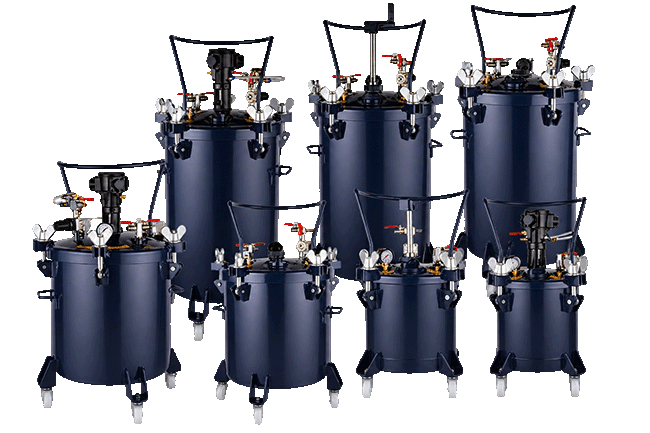
Paint Supply Tank: How to Choose the Right Pressure Tank for Paint & Coating Systems
A paint supply tank is a sealed, pressurized container that stores paint, coatings, or other liquid materials and delivers them under controlled pressure to spray guns, dispensing valves, or automated coating systems. Instead of refilling small gravity cups repeatedly, a paint supply tank keeps a larger volume of material under steady pressure so production can run continuously with more consistent flow.
If you are specifying a paint supply tank, the key decision factors are: material compatibility (often SUS304 or SUS316 stainless steel), tank capacity, working pressure, whether you need agitation or mixing, and the fittings/ports required to connect to your downstream equipment. The right configuration depends on your fluid, your spray or dispensing process, and your production volume.
What Is a Paint Supply Tank?
A paint supply tank — also called a paint pressure tank, paint pressure pot, or spray paint tank — is a pressure vessel designed to hold coating material and feed it to spray or dispensing equipment. Compressed air is introduced into the tank to create controlled internal pressure. That pressure pushes the paint or coating through a fluid hose to the spray gun or automatic spraying system.
Typical applications include:
- Paint and coating supply systems
- Adhesive dispensing equipment
- Chemical material storage and transfer
- Industrial fluid transportation
- Automated production lines
- High-viscosity material feeding systems
The main purpose of a paint supply tank is to ensure stable material delivery, improve process control, and support continuous industrial production.
Why Use a Paint Supply Tank Instead of a Small Cup?
The main advantage of a paint supply tank is continuous and stable material delivery. When operators use a small spray gun cup, production must stop frequently for refilling. This reduces efficiency, especially when painting large surfaces or working on continuous production lines.
A pressure tank provides a larger paint supply, allowing operators to spray for longer periods without interruption. Stable fluid pressure also helps maintain uniform paint flow to the spray gun, which can improve spraying consistency and surface finish.
Key Selection Factors for a Paint Supply Tank
1. Material of Construction
Stainless steel is one of the most popular materials for industrial pressure tanks because it offers durability, corrosion resistance, and a clean appearance. Common grades include SUS304 and SUS316. SUS304 is commonly used for many industrial applications, while SUS316 may be preferred when stronger corrosion resistance is required.
The correct material should be selected according to:
- Fluid composition
- Chemical compatibility
- Operating pressure
- Working temperature
- Cleaning requirements
- Production environment
2. Tank Capacity
Capacity should match your production volume and refill frequency. Larger tanks reduce refill interruptions but require more space and may be heavier when full. Smaller tanks are easier to handle and clean but may need more frequent refilling.
3. Working Pressure
The tank must be rated for the pressure required by your spray gun or dispensing system. Working pressure affects fluid flow rate and atomization. Always confirm the maximum allowable working pressure of the tank and ensure it meets your process requirements.
4. Agitation or Mixing
Some coatings and adhesives contain pigments or fillers that settle over time. In these cases, a tank equipped with a pneumatic agitator or manual/automatic mixer helps keep the material homogeneous. If your material tends to separate, agitation may be necessary for consistent results.
5. Fittings and Configuration
Depending on the application, paint supply tanks can be supplied with:
- Pneumatic agitators
- Manual or automatic mixers
- Pressure regulators
- Safety valves
- Fluid outlet valves
- Air inlet fittings
- Pressure gauges
- Stainless steel inner containers
- Customized connection ports
These options allow the tank to be adapted to different coating materials and industrial production requirements.
Typical Applications and Industries
Paint supply tanks are widely used in adhesive dispensing, paint spraying, coating, chemical processing, electronics manufacturing, food processing, laboratory systems, and automated production lines. Because different industries have different requirements, buyers should evaluate not only the tank itself but also the manufacturing capability, material quality, customization options, and technical support of the supplier.
What to Look for in a Paint Supply Tank Manufacturer
A professional pressure tank manufacturer designs and produces tanks that can safely hold liquids or materials under controlled pressure. Depending on the application, manufacturers may supply:
- Stainless steel pressure tanks
- Adhesive dispensing pressure tanks
- Paint pressure tanks
- Pneumatic pressure tanks
- Mixing pressure vessels
- Small pressure vessels
- Industrial dispensing tanks
- Custom pressure tanks
- Sanitary stainless steel tanks
- Fluid transfer tanks
Some manufacturers focus on standard models, while others provide OEM and custom fabrication services for special production requirements.
Safety and Maintenance Notes
Pressure tanks should be operated within their rated pressure limits. Regular inspection of seals, valves, gauges, and safety valves is important to maintain safe operation. Cleaning procedures should be compatible with the tank material and the fluids being used. Always follow the manufacturer’s instructions for installation, operation, and maintenance.
FAQ
What is a paint supply tank used for?
A paint supply tank is used to store and deliver paint, coatings, adhesives, and other liquid materials under controlled pressure to spray guns, dispensing valves, or automated coating systems. It provides a continuous and stable supply of material for industrial painting and coating processes.
What is the difference between a paint supply tank and a pressure pot?
They are essentially the same type of equipment. “Paint supply tank,” “paint pressure tank,” “paint pressure pot,” and “spray paint tank” are different terms for a pressurized container that feeds coating material to spray or dispensing equipment.
Should I choose SUS304 or SUS316 for a paint supply tank?
SUS304 is commonly used for many industrial applications. SUS316 may be preferred when stronger corrosion resistance is required, such as with more aggressive chemicals or certain environments. The choice depends on the fluid composition, operating conditions, and cleaning requirements.
Do I need an agitator on my paint supply tank?
If your coating or adhesive contains pigments or fillers that tend to settle, an agitator or mixer can help keep the material homogeneous. For materials that do not separate easily, agitation may not be necessary. Consider your specific material properties and process requirements.
How do I choose the right size paint supply tank?
Consider your production volume, refill frequency, available space, and the weight of the full tank. Larger tanks reduce refill interruptions but require more space and may be heavier. Smaller tanks are easier to handle and clean but may need more frequent refilling.
Can paint supply tanks be customized?
Many manufacturers offer customization options such as capacity, pressure rating, material grade, agitator type, and connection ports. Custom fabrication is available for special production requirements. Consult with the manufacturer to determine the best configuration for your application.
For more information on pressure tanks for paint, coating, and adhesive applications, visit madetank.com.
