

Dispensing Valve Solutions | Industrial Dispensing Valve Supplier
Why Is a Dispensing Valve Important in Modern Manufacturing?
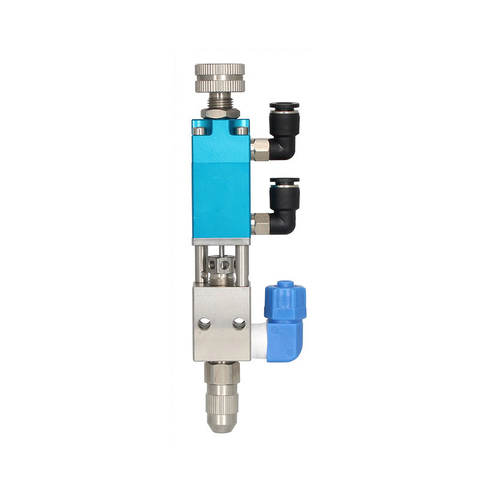
A dispensing valve is an industrial fluid control component that regulates the release of liquids, adhesives, sealants, lubricants, and other process materials. It helps manufacturers apply the required material to a specific location or surface according to defined production parameters.
In modern manufacturing, even small variations in material application can affect bonding quality, assembly performance, product appearance, and manufacturing costs. A suitable dispensing valve helps control material delivery and supports repeatable production processes.
Dispensing valves are used in electronics assembly, automotive manufacturing, electrical equipment production, industrial bonding, and many other applications where controlled fluid delivery is essential.
For manufacturers looking to improve process stability, selecting the right dispensing valve is not simply an equipment purchase. It is an important decision that affects material consumption, production efficiency, and long-term operating costs.
How Does an Industrial Dispensing Valve Work?
An industrial dispensing valve controls the passage of material through a dedicated fluid channel. Depending on the design, the valve may use pneumatic actuation, electric actuation, or another mechanism to control fluid release.
A typical dispensing process includes three main stages.
Material delivery: A compatible supply system delivers the fluid to the valve at the required pressure or flow conditions.
Controlled application: The valve opens or regulates its flow passage, allowing material to reach the target through a suitable nozzle or outlet.
Dispensing shutoff: The valve stops or reduces material flow when the programmed dispensing cycle ends.
The final deposit depends on the valve design, fluid viscosity, supply stability, nozzle geometry, and control settings. For applications requiring high repeatability, these factors should be evaluated as part of the complete dispensing system.
Types of Dispensing Valves for Different Applications
Choosing the correct valve type helps match dispensing performance to the material and production process.
Pneumatic Dispensing Valve
A pneumatic dispensing valve uses compressed air to actuate its internal mechanism. It is commonly used in automated manufacturing systems that require controlled opening and closing cycles.
Precision Dispensing Valve
A precision dispensing valve is designed for applications that require controlled material deposits and repeatable output. Depending on its configuration, it can support small-volume dispensing, adhesive application, and other precision assembly tasks.
Spray Dispensing Valve
A spray dispensing valve distributes compatible fluids across a target area using an appropriate atomization mechanism. It is suitable for applications that require surface coverage rather than individual drops or continuous beads.
Jet Dispensing Valve
A jet dispensing valve ejects material toward the target without requiring direct nozzle contact. Certain designs support high-speed dispensing of small deposits in electronics and other precision manufacturing applications.
Two-Component Adhesive Dispensing Valve
A two-component dispensing valve is used in systems that handle materials such as compatible epoxy and polyurethane adhesives. The system generally keeps the two components separate until the intended mixing stage.
Each valve type has different operating characteristics. Manufacturers should select equipment according to actual process requirements rather than assuming that one valve design can handle every fluid application.
Key Factors That Influence Dispensing Performance
Reliable dispensing depends on more than the valve itself. Several technical factors should be considered before choosing a solution.
Fluid viscosity: Material thickness affects flow resistance and the valve’s ability to deliver consistent deposits.
Dispensing volume: Small droplets, larger shots, continuous beads, and spray patterns require different valve configurations.
Pressure stability: Changes in fluid supply pressure can influence output consistency, especially in pressure-driven systems.
Material compatibility: Valve bodies, seals, and wetted components must be compatible with the chemical properties of the fluid.
Cycle frequency: High-volume production requires a valve suited to the required operating frequency and control response.
Cleaning and maintenance: Material buildup, curing behavior, and contamination risks can affect long-term performance.
Evaluating these factors before installation helps manufacturers reduce avoidable process problems and select equipment that fits their production environment.
Where Are Dispensing Valves Used?
Industrial dispensing valves support a broad range of manufacturing processes.
- Electronics: Applying assembly adhesives, thermal interface materials, and protective compounds.
- Automotive: Dispensing sealants, lubricants, bonding agents, and functional assembly materials.
- Electrical equipment: Applying suitable insulating compounds and encapsulation materials.
- LED manufacturing: Controlling the application of compatible bonding and protective materials.
- Industrial machinery: Delivering grease, thread-locking compounds, and other assembly fluids.
- Consumer products: Applying adhesives during automated component assembly.
The required valve specifications vary by industry, fluid formulation, production speed, and application geometry. Product selection should therefore be based on the intended use rather than industry category alone.
How to Choose a Reliable Dispensing Valve Supplier
Finding the right dispensing valve supplier involves evaluating both product quality and technical support.
Product specifications: Look for clear information about operating pressure, actuation method, fluid compatibility, dimensions, and recommended applications.
Application experience: A knowledgeable supplier should understand the differences between dispensing adhesives, lubricants, sealants, and other process materials.
Customization capabilities: Some applications require specific nozzle designs, connection dimensions, materials, or integration arrangements.
Quality control: Ask about manufacturing consistency, inspection procedures, and available product documentation.
After-sales support: Technical assistance, replacement components, and maintenance guidance can help reduce equipment downtime.
Before requesting a quotation, prepare the fluid name, viscosity, target dispensing volume, operating conditions, and application details. Supplying this information makes technical evaluation more efficient.
For demanding applications, testing the valve with the actual material is a practical way to verify compatibility and dispensing performance before committing to full-scale production.
Frequently Asked Questions About Dispensing Valves
What is a dispensing valve used for?
A dispensing valve controls the application of fluids such as adhesives, sealants, lubricants, and coatings. It is widely used in automated manufacturing, precision assembly, and industrial fluid application.
How do I choose the right dispensing valve?
Consider fluid viscosity, required dispensing volume, application pattern, operating pressure, cycle frequency, and material compatibility. These factors help determine which valve design is appropriate for your process.
Can a dispensing valve be integrated into an automated production line?
Yes. Many dispensing valves can be integrated with programmable controllers, robotic systems, and automated assembly equipment. Compatibility depends on the valve’s actuation method and control requirements.
How can dispensing valves help reduce production costs?
A suitable dispensing valve can help reduce excessive material application, improve process consistency, and limit dispensing-related defects. Actual cost savings depend on the application and overall system configuration.
What is the difference between a dispensing valve and a metering system?
A dispensing valve controls the release of material. A metering system measures or regulates the quantity or ratio of material supplied. Some integrated systems combine these functions, but they are not interchangeable in every application.
Find the Right Dispensing Valve for Your Manufacturing Process
Choosing a suitable dispensing valve helps establish a reliable fluid application process. From adhesive bonding to automated precision assembly, the right equipment can support consistent material delivery, efficient production, and better control over operating costs.
If you are looking for an industrial dispensing valve for a specific fluid or manufacturing application, consult an experienced dispensing valve manufacturer to compare suitable configurations and confirm technical compatibility.
Contact our team to discuss your dispensing requirements and find a valve solution tailored to your production needs.