

AB Glue Dispenser Valve | Two-Component Adhesive Dispensing
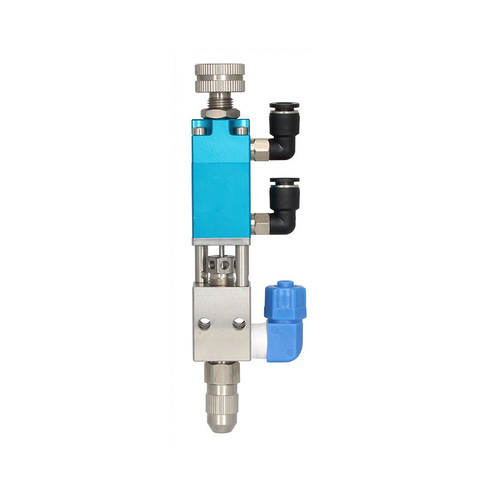
What Is an AB Glue Dispenser Valve?
An AB glue dispenser valve is a specialized fluid control component used in dispensing two-component adhesives, commonly known as A/B glue. These adhesives typically consist of two separate materials that react or cure when combined, such as epoxy, polyurethane, or certain silicone formulations.
The valve helps control the delivery of the two components during the dispensing process. Depending on the system design, the A and B materials travel through separate fluid passages and are combined in a designated mixing chamber or mixing nozzle before application.
AB glue dispensing solutions are widely used in electronics manufacturing, automotive assembly, industrial bonding, LED production, and other applications that require controlled adhesive application.
For manufacturers working with reactive adhesives, choosing the right AB glue dispenser valve helps improve process consistency, reduce material waste, and support reliable production.
How Does an AB Glue Dispenser Valve Work?
A typical AB glue dispensing system includes separate material supplies for components A and B, a metering or pumping system, a dispensing valve, and a mixing unit.
The dispensing process generally involves four steps:
1. Separate Material Supply
Components A and B are stored in separate containers to prevent premature chemical reactions. Each material is delivered through its own fluid path.
2. Accurate Metering
A compatible metering system controls the amount of each component according to the adhesive manufacturer’s specified mixing ratio. Depending on the equipment design, metering may be performed by precision pumps or another dedicated dosing mechanism.
3. Controlled Dispensing
The AB glue dispenser valve opens and closes to control the delivery of the materials. The valve’s design, response characteristics, and compatibility with the adhesive influence dispensing performance.
4. Mixing and Application
The two components are combined in a suitable static mixer, dynamic mixer, or integrated mixing assembly, depending on the system. The mixed adhesive is then applied to the target surface.
It is important to distinguish valve control from ratio control: the dispensing valve regulates material flow, while the metering system is generally responsible for maintaining the required A-to-B ratio.
Key Benefits of an AB Glue Dispensing Valve
1. Controlled Adhesive Application
A suitable AB glue dispensing valve helps deliver adhesive to specific locations with repeatable dispensing cycles. This is particularly useful for automated assembly processes that require consistent bonding.
2. Support for Two-Component Materials
The system is designed to keep reactive components separated until the intended mixing stage. Appropriate valve and fluid-path design helps reduce the risk of premature curing inside the equipment.
3. Reduced Material Waste
Controlled dispensing can help reduce excessive adhesive application, unwanted dripping, and material loss. Proper shutdown, purging, and cleaning procedures are also important for minimizing waste.
4. Integration with Automated Equipment
Depending on the model, an AB glue dispenser valve can be integrated into robotic workstations, automated assembly lines, and programmable dispensing equipment to support repeatable production cycles.
5. Flexible Industrial Applications
Different valve configurations can accommodate different adhesive viscosities, dispensing volumes, operating conditions, and production requirements. Selecting the right configuration is essential for dependable operation.
Applications of AB Glue Dispenser Valves
AB glue dispensing systems are used in a wide range of industries.
- Electronics manufacturing: Bonding electronic components, potting assemblies, and applying protective compounds.
- Automotive industry: Applying structural adhesives, sealing materials, and two-component bonding agents.
- LED manufacturing: Dispensing compatible encapsulation and bonding materials.
- Industrial equipment: Bonding metal, plastic, and composite components with suitable two-part adhesives.
- Electrical manufacturing: Potting and encapsulating components where the adhesive system meets the required insulation and process specifications.
- Precision assembly: Applying controlled quantities of two-component adhesive to designated bonding areas.
The best valve depends on the adhesive formulation, required output, production cycle, and application method.
How to Choose the Right AB Glue Dispenser Valve
Before purchasing an AB glue dispensing valve, evaluate the following factors.
Adhesive compatibility: Confirm that the valve body, seals, and wetted components are compatible with both adhesive components.
Mixing ratio: Identify the required A-to-B ratio and verify that the complete dispensing system can maintain it under actual operating conditions.
Fluid viscosity: Consider the viscosity of both components, including any differences between them. High-viscosity adhesives may require suitable pumps, larger flow passages, or specialized valve configurations.
Dispensing volume: Define the required shot size, bead dimensions, or continuous dispensing rate to select an appropriate valve and nozzle.
Operating pressure: Check the fluid supply pressure and pneumatic actuation pressure separately, where applicable. Both must remain within the equipment’s specified limits.
Production requirements: Evaluate response time, dispensing frequency, automation compatibility, maintenance access, and cleaning procedures.
Supplier support: Look for clear technical specifications, product documentation, replacement parts, and application guidance.
Providing your supplier with the adhesive type, mixing ratio, viscosity, target dispensing volume, and application details can make equipment selection more efficient.
Why Choose a Professional AB Glue Dispenser Valve Supplier?
A professional AB glue dispenser valve supplier should understand the challenges of two-component adhesive dispensing and help customers identify suitable equipment configurations.
When comparing suppliers, consider manufacturing quality, material compatibility, dispensing consistency, customization options, technical documentation, and after-sales service.
For demanding applications, testing the valve with the actual adhesive is often the most effective way to verify compatibility and performance. This can help identify potential issues involving curing, dripping, pressure stability, or cleaning before full-scale production.
Choosing the right dispensing solution can improve process reliability and help manufacturers control adhesive consumption over time.
Frequently Asked Questions About AB Glue Dispenser Valves
What is an AB glue dispenser valve used for?
An AB glue dispenser valve controls the delivery of two-component adhesives, such as compatible epoxy and polyurethane formulations. It is commonly used in automated bonding, sealing, potting, and encapsulation processes.
Can an AB glue dispenser valve control the mixing ratio?
The valve alone does not necessarily control the mixing ratio. In most systems, a metering mechanism determines the amount of each component, while the valve controls dispensing. The complete system must be configured to meet the adhesive manufacturer’s specified ratio.
Which adhesives can an AB glue dispensing valve handle?
Depending on its design and material compatibility, an AB glue dispensing system may handle epoxy, polyurethane, silicone, and other two-component adhesives. Compatibility should be confirmed for the specific adhesive formulation.
How can I prevent AB glue from curing inside the valve?
Keep components A and B separated until the intended mixing point, use a suitable mixing arrangement, and follow the manufacturer’s recommended shutdown, purging, and cleaning procedures. Mixed adhesive should not remain in passages that are not designed to accommodate curing material.
What information is needed to select an AB glue dispenser valve?
The most useful details include adhesive type, A-to-B mixing ratio, component viscosities, dispensing volume, operating pressure, required cycle rate, and application environment.
Find the Right AB Glue Dispenser Valve for Your Production Line
Reliable two-component adhesive dispensing starts with the right combination of valve design, metering accuracy, material compatibility, and mixing technology.
Whether you are upgrading an existing production line or developing a new automated bonding process, selecting a suitable AB glue dispenser valve can help improve dispensing consistency, reduce material waste, and support efficient manufacturing.
Contact an experienced dispensing equipment supplier to discuss your application requirements and identify the right solution for your two-component adhesive process.
