

Electronic Component Dispensing Valve | A Buyer’s Guide to Selection and OEM Sourcing
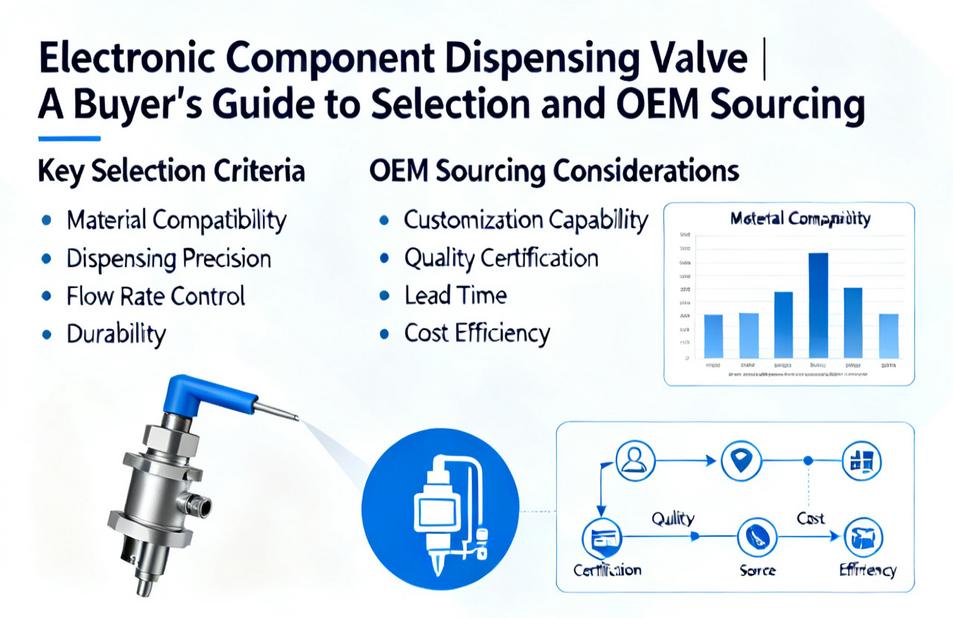
An electronic component dispensing valve is a precision fluid control device used to apply controlled amounts of adhesive, solder paste, epoxy, conformal coating, flux, or other process fluids onto printed circuit boards and electronic assemblies. In SMT lines, PCB assembly cells, and microelectronics production, this type of dispensing valve helps maintain repeatable deposit size and placement so that downstream processes such as bonding, sealing, and protection can run consistently. For procurement teams and process engineers sourcing dispensing hardware, understanding how these valves work, where they fit, and what to evaluate before ordering is essential to matching the right unit to a specific production environment.
What an Electronic Component Dispensing Valve Does
In electronics manufacturing, fluid application is rarely a simple open-and-close task. Deposits may be very small, cycle times are short, and the fluid itself may be abrasive, filled, moisture-sensitive, or fast-curing. An electronic component dispensing valve regulates the release of material from a reservoir or pressure pot to the dispensing tip, using pneumatic, piezoelectric, or electro-mechanical actuation depending on the design. The valve opens and closes in response to a signal from a dispenser controller or machine motion system, and the resulting deposit is determined by valve timing, nozzle geometry, fluid viscosity, and feed pressure.
These valves are commonly integrated into automated dispensing platforms, gantries, and inline conveyor systems, but they can also be mounted on benchtop dispensers for lower-volume or prototype work. Because the electronics sector covers a wide range of fluid types and substrate layouts, dispensing valves are available in several actuation principles and mounting configurations.
Common Valve Types in Electronics Dispensing
Pneumatic Dispensing Valves
Pneumatic valves use air pressure to actuate a piston or diaphragm, making them a practical choice for many adhesives, silicones, and conformal coatings. They are relatively straightforward to control and can be adapted to different needle and nozzle sizes. Buyers often select pneumatic models when the fluid is compatible with air-driven actuation and when the production mix includes several materials.
Piezoelectric Dispensing Valves
Piezoelectric valves use a fast-response actuator to create high-frequency dispensing cycles. They are often considered for very small deposits and high-throughput applications where consistent micro-deposition matters. Because the actuation principle differs from pneumatic designs, fluid compatibility and controller matching should be confirmed with the valve manufacturer.
Time-Pressure and Auger-Based Systems
Some dispensing setups use time-pressure control, while others rely on auger or progressive cavity mechanisms to meter material. These approaches can be relevant for filled materials or fluids where a positive displacement method is preferred. The choice depends on deposit tolerance, fluid characteristics, and the surrounding machine architecture.
Key Features Buyers Should Evaluate
- Fluid compatibility: confirm that wetted parts and seals are suitable for the adhesive, flux, solder paste, or coating being used.
- Deposit repeatability: review how the valve controls shot size and whether the controller supports the required timing resolution.
- Cycle speed: match valve response to the takt time of the dispensing line.
- Mounting and integration: check interface dimensions, signal type, and compatibility with existing gantries or robot arms.
- Maintenance access: consider how easily nozzles, seals, and valve components can be cleaned or replaced during production.
- Nozzle and needle options: verify the availability of tip sizes suited to the target deposit footprint.
For many electronics applications, the valve is only one part of the dispensing system. Feed pressure regulation, fluid degassing, temperature control, and motion programming all influence final deposit quality, so buyers should treat valve selection as part of an integrated process decision.
Materials and Construction Considerations
Wetted materials matter in electronics dispensing because process fluids can react with incompatible metals or elastomers. Stainless steel components are common in many valve bodies, while seal materials are selected according to chemical compatibility. Some applications require fluid paths that minimize dead volume to reduce material waste and cleaning time. When reviewing a supplier’s documentation, ask for material specifications for the fluid path and replaceable wear parts rather than relying on general descriptions.
Housing and actuator design also affect durability in production environments. Valves that are exposed to frequent cleaning, vibration, or elevated ambient temperatures may need a construction suited to those conditions. The objective is not simply a valve that works on day one, but one that maintains performance through normal production cycles.
Typical Industrial Applications
Electronic component dispensing valves appear across PCB assembly, semiconductor packaging support, LED assembly, sensor production, and general microelectronics manufacturing. Specific uses include applying underfill, encapsulating components, dispensing thermal interface material, placing solder paste in low-volume or rework operations, and applying conformal coating to selected board areas. In each case, the valve must be matched to the fluid rheology and the deposit geometry required by the product design.
Beyond electronics, similar valve designs may be used in medical device assembly, automotive electronics, and precision mechanical assembly where small, repeatable fluid deposits are needed. Buyers should describe the actual fluid and substrate to the valve supplier, because a valve that performs well with one material may behave differently with another.
How to Choose the Right Valve for Your Line
Start with the fluid: viscosity, filler content, pot life, and curing behavior all influence valve type and nozzle choice. Next, define the deposit: size, shape, tolerance, and placement accuracy. Then review machine integration, including controller compatibility, mounting space, and signal timing. Finally, consider production volume and maintenance strategy. A valve that is easy to service can reduce downtime, while a design with limited service access may create hidden operating costs.
When comparing quotations, request dimensional drawings, fluid path material details, and recommended spare parts. If the application is new, ask whether the supplier can support sample testing or provide application guidance based on the fluid data sheet. This is often more useful than comparing headline specifications alone.
OEM and Customization Options
Many dispensing valve manufacturers offer OEM supply and custom configurations for equipment builders and distributors. Customization may include nozzle adaptation, mounting bracket design, signal interface changes, private labeling, or packaging suitable for the customer’s service network. Buyers should clarify which elements are truly customizable and which are standard options, and should request written specifications before committing to a production order. For OEM projects, discussing annual volume, technical support expectations, and documentation requirements early helps avoid mismatches later.
Buying Considerations and Supplier Selection
Selecting a dispensing valve supplier involves more than price. Evaluate whether the factory can explain fluid compatibility clearly, provide consistent dimensional data, and respond to technical questions about integration. Ask about production capacity, quality control procedures, and the availability of replacement parts. For international buyers, communication responsiveness and export documentation experience are practical factors. A supplier that understands electronics dispensing applications can often help identify potential issues before the valve reaches the production floor.
Frequently Asked Questions
How do I know which dispensing valve type fits my adhesive?
Begin with the fluid data sheet and share viscosity, filler content, and curing characteristics with the valve supplier. The supplier can then recommend pneumatic, piezoelectric, or positive displacement options based on deposit size and cycle time requirements.
Can a dispensing valve be integrated into my existing dispensing machine?
Integration depends on mounting dimensions, signal type, and controller compatibility. Provide the machine interface details to the valve manufacturer so the mounting and control requirements can be checked before purchase.
Do suppliers offer OEM or custom valve configurations?
Many manufacturers support OEM projects and custom options such as nozzle adaptation, mounting changes, and private labeling. Confirm the scope of customization and request written specifications for the proposed configuration.
What spare parts should I keep in stock?
Common wear items typically include seals, nozzles, and selected actuator components. The exact list depends on valve design and production intensity, so ask the supplier for a recommended spare parts list based on your application.
Conclusion
Choosing an electronic component dispensing valve requires a clear understanding of the fluid, the deposit requirement, and the machine environment. Buyers who compare valve types against actual process needs, confirm material compatibility, and evaluate supplier technical support are better positioned to achieve stable dispensing results. If you are reviewing options for a new line or an OEM project, contact the supplier with your fluid details, deposit specifications, and integration requirements to discuss suitable configurations and customization possibilities.
