

Air Operated Dispensing Valve | Industrial Dispensing Solutions
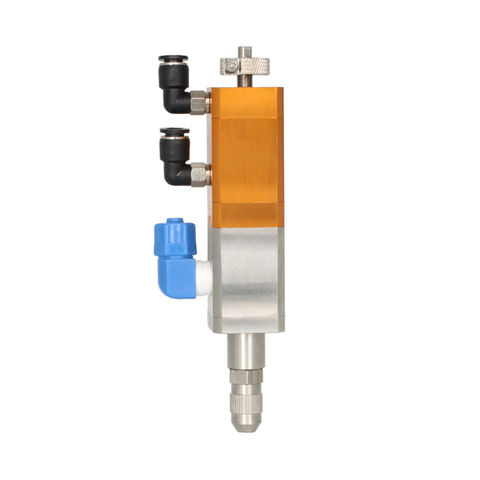
What Is an Air Operated Dispensing Valve?
An air operated dispensing valve is a fluid control device that uses compressed air to actuate its internal mechanism and regulate the delivery of compatible liquids, adhesives, sealants, lubricants, and other industrial materials.
It is commonly used in manufacturing processes that require controlled fluid application, repeatable dispensing cycles, and integration with automated equipment.
Depending on its design, an air operated dispensing valve can deliver individual droplets, controlled shots, continuous beads, or other dispensing patterns. Different configurations are available for different material viscosities, operating conditions, and production requirements.
Unlike a manually operated valve, an air operated dispensing valve can receive control signals from a dispensing controller or automated system, helping manufacturers standardize material application and reduce repetitive manual operations.
For businesses seeking dependable fluid control, selecting the right air operated dispensing valve is an important step toward improving production consistency and process efficiency.
How Does an Air Operated Dispensing Valve Work?
An air operated dispensing valve uses compressed air to move an internal piston, diaphragm, or other actuation mechanism, depending on the valve design. This movement opens or closes the fluid passage and controls when material is released.
A typical dispensing system includes four main components:
1. Compressed Air Supply: Provides the actuation force required to operate the valve.
2. Fluid Supply System: Delivers adhesive or another compatible material through a reservoir, cartridge, pump, or pressure-fed system.
3. Control Unit: Sends the operating signal that determines when the valve opens and closes.
4. Dispensing Nozzle: Directs the material toward the target component or surface.
During operation, the control system activates the valve, allowing material to flow through the outlet. When the actuation signal is removed, the valve returns to its designed closing position, depending on its operating principle.
It is important to distinguish actuation air pressure from fluid supply pressure. Actuation pressure operates the valve mechanism, while fluid pressure drives material through the fluid passage. Both must remain within the manufacturer’s specified operating ranges.
The final dispensing result depends on valve construction, fluid viscosity, supply stability, nozzle dimensions, and control timing.
Key Benefits of Air Operated Dispensing Valves
1. Consistent Dispensing Cycles
Air operated dispensing valves support repeatable opening and closing operations. When the fluid supply and operating parameters remain stable, they can help maintain consistent material application across production cycles.
2. Easy Integration with Automation
These valves can be integrated into compatible robotic workstations, automated assembly machines, and programmable manufacturing systems. This makes them suitable for repetitive industrial dispensing tasks.
3. Flexible Fluid Applications
Depending on the model and material compatibility, an air operated dispensing valve can handle various adhesives, sealants, lubricants, and other process fluids.
4. Reduced Material Waste
Appropriate valve selection and process adjustment can help reduce excessive application, unwanted dripping, and unnecessary material consumption.
5. Practical Industrial Operation
Compressed-air actuation provides a straightforward method of controlling valve movement. Proper air quality, pressure regulation, and routine maintenance help support reliable operation.
Actual performance depends on the valve design, material characteristics, and complete dispensing system.
Industrial Applications of Air Operated Dispensing Valves
Air operated dispensing valves are used across a wide range of manufacturing industries.
- Electronics manufacturing: Applying adhesives, protective compounds, and assembly materials to electronic components.
- Automotive production: Dispensing compatible bonding agents, sealants, and lubricants.
- LED manufacturing: Applying suitable bonding and encapsulation materials.
- Electrical equipment: Delivering compatible insulating compounds and assembly adhesives.
- Industrial machinery: Applying grease, thread-locking compounds, and other functional fluids.
- Automated assembly: Controlling adhesive application during repetitive production processes.
The appropriate valve depends on the fluid’s viscosity, required dispensing volume, application pattern, operating conditions, and production speed.
How to Choose the Right Air Operated Dispensing Valve
Selecting the right air operated dispensing valve requires matching the valve to the material and manufacturing process.
Fluid viscosity: Confirm that the valve can handle the material’s flow characteristics. High-viscosity adhesives may require specialized valve designs and suitable fluid delivery equipment.
Dispensing volume: Determine whether the application requires small droplets, individual shots, continuous beads, or larger deposits.
Actuation pressure: Check the required compressed-air pressure and ensure that the control system can supply it consistently.
Fluid supply pressure: Verify the pressure required to deliver the material through the valve without exceeding the equipment’s limits.
Material compatibility: Ensure that the valve body, seals, and other wetted components are compatible with the fluid’s chemical properties.
Response and cycle frequency: Consider opening and closing response, production speed, and the repeatability required by the application.
Maintenance requirements: Evaluate cleaning access, replacement parts, seal service life, and the potential for material buildup.
Before requesting a quotation, provide your supplier with the fluid type, viscosity, required dispensing volume, operating pressures, cycle rate, and application details.
How to Prevent Dripping and Dispensing Problems
Dripping, inconsistent deposits, and nozzle blockage can affect production quality and increase material costs.
To minimize these problems, select a valve with suitable shutoff characteristics, maintain stable fluid supply conditions, and choose a nozzle appropriate for the material.
For adhesives that cure quickly or react with moisture, follow the manufacturer’s recommended handling, shutdown, and cleaning procedures. Ensure that the wetted components are compatible with the adhesive formulation.
If dispensing becomes inconsistent, inspect the fluid supply, nozzle condition, actuation pressure, and valve mechanism before changing operating parameters. Increasing air pressure without identifying the underlying problem may not improve performance.
Why Choose a Professional Air Operated Dispensing Valve Manufacturer?
A professional air operated dispensing valve manufacturer should provide clear technical specifications, consistent manufacturing quality, and application-specific guidance.
When comparing suppliers, review valve configurations, operating pressure ranges, material compatibility, customization options, product documentation, and after-sales support.
For specialized fluids or demanding production conditions, testing the valve with the actual material can help verify dispensing consistency, shutoff performance, and compatibility before full-scale implementation.
The right dispensing solution should meet your process requirements while balancing reliability, maintenance needs, material efficiency, and long-term operating costs.
Frequently Asked Questions
What is an air operated dispensing valve used for?
It controls the delivery of compatible fluids, including adhesives, sealants, lubricants, and other industrial materials. It is commonly used in automated manufacturing and precision assembly.
Is an air operated dispensing valve the same as a pneumatic dispensing valve?
The terms are often used interchangeably when describing valves actuated by compressed air. However, the exact operating principle and functions depend on the specific valve design.
Does an air operated dispensing valve require electricity?
The valve’s actuation mechanism uses compressed air, but the complete system may require electricity for its controller, sensors, pumps, or other equipment.
Can an air operated dispensing valve handle high-viscosity adhesives?
Some models are designed for high-viscosity adhesives and pastes. Suitability depends on valve construction, fluid supply pressure, outlet dimensions, and material properties.
What information is needed to select an air operated dispensing valve?
Provide the material type, viscosity, required dispensing volume, actuation pressure, fluid supply pressure, production cycle, and application environment.
Find the Right Air Operated Dispensing Valve for Your Application
Reliable fluid application starts with the right combination of valve design, compressed-air control, material compatibility, and process configuration.
Whether you need an air operated dispensing valve for adhesive bonding, industrial lubrication, or automated assembly, selecting equipment that matches your material and operating requirements is essential.
Contact an experienced air operated dispensing valve supplier to discuss your application, confirm technical compatibility, and find the right solution for your production process.