

Pressure Tank for Electronics Dispensing | Selection, Customization, and Supplier Guidance
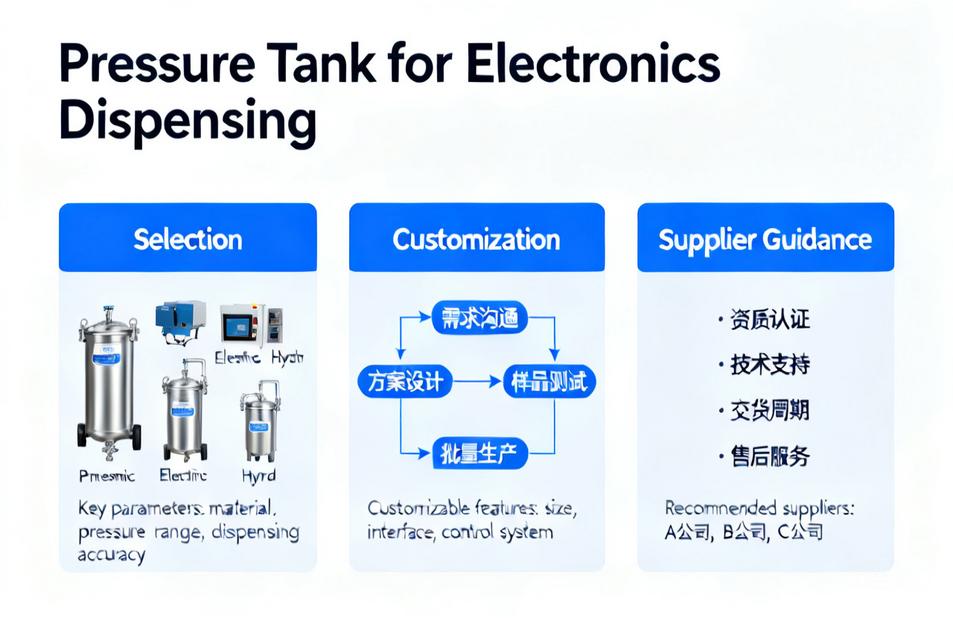
A pressure tank for electronics dispensing is a sealed vessel that uses compressed air or inert gas to deliver a steady, controlled flow of adhesive, sealant, conformal coating, or other liquid materials to a dispenser valve or nozzle. It is commonly used in PCB assembly, semiconductor packaging, LED production, and other precision manufacturing processes where consistent shot size and repeatable dispensing are critical. For buyers seeking a reliable pressure tank for electronics dispensing, understanding the design, material, and integration options is essential to achieving stable production output.
Product Overview: What Is a Pressure Tank for Electronics Dispensing?
In automated or semi-automated dispensing systems, a pressure tank acts as a reservoir and pressure source. The material to be dispensed is loaded into the tank, and regulated air pressure pushes the fluid through a hose to a dispensing valve, which then deposits the material onto the workpiece. This method is often preferred for low-to-medium viscosity fluids, such as UV adhesives, cyanoacrylates, solder paste, and some potting compounds. Unlike syringe-based dispensing, a pressure tank allows for larger volumes and less frequent refills, which improves production uptime. It also provides a more consistent pressure head, which is important for achieving uniform bead width or dot size in electronics applications.
Key Features to Look For in a Pressure Tank
When evaluating a pressure tank for electronics dispensing, consider the following structural and operational features. A well-designed tank should include a quick-open lid or clamp for easy cleaning, a pressure regulator with gauge for precise control, and a safety valve to prevent over-pressurization. The tank should also have a bottom outlet with a fitting that matches your existing hose or valve connections. Many tanks are equipped with a transparent sight tube (e.g., PTFE or polypropylene) to indicate the remaining fluid level, which is helpful for planning refills and preventing air entrapment. Another important feature is the ability to agitate or stir the material, especially if the fluid contains fillers or tends to separate over time. Some tanks offer a motorized stirrer or a manual paddle that can be mounted through the lid.
Materials and Construction
The material of the pressure tank must be compatible with the chemical composition of the fluid being dispensed. For most solvent-based adhesives and coatings, a stainless steel tank (e.g., 304 or 316) is recommended due to its corrosion resistance and easy cleaning. For reactive materials like cyanoacrylates (super glue), anodized aluminum or PTFE-lined tanks may be required to prevent premature curing or contamination. The tank body should be smooth and free of internal crevices where dried residue can accumulate. Also consider the maximum working pressure rating, which is typically between 1 and 10 bar, but the exact rating must be matched to your system’s air supply and the fluid’s viscosity. A higher working pressure allows for faster dispensing of thicker materials, while lower pressure is preferred for thin fluids to avoid splashing or overspray.
Industrial Applications in Electronics Manufacturing
The pressure tank for electronics dispensing is used across multiple stages of electronics production. One common application is conformal coating on PCBs, where a thin protective layer is applied to the circuit board to resist moisture, dust, and thermal cycling. Another application is dispensing solder paste for reflow soldering in surface-mount technology (SMT) lines. In semiconductor packaging, pressure tanks are used to apply die attach adhesive, underfill materials, and glob-top compounds. They are also used in LED manufacturing for phosphor dispensing and lens bonding, and in medical device assembly for adhesive bonding of components. The key benefit in all these cases is the ability to maintain a consistent dispensing rate, which directly impacts yield and quality.
How to Choose the Right Pressure Tank for Your Process
Choosing the correct pressure tank involves several technical considerations. First, estimate the volume of material you need to dispense per shift. If you use less than 100 cc per day, a syringe-based dispenser may be more economical, but for higher volumes, a tank capacity of 1, 2, 5, or 10 liters is common. Second, check the viscosity range of your material. Very high-viscosity pastes may require a tank with a larger outlet and a wider fluid path, and may also need a higher pressure range. Third, consider the frequency of color or material changes. If you change fluids frequently, a smaller tank with a quick-release lid and a disposable liner may be more convenient. Fourth, think about the control system. Some tanks are designed to be used with a manual regulator, while others can be integrated with a PLC or a dispensing controller that adjusts pressure automatically based on a programmed recipe. Finally, do not forget the fittings and compatibility. The tank’s outlet thread (e.g., NPT, BSP, or flange) must match your dispensing valve inlet. Many suppliers offer adapters, so communicate your existing equipment specifications when requesting a quote.
Customization and OEM Options
If you have specific requirements that are not met by standard off-the-shelf tanks, a custom pressure tank may be a viable solution. As a buyer, you can work with a manufacturer or factory that offers OEM services. Customization options include tank capacity, outlet size and location, lid type (e.g., single clamp or triple clamp), pressure gauge precision, and the addition of an agitator or a heated jacket for materials that need temperature control. Some suppliers also offer a PTFE coating inside the tank to prevent chemical attack. When requesting a custom design, provide a detailed specification sheet, including the fluid name (or a datasheet), viscosity, solids content, and any temperature limitations. This helps the manufacturer recommend the right material and sealing elements, such as O-rings made of Viton, EPDM, or PTFE.
Buying Considerations: What to Ask Your Supplier
When you contact a pressure tank supplier or manufacturer, ask about the following points to ensure the tank will meet your process requirements. First, confirm the maximum working pressure and whether the tank has passed a pressure test. Second, ask about the internal surface finish, especially if you are dispensing adhesives that are sensitive to contamination. Third, inquire about the availability of spare parts, such as seals, regulators, and gauges. Fourth, request the technical drawing or dimensional layout to verify installation space. Fifth, ask about the minimum order quantity (MOQ) and lead time, but do not rely on a generic answer; lead time often depends on the current production schedule. Sixth, clarify the warranty policy and after-sales support. A reliable supplier should be able to provide application guidance and recommend the appropriate tank model based on your dispensing system.
Supplier Selection: Manufacturer vs. Trading Company
When sourcing a pressure tank for electronics dispensing, you may encounter both manufacturers (factories) and trading companies. Working directly with a manufacturer often provides better opportunities for customization, faster problem resolution, and more competitive pricing, especially for high-volume orders. However, a well-established trading company can also connect you with proven factories and may offer additional services such as quality inspection and logistics coordination. To evaluate a supplier, ask for product photos, a factory audit report (if available), and test certificates for pressure vessels. If possible, request a sample for trial dispensing with your actual material. This is a practical way to verify performance before placing a bulk order. Also, consider the supplier’s experience in the electronics industry. A supplier that has provided tanks to PCB assembly lines or semiconductor plants is more likely to understand your specific requirements.
Frequently Asked Questions
How does a pressure tank for electronics dispensing work?
A pressure tank works by filling the container with liquid material, then introducing compressed air or inert gas at a regulated pressure. The pressure forces the fluid upward through a dip tube or downward to the outlet, from where it flows through a hose to a dispensing valve. The valve opens and closes to control the flow, and the tank pressure determines the flow rate and consistency.
Can I use a pressure tank with high-viscosity pastes?
Yes, but you need to select a tank with a larger outlet and possibly a higher working pressure. Some high-viscosity materials may also require a piston-type pressure tank (also called a ram pressure tank) that applies pressure directly on the surface of the material, rather than relying only on air pressure to push through a dip tube. Discuss your material’s viscosity with the supplier to get the right recommendation.
What is the difference between a single-air and dual-air pressure tank?
A single-air tank uses air pressure only to push the fluid. A dual-air tank provides air pressure to push the fluid and an additional separate air line that may be used for a dispensing valve or to agitate the material. Dual-air tanks are useful when the dispensing valve requires an airline to open and close, or when you need to purge the system with a different pressure setting.
Do I need a regulator with a gauge on the tank?
Yes, a pressure regulator with a gauge is essential for reproducible dispensing. Without it, variations in the factory air supply will cause inconsistent flow rates, leading to defective products. A precision regulator with a small pressure range is recommended for low-viscosity materials, where even a 0.1 bar change can affect the dispensed dot size.
Conclusion
A pressure tank for electronics dispensing is a critical component for achieving consistent, high-quality results in automated fluid application. When selecting a tank, prioritize material compatibility, pressure accuracy, ease of cleaning, and integration with your existing dispensing system. Do not hesitate to request a sample or a trial run using your own adhesives or coatings. A reputable manufacturer or supplier will guide you through the selection and customization process, ensuring that the tank meets your production requirements. If you have questions about spec, configuration, or OEM possibilities, contact a verified supplier and provide them with your fluid data and equipment details to receive a tailored proposal.