

Automotive Adhesive Dispensing Valve | A Buyer’s Guide to Selection and OEM Sourcing
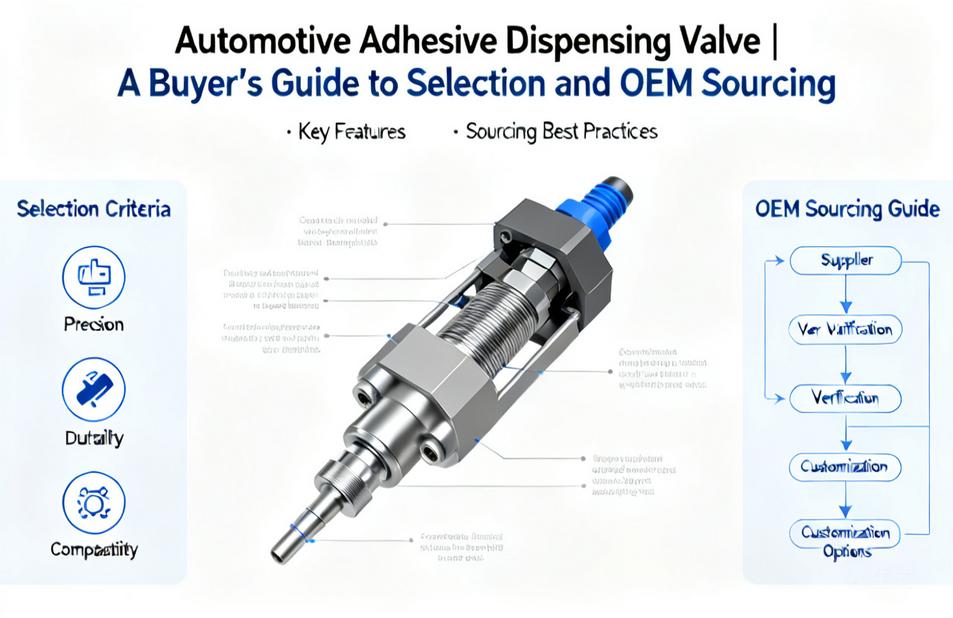
An automotive adhesive dispensing valve is a precision fluid-handling component used to control the flow, volume, and placement of adhesives, sealants, and similar materials during vehicle assembly and component manufacturing. It sits at the point where material leaves the supply system and is applied to the workpiece, and its performance directly affects bead consistency, joint quality, material waste, and production cycle time. For overseas buyers sourcing dispensing components for automotive lines, understanding how these valves work and what to evaluate before placing an order is essential for matching the right valve to the process.
What the Valve Does in an Automotive Dispensing System
In a typical adhesive application setup, adhesive is fed from a drum or pail through a pump and hose to the dispensing valve, which opens and closes to release material in a controlled manner. The valve may be operated manually, pneumatically, or electrically, and it may be mounted on a robot arm, a fixed bracket, or a handheld applicator. The valve’s job is to start and stop the adhesive flow cleanly, maintain a stable bead, and avoid drips, strings, or cured material buildup at the nozzle.
Automotive plants use these valves across many stages, including body-in-white structural bonding, hem flange sealing, window glazing, interior trim attachment, and underbody coating. Because adhesive chemistry varies widely, from one-component polyurethane to two-component epoxy and heat-cured structural adhesives, the valve must be matched to the material’s viscosity, reactivity, and abrasive content.
Key Features Buyers Should Review
Flow Control and Shut-off Behavior
Clean shut-off is one of the most important characteristics of an adhesive dispensing valve. A valve that closes slowly can leave a tail or drip that contaminates the workpiece or the robot path. Look for designs with a positive needle or piston shut-off and consider how the valve behaves at the end of each dispense cycle. Snuff-back or suck-back features can help pull material away from the nozzle after dispensing.
Wetted Materials and Sealing
Adhesives used in automotive assembly can be moisture-curing, solvent-containing, or filled with abrasive particles. Valve bodies, needles, and seals must be compatible with the specific chemistry. Buyers should confirm the wetted materials offered by the manufacturer and ask how seals perform with the intended adhesive. Do not assume one seal material suits every application.
Mounting and Integration
The valve must integrate with the robot, gantry, or fixture it will be attached to. Check mounting patterns, weight, and access to adjustment points. For automated lines, consider whether the valve supports position feedback, purge circuits, or quick-disconnect nozzles that reduce maintenance downtime.
Adjustability and Repeatability
Operators and process engineers need to tune dispense volume and bead width without rebuilding the system. Look for adjustable stroke, regulator compatibility, and repeatable settings that can be documented for quality control. Repeatability matters more than maximum flow rate in most automotive bonding operations.
Materials and Construction Considerations
Stainless steel wetted parts are common where corrosion resistance and cleaning are priorities, while aluminum bodies are used where weight matters. Nozzle and needle materials should be selected for wear resistance when dispensing filled adhesives. Buyers should ask for a material breakdown of all wetted components and confirm that seals and seats are available as replacement parts. A valve that cannot be serviced with readily available spares becomes a production risk in high-volume automotive plants.
Typical Industrial Applications
Automotive adhesive dispensing valves appear in structural bonding of body panels, application of seam sealers, windshield and backlite glazing, attachment of brackets and reinforcements, battery pack assembly for electric vehicles, and interior component bonding. Each application places different demands on bead size, cycle time, and material compatibility, so the same valve design may need different nozzle and seal configurations for different jobs.
Suppliers serving automotive tiers often need valves that can be documented for process validation and traceability. Discussing the application with the manufacturer early helps avoid mismatches between the valve and the adhesive system.
How to Choose the Right Valve for Your Line
Start with the adhesive specification: chemistry, viscosity, fillers, pot life, and cure method. Then define the dispense requirement: bead width and height, dispense volume per cycle, cycle time, and whether the valve will be robot-mounted or fixed. Consider the supply system, including pump type and pressure stability, because valve performance depends on stable upstream flow. Finally, review maintenance access, spare parts availability, and operator training needs.
For custom or OEM projects, prepare a short application brief that includes the material datasheet, a description of the workpiece, target cycle time, and any line integration constraints. A qualified manufacturer can then recommend a valve configuration or propose a custom variant.
Customization and OEM Options
Many suppliers offer OEM and custom configurations for automotive customers, including special mounting brackets, nozzle extensions, seal materials, and actuator options. Custom work may also involve matching valve interfaces to existing robot tooling or integrating sensors for process monitoring. When discussing customization, clarify which components are standard and which are project-specific, and ask how replacement parts will be supplied over the life of the program.
Supplier Selection and Buying Considerations
When comparing suppliers, look for experience with automotive adhesive systems, clear material and dimension documentation, and a willingness to discuss application details before quoting. Ask about service parts, technical support, and how the supplier handles changes to adhesive chemistry or line requirements. If you need a factory partner for volume production, review their production and quality processes directly rather than relying on general claims. Sample evaluation on your own material and equipment is the most reliable way to confirm fit.
Frequently Asked Questions
Can one valve handle both one-component and two-component adhesives?
Not always. Two-component materials usually require metering and mixing upstream of the valve, and the valve must be compatible with the mixed material’s cure behavior. Discuss the full material system with the supplier before selecting a valve.
How do I match a dispensing valve to my robot or dispensing machine?
Check mounting pattern, weight, actuator type, and control signal compatibility. Share the tooling interface and cycle requirements with the manufacturer so the valve can be configured correctly.
Are custom nozzle and seal configurations available?
Many manufacturers offer custom nozzle lengths, orifice sizes, and seal materials for specific applications. Request drawings and material specifications for approval before production.
What information should I provide for an accurate quotation?
Provide the adhesive datasheet, target bead size, cycle time, mounting method, supply pressure range, and any line integration requirements. This helps the supplier recommend a suitable valve and identify customization needs.
Conclusion
Selecting an automotive adhesive dispensing valve comes down to matching the valve to the adhesive, the dispense requirement, and the production environment. Buyers should prioritize clean shut-off, material compatibility, serviceability, and clear technical documentation over broad marketing claims. If you are evaluating options for a new line or replacing an existing valve, contact a qualified manufacturer or supplier with your application details, and ask about OEM or custom configurations that fit your equipment and production goals.
