

Suck Back Dispensing Valve | Anti-Drip Dispensing Solutions
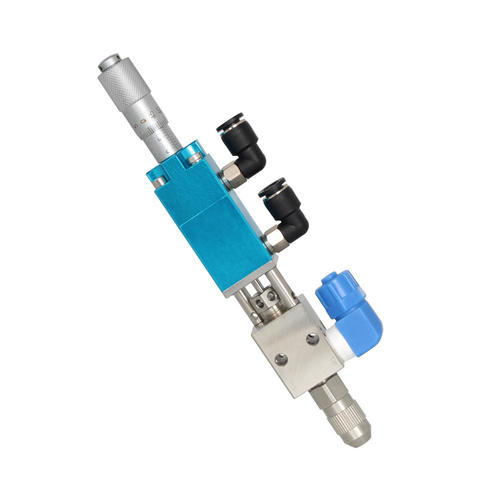
What Is a Suck Back Dispensing Valve?
A suck back dispensing valve is a specialized fluid control valve designed to reduce unwanted dripping and residual material flow at the end of a dispensing cycle. It uses a reverse-suction or material-retraction mechanism to draw a small amount of fluid back from the outlet when dispensing stops.
This function is particularly useful when working with adhesives, sealants, lubricants, and other compatible fluids that tend to drip, form strings, or leave excess material around the dispensing nozzle.
Unlike a conventional dispensing valve that primarily opens and closes the fluid passage, a suck back dispensing valve incorporates a mechanism intended to relieve residual fluid pressure or retract material near the outlet. The exact mechanism depends on the valve design.
For manufacturers seeking cleaner dispensing, reduced contamination, and more consistent adhesive deposits, a suitable suck back dispensing valve can help improve process control and production quality.
How Does a Suck Back Dispensing Valve Work?
A suck back dispensing valve controls material delivery and introduces a retraction action when the dispensing cycle ends. Depending on its design, this action may be generated by a retracting piston, diaphragm, needle mechanism, or another internal component.
A typical dispensing cycle involves four stages:
1. Material Supply: A compatible reservoir, cartridge, pump, or pressure-fed system delivers fluid to the valve.
2. Dispensing Activation: The valve opens and allows the material to flow through the outlet toward the target surface.
3. Dispensing Shutoff: The valve closes or interrupts the fluid supply when the programmed dispensing cycle ends.
4. Suck-Back Action: The mechanism retracts a small amount of material or relieves residual pressure near the outlet, helping reduce unwanted dripping.
The effectiveness of this process depends on the valve structure, fluid viscosity, supply pressure, nozzle geometry, and suck-back adjustment.
Suck-back is not the same as simply stopping fluid flow. It introduces a controlled retraction effect intended to manage residual material at the outlet.
Key Benefits of a Suck Back Dispensing Valve
1. Reduced Adhesive Dripping
Residual fluid can continue to move toward the nozzle after the valve closes. A suitable suck-back mechanism helps counter this behavior and reduce unwanted droplets.
2. Cleaner Dispensing Results
By limiting excess material at the nozzle, a suck back dispensing valve can help reduce contamination around bonding areas, fixtures, and nearby components.
3. Improved Deposit Consistency
Unwanted dripping can cause inconsistent deposit sizes and irregular adhesive placement. Properly adjusted suck-back operation helps improve repeatability under suitable operating conditions.
4. Reduced Material Waste
Less residual dripping and fewer dispensing defects can help reduce adhesive consumption and cleanup requirements. Actual savings depend on the material and process.
5. Support for Automated Production
Suck back dispensing valves can be integrated into compatible robotic systems, automated assembly machines, and programmable dispensing equipment.
Industrial Applications of Suck Back Dispensing Valves
Suck back dispensing valves are useful in applications where residual material at the outlet can affect product quality or manufacturing efficiency.
- Electronics manufacturing: Applying adhesives to circuit boards, connectors, sensors, and electronic components.
- Automotive assembly: Dispensing compatible bonding agents and sealants while minimizing unwanted material deposits.
- LED production: Applying suitable bonding and encapsulation materials.
- Precision component assembly: Controlling small adhesive deposits where excess material can interfere with nearby parts.
- Industrial bonding: Applying adhesives to metal, plastic, and composite components.
- Automated lubrication: Delivering compatible lubricants while helping control residual flow at the dispensing point.
The appropriate valve depends on fluid viscosity, dispensing volume, required cycle frequency, outlet geometry, and production conditions.
How to Choose the Right Suck Back Dispensing Valve
Selecting a suck back dispensing valve requires evaluating both its dispensing performance and its retraction mechanism.
Fluid viscosity: Confirm that the valve can handle the material’s flow characteristics. Thick adhesives and pastes may require a specialized design and suitable fluid supply equipment.
Suck-back adjustment: Determine whether the retraction effect can be adjusted to suit the material and application. Excessive suck-back may introduce air or cause inconsistent deposits.
Dispensing volume: Define the required droplet size, shot volume, or bead dimensions. Suck-back adjustment should not compromise the required deposit.
Material compatibility: Ensure that the valve body, seals, nozzle, and other wetted components are compatible with the fluid’s chemical properties.
Operating pressure: Verify the fluid supply pressure and any actuation pressure separately, following the manufacturer’s specifications.
Response and cycle frequency: Consider valve response, shutoff behavior, and repeatability at the intended production speed.
Maintenance requirements: Evaluate cleaning access, nozzle replacement, material buildup, and the risk of curing inside the fluid passage.
Before requesting a quotation, provide the supplier with the fluid type, viscosity, required dispensing volume, operating conditions, and application details.
How to Reduce Dripping and Stringing During Dispensing
Although a suck back dispensing valve is designed to help manage residual material, valve selection alone cannot eliminate every dispensing problem.
To improve results, maintain stable fluid supply pressure, choose a nozzle suited to the material, and optimize the suck-back setting through practical testing. Adhesive viscosity, temperature, curing behavior, and nozzle distance should also be considered.
If dripping continues, inspect the shutoff mechanism, fluid supply, and nozzle condition. If the valve retracts too much material, air may enter the fluid path or the next deposit may become inconsistent.
For fast-curing adhesives, follow the manufacturer’s recommended cleaning and shutdown procedures to prevent material buildup inside the valve.
Why Choose a Professional Suck Back Dispensing Valve Manufacturer?
A professional suck back dispensing valve manufacturer should provide clear technical specifications, application guidance, and support for selecting the correct valve configuration.
When comparing suppliers, review the retraction mechanism, material compatibility, available adjustment options, operating pressure limits, manufacturing quality, and after-sales support.
For demanding applications, test the valve with the actual fluid and nozzle before full-scale production. This helps verify whether the suck-back function reduces dripping without affecting dispensing volume or deposit consistency.
The right solution should balance clean dispensing, repeatability, maintenance requirements, and long-term operating costs.
Frequently Asked Questions
What is a suck back dispensing valve used for?
A suck back dispensing valve helps reduce dripping and residual fluid flow after dispensing. It is commonly used for adhesives, sealants, lubricants, and other compatible materials.
How does a suck back dispensing valve prevent dripping?
It uses a retraction mechanism to draw back a small amount of fluid or relieve residual pressure near the outlet when dispensing stops. The exact method depends on the valve design.
Can a suck back dispensing valve handle high-viscosity adhesives?
Some models are designed for high-viscosity materials. Suitability depends on the valve mechanism, retraction capability, fluid supply system, and adhesive properties.
Can excessive suck-back affect dispensing accuracy?
Yes. Excessive retraction can introduce air or affect the next deposit. The setting should be optimized for the fluid, nozzle, and required dispensing volume.
What information is needed to select a suck back dispensing valve?
Provide the material type, viscosity, dispensing volume, operating pressure, nozzle requirements, production cycle, and details of the dripping problem you want to solve.
Find the Right Suck Back Dispensing Valve for Your Application
Clean dispensing requires more than simply stopping fluid flow. The right combination of valve design, suck-back adjustment, nozzle selection, and process control helps manage residual material and improve production consistency.
Whether you are dispensing industrial adhesives, sealants, or other compatible fluids, a suitable suck back dispensing valve can help reduce dripping, minimize cleanup, and support more reliable automated manufacturing.
Contact an experienced suck back dispensing valve supplier to discuss your material, application requirements, and dispensing challenges, and find a solution tailored to your production process.
