

High Flow Dispensing Valve | Industrial Fluid Control Solutions
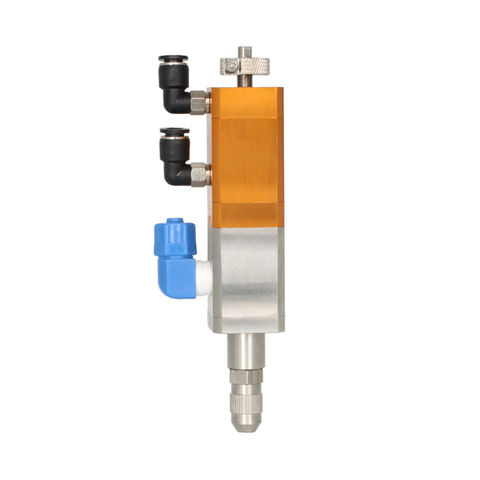
What Is a High Flow Dispensing Valve?
A high flow dispensing valve is an industrial fluid control device designed to deliver relatively large quantities of liquid or paste materials within a specified time. It is commonly used in manufacturing processes that require rapid material application, continuous fluid delivery, or the dispensing of larger adhesive deposits.
Depending on its design, a high flow dispensing valve can handle compatible adhesives, sealants, lubricants, coatings, and other process fluids. It can support applications involving continuous beads, large-volume deposits, filling, sealing, and automated material transfer.
Unlike micro-dispensing valves designed for very small deposits, high flow dispensing valves prioritize sufficient flow capacity and efficient material delivery. Their actual performance depends on the internal flow passage, valve mechanism, nozzle dimensions, fluid properties, and supply conditions.
For manufacturers looking to increase production throughput or apply larger amounts of material efficiently, selecting the right high flow dispensing valve is an important step toward improving process performance.
How Does a High Flow Dispensing Valve Work?
A high flow dispensing valve controls material delivery through an internal passage that opens, closes, or regulates fluid flow. Depending on the model, the valve may use pneumatic actuation, electric actuation, a piston mechanism, or another specialized design.
A typical dispensing system includes four main components:
1. Fluid Supply: A reservoir, pressure vessel, cartridge, or pump delivers material to the valve.
2. Valve Actuation: A control signal activates the valve mechanism to initiate or stop material delivery.
3. High Flow Delivery: Material passes through the valve’s internal passage and outlet at a rate suited to the application.
4. Flow Shutoff: The valve closes or reduces flow according to its operating design and the required dispensing sequence.
The achievable flow rate depends on material viscosity, supply pressure, passage dimensions, nozzle resistance, and temperature. A larger flow passage alone does not guarantee higher output if the fluid supply system cannot provide sufficient flow.
For demanding applications, the valve and supply system should be evaluated together to ensure stable material delivery.
Key Benefits of High Flow Dispensing Valves
1. Higher Material Throughput
A suitable high flow dispensing valve can deliver larger quantities of material within a defined cycle, supporting manufacturing processes that require rapid application or continuous flow.
2. Efficient Continuous Dispensing
For applications involving long adhesive beads, sealing lines, or repeated large deposits, a high flow valve can help maintain efficient material delivery when properly configured.
3. Reduced Production Bottlenecks
Matching valve capacity to the required output can reduce dispensing-related delays and help equipment operate at the intended production rate.
4. Flexible Industrial Applications
Different valve configurations can accommodate various compatible fluids, flow requirements, and dispensing patterns. The correct selection depends on the material and application rather than flow capacity alone.
5. Automation Compatibility
High flow dispensing valves can be integrated into automated assembly lines, robotic systems, filling equipment, and industrial dispensing machines, depending on their control interfaces.
Actual benefits depend on valve design, fluid characteristics, and the complete dispensing system.
Industrial Applications of High Flow Dispensing Valves
High flow dispensing valves are used in manufacturing processes where material delivery rate and application volume are important.
- Automotive manufacturing: Applying compatible sealants, adhesives, and bonding compounds to vehicle components.
- Industrial bonding: Delivering larger quantities of adhesive for structural assembly and component joining.
- Electronics and electrical equipment: Dispensing suitable potting compounds and encapsulation materials.
- Construction products: Applying compatible bonding agents and sealants during automated production.
- Packaging manufacturing: Controlling adhesive application in high-throughput assembly and packaging operations.
- Industrial filling and coating: Delivering compatible fluids into designated spaces or across surfaces where the required flow rate suits the valve design.
The right valve depends on material properties, required flow rate, application geometry, operating conditions, and production volume.
How to Choose the Right High Flow Dispensing Valve
Selecting a high flow dispensing valve requires evaluating the complete material delivery process.
Required flow rate: Determine the target flow rate and dispensing volume per cycle. Confirm that the valve can achieve the required output under actual operating conditions.
Fluid viscosity: Check the material’s viscosity at the intended operating temperature. High-viscosity materials may require a suitable pump, larger passages, or specialized valve mechanisms.
Flow passage and outlet size: Ensure that the internal passage, connections, and nozzle provide sufficient flow capacity without excessive restriction.
Operating pressure: Verify the required fluid supply pressure and, where applicable, pneumatic actuation pressure separately.
Material compatibility: Confirm that the valve body, seals, and other wetted components are compatible with the fluid’s chemical properties.
Dispensing pattern: Determine whether the application requires continuous beads, large shots, filling, or another delivery method.
Control and shutoff: Consider response time, flow regulation, residual dripping, and integration with the production system.
Maintenance requirements: Evaluate cleaning access, replacement parts, wear resistance, and the risk of material buildup.
Before requesting a quotation, provide your supplier with the fluid type, viscosity, target flow rate, operating pressure, required dispensing volume, and application details.
High Flow vs. High Viscosity Dispensing Valves
High flow and high viscosity describe different dispensing requirements.
A high flow dispensing valve is selected primarily for its ability to deliver a required quantity of material within a specified time.
A high viscosity dispensing valve is designed to handle materials that resist flowing easily through the fluid passage.
Some applications require both capabilities, such as dispensing thick adhesives at a high production rate. In these cases, the valve, pump, fluid passages, and nozzle must be matched to the material’s properties and target output.
Choosing a valve based on flow rate alone may lead to poor performance if the fluid supply system cannot maintain the required delivery conditions.
Why Choose a Professional High Flow Dispensing Valve Manufacturer?
A professional high flow dispensing valve manufacturer should provide clear technical specifications, material compatibility guidance, and application-specific recommendations.
When comparing suppliers, review rated flow capacity, operating pressure limits, available valve configurations, manufacturing quality, customization options, and after-sales support.
For demanding applications, testing the valve with the actual material can help verify flow stability, shutoff performance, and suitability for the intended production cycle.
The right dispensing solution should meet your throughput requirements while balancing reliability, material efficiency, maintenance needs, and long-term operating costs.
Frequently Asked Questions
What is a high flow dispensing valve used for?
It controls the delivery of relatively large quantities of compatible fluids, including adhesives, sealants, lubricants, and industrial compounds. It is commonly used in automated manufacturing, sealing, bonding, and filling applications.
What determines the flow rate of a dispensing valve?
Flow rate depends on valve design, internal passage dimensions, fluid viscosity, supply pressure, nozzle resistance, and temperature.
Can a high flow dispensing valve handle thick adhesives?
Some models can handle high-viscosity adhesives, but suitability depends on the valve mechanism, flow passage, supply system, and material characteristics.
Is a high flow dispensing valve suitable for automated production?
Yes. Many models can be integrated into automated assembly equipment and robotic systems, provided the valve’s actuation and control interfaces are compatible.
What information is needed to select a high flow dispensing valve?
Provide the material type, viscosity, required flow rate, dispensing volume, operating pressure, production cycle, and application environment.
Find the Right High Flow Dispensing Valve for Your Application
Efficient high-volume dispensing starts with the right combination of valve design, fluid supply capacity, material compatibility, and process control.
Whether you need to apply industrial adhesives, dispense sealants, or deliver larger quantities of process fluids, a suitable high flow dispensing valve can help support efficient material delivery and reliable manufacturing.
Contact an experienced high flow dispensing valve supplier to discuss your flow requirements, confirm technical compatibility, and identify a solution tailored to your production process.
