

Fan Spray Dispensing Valve | Industrial Spray Solutions
What Is a Fan Spray Dispensing Valve?
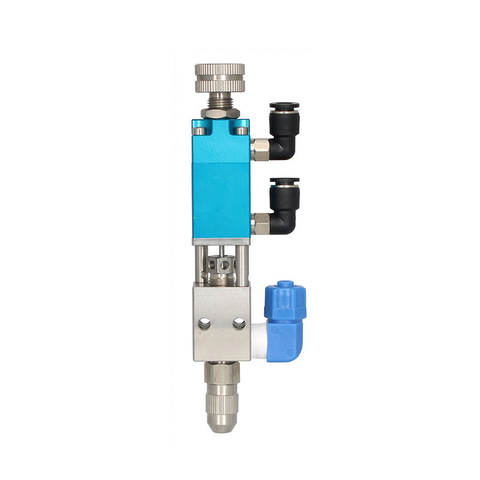
A fan spray dispensing valve is an industrial fluid control device designed to release compatible liquids in a flat, fan-shaped spray pattern. It combines controlled fluid delivery with a suitable spray nozzle or atomization assembly to distribute material across a defined surface area.
Unlike conventional dispensing valves that deposit individual drops or continuous beads, a fan spray dispensing valve is designed for applications requiring broader surface coverage. Depending on the equipment configuration, it can handle sprayable adhesives, primers, lubricants, coatings, release agents, and other compatible industrial fluids.
The valve regulates when material flows, while the nozzle and atomization mechanism determine the resulting spray pattern. Understanding how these components work together is essential when selecting equipment for a specific production process.
For manufacturers seeking consistent spray coverage and efficient fluid application, a properly configured fan spray dispensing valve can help improve process control and production repeatability.
How Does a Fan Spray Dispensing Valve Work?
A fan spray dispensing valve typically operates through a controlled fluid passage connected to a nozzle designed to produce a flat spray pattern. Depending on the model, atomization may rely on fluid pressure, compressed-air assistance, or another engineered mechanism.
A typical system follows four steps:
1. Fluid Supply: A compatible pump, reservoir, or pressure-fed system delivers the material to the valve.
2. Valve Activation: A control signal opens the valve and initiates fluid delivery according to the production sequence.
3. Fan Spray Formation: The nozzle shapes the discharged material into a fan-shaped pattern. In atomizing designs, the atomization mechanism helps break the fluid into droplets.
4. Surface Application: The spray is directed toward the target at a controlled distance and angle to achieve the required coverage.
Spray performance depends on nozzle geometry, fluid viscosity, supply pressure, atomization conditions, spray distance, and target surface characteristics. The valve, nozzle, and fluid supply should therefore be selected as a coordinated system.
Key Benefits of a Fan Spray Dispensing Valve
1. Wide and Defined Spray Coverage
A fan spray dispensing valve distributes material across a wider area than a concentrated dispensing outlet. This makes it suitable for applying thin layers of compatible coatings, adhesives, and functional fluids.
2. Improved Application Consistency
When the nozzle and operating parameters are properly matched, the system can produce repeatable spray patterns. Consistent coverage helps reduce variations in coating appearance and material distribution.
3. Efficient Automated Spraying
Fan spray dispensing valves can be integrated into robotic workstations, automated coating machines, and production lines. Controlled valve timing helps coordinate fluid application with component movement.
4. Flexible Spray Pattern Configuration
Different nozzle designs can produce different fan widths and distribution characteristics. This flexibility allows manufacturers to adapt the spray process to component dimensions and application requirements.
5. Better Material Utilization
Optimizing spray width, pressure, distance, and fluid delivery can help reduce unnecessary overspray and material consumption. Actual savings depend on the application and transfer efficiency.
Industrial Applications of Fan Spray Dispensing Valves
Fan spray dispensing valves are used in manufacturing processes where controlled flat-spray coverage is required.
- Automotive manufacturing: Applying compatible primers, coatings, lubricants, and surface treatment fluids.
- Industrial coating: Distributing protective or functional coatings over defined component surfaces.
- Electronics manufacturing: Applying compatible protective materials to designated areas of electronic assemblies.
- Adhesive application: Spraying suitable adhesives across bonding surfaces that require broad coverage.
- Packaging equipment: Applying compatible release agents and process fluids during automated production.
- General industrial processing: Distributing functional liquids across components with defined spray coverage requirements.
The appropriate valve depends on fluid properties, required spray width, target surface geometry, coating thickness, and production speed.
How to Choose the Right Fan Spray Dispensing Valve
Selecting the right fan spray dispensing valve requires evaluating the material, spray pattern, and production conditions together.
Spray width: Determine the required coverage width and confirm that the nozzle can achieve it under the intended operating conditions.
Fluid viscosity: Ensure that the valve and nozzle can handle the material’s flow characteristics. Highly viscous fluids may require specialized equipment or may not be suitable for spraying.
Atomization method: Identify whether the application requires pressure-based spraying, air-assisted atomization, or another compatible configuration.
Spray distribution: Consider the required droplet characteristics, coating uniformity, and acceptable variation across the target surface.
Material compatibility: Confirm that the valve body, seals, nozzle, and other wetted components are compatible with the fluid’s chemical properties.
Operating pressure: Check fluid supply pressure and atomization pressure separately where applicable, following the manufacturer’s specifications.
Automation requirements: Evaluate response time, cycle frequency, spray distance, and compatibility with existing control equipment.
Maintenance requirements: Consider nozzle cleaning, wear, material buildup, and replacement part availability.
Before requesting a quotation, provide your supplier with the fluid type, viscosity, required spray width, target coverage area, operating pressure, and production requirements.
How to Improve Fan Spray Coverage and Reduce Overspray
Uneven coverage, excessive overspray, and nozzle blockage can increase material costs and affect finished product quality.
To improve spray consistency, use a nozzle suited to the material and maintain stable fluid supply conditions. Control the distance and angle between the valve and the target surface, and optimize the operating parameters through practical testing.
For automated systems, consistent component positioning and repeatable valve timing are also important. Inspect the nozzle and fluid passages regularly to identify contamination or wear before these issues affect production.
If the fan pattern becomes uneven, check the nozzle condition, fluid viscosity, pressure stability, and atomization settings before making adjustments.
Testing the valve with the actual fluid and target surface helps verify spray width, coverage consistency, and material transfer performance.
Why Choose a Professional Fan Spray Dispensing Valve Manufacturer?
A professional fan spray dispensing valve manufacturer should provide clear product specifications, suitable nozzle options, material compatibility guidance, and application-specific technical support.
When comparing suppliers, review spray pattern characteristics, atomization methods, operating pressure limits, manufacturing quality, customization options, and after-sales service.
For demanding applications, request a practical spray test using your actual fluid and target component. This helps verify whether the proposed configuration meets your coverage and production requirements.
The right solution should balance spray consistency, material efficiency, maintenance requirements, and long-term operating costs.
Frequently Asked Questions
What is a fan spray dispensing valve used for?
A fan spray dispensing valve distributes compatible liquids in a flat, fan-shaped pattern. It is commonly used for industrial coating, sprayable adhesive application, lubrication, and surface treatment.
What determines the spray width of a fan spray dispensing valve?
Spray width depends on nozzle geometry, fluid properties, operating pressure, atomization conditions, and the distance between the valve and target surface.
Can a fan spray dispensing valve handle high-viscosity adhesives?
Suitability depends on the valve design, nozzle configuration, and atomization method. Some thick adhesives are unsuitable for spraying, so material compatibility should be confirmed before selection.
What is the difference between a fan spray valve and an atomizing dispensing valve?
A fan spray valve describes the desired flat spray pattern, while an atomizing dispensing valve emphasizes the mechanism used to break fluid into droplets. A fan spray dispensing valve may combine both functions.
What information is needed to select a fan spray dispensing valve?
Provide the fluid type, viscosity, required spray width, target coverage area, operating pressure, production speed, and application environment.
Find the Right Fan Spray Dispensing Valve for Your Application
Consistent industrial spraying starts with the right combination of valve design, nozzle geometry, fluid compatibility, and process control.
Whether you need a fan spray dispensing valve for coating, adhesive application, or automated surface treatment, selecting a suitable configuration can help improve coverage consistency and support efficient manufacturing.
Contact an experienced fan spray dispensing valve supplier to discuss your material requirements, compare available configurations, and find a solution tailored to your production process.
