

Spray Paint Pressure | How to Choose the Right Pressure for Consistent Coating Results
What Is Spray Paint Pressure?
Spray paint pressure is the pressure used to atomize paint and deliver it to a surface during a spraying operation. The correct setting depends on the spray gun, coating material, nozzle size, equipment design, and required finish.
In industrial spray painting, two important pressure settings must be distinguished: air pressure, which helps atomize paint in conventional air spray systems, and fluid pressure, which pushes paint from a pressure tank or supply system to the spray gun.
Choosing the right combination is essential for achieving consistent coating thickness, smooth surface appearance, stable material flow, and efficient paint consumption. Excessive or insufficient pressure can cause defects, uneven coverage, and unnecessary material waste.
Why Is Spray Paint Pressure Important?
Correct spray paint pressure helps maintain a stable balance between atomization, material delivery, and coating quality.
1. Consistent Paint Atomization
In conventional air spray systems, compressed air breaks liquid paint into droplets. Appropriate atomization helps create an even spray pattern and a uniform finish.
Pressure that is too low may produce coarse droplets, poor atomization, or an irregular spray pattern. Excessive pressure can increase overspray and may affect transfer efficiency.
2. Stable Paint Supply
Fluid pressure determines how effectively paint moves from a pressure pot, tank, or pump through the hose to the spray gun.
Stable fluid delivery is particularly important when spraying large components, coating multiple parts, or operating an industrial production line.
3. Improved Coating Quality
The relationship between air pressure, fluid pressure, paint viscosity, and nozzle size affects film uniformity and surface appearance. Correctly matched settings help reduce common defects such as orange peel, uneven coverage, and excessive paint buildup.
4. Better Material Efficiency
Proper pressure settings can reduce overspray, dripping, and unnecessary paint consumption. The result is a more controlled spraying process and potentially lower operating costs.
Air Pressure vs. Fluid Pressure in Spray Painting
Understanding the difference between air pressure and fluid pressure is essential when selecting industrial spray painting equipment.
| Parameter | Main Function | Key Considerations |
|---|---|---|
| Air pressure | Atomizes paint in conventional air spray systems | Spray gun design, air cap, nozzle, and coating viscosity |
| Fluid pressure | Moves paint from the tank or pump to the spray gun | Hose length, paint viscosity, nozzle demand, and delivery rate |
| Tank pressure | Supplies paint from a pressurized container | Tank design, regulator settings, material requirements, and safety limits |
These pressures perform different functions and should not be treated as interchangeable.
For example, increasing tank pressure does not necessarily improve atomization. If fluid pressure becomes excessive relative to the air supply, the gun may deliver too much material for the available atomizing air, resulting in a poor finish.
The best results come from balancing both systems according to the equipment manufacturer’s instructions.
How to Set the Right Spray Paint Pressure
There is no single pressure setting suitable for every paint, spray gun, or industrial application. Use the following process to establish an appropriate operating setup.
Step 1: Check the spray gun specifications. Identify the recommended inlet air pressure, nozzle size, and compatible coating types. For HVLP equipment, follow the manufacturer’s specified pressure measurement point and operating conditions.
Step 2: Check paint viscosity. High-viscosity coatings may require a different nozzle, suitable material conditioning, or a compatible fluid delivery system. Do not compensate for unsuitable equipment simply by increasing pressure.
Step 3: Adjust fluid delivery. If using a pressure paint tank, begin within the manufacturer’s recommended operating range and adjust gradually to achieve stable material flow.
Step 4: Test the spray pattern. Spray onto a test panel and inspect the fan shape, droplet distribution, coverage, and surface finish.
Step 5: Fine-tune the settings. Adjust air pressure, fluid pressure, gun distance, and travel speed systematically. Change one variable at a time to identify its effect.
Step 6: Verify production consistency. Repeat the test under representative operating conditions before applying the settings to full production.
Always observe the pressure limits specified for the spray gun, hoses, regulators, and pressure tank.
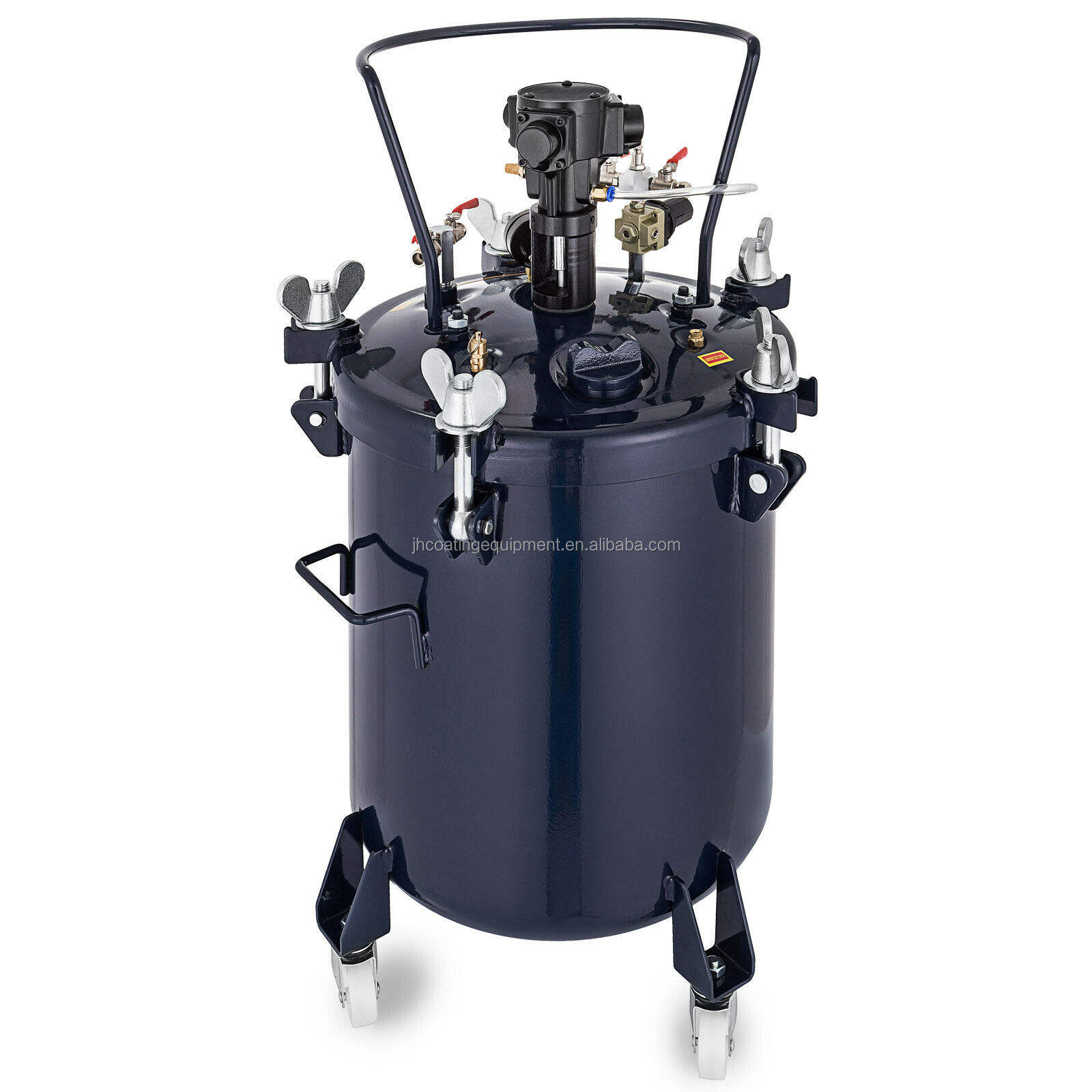
How Does a Paint Pressure Tank Improve Material Delivery?
A paint pressure tank, also called a pressure pot, is designed to store and supply compatible coating materials under controlled pressure.
In a typical system, compressed air pressurizes the tank, pushing paint through a fluid hose toward the spray gun. A regulator helps control the operating pressure, while compatible fittings and hoses support material transfer.
A suitable paint pressure tank can offer several advantages:
- Continuous material supply: Supports longer spraying operations without frequent manual refilling.
- Stable fluid delivery: Helps maintain consistent paint flow when correctly configured.
- Production flexibility: Can supply compatible coatings to one or more spray guns, depending on the system design.
- Reduced manual handling: Supports repeatable coating operations in industrial environments.
- Integration capability: Can be incorporated into suitable spray booths, coating lines, and automated equipment.
The tank must be compatible with the coating’s chemical properties, required working pressure, capacity, and production requirements. Its rated pressure must never be exceeded.
Common Spray Paint Pressure Problems and Solutions
Problem: Rough or orange-peel finish. Possible causes include unsuitable atomization, incorrect viscosity, excessive film thickness, or inappropriate application technique. Check the gun manufacturer’s settings and the coating supplier’s recommendations.
Problem: Paint dripping or running. Excessive fluid delivery, slow gun movement, or excessive film buildup may be responsible. Check the fluid pressure and application technique before making major adjustments.
Problem: Uneven spray pattern. Inspect the nozzle, air cap, fluid passages, and air supply for contamination, wear, or restrictions.
Problem: Inconsistent paint flow. Check tank pressure stability, material level, hose condition, viscosity, and regulator operation.
Problem: Excessive overspray. Review atomizing pressure, gun distance, spray angle, and transfer efficiency. Higher pressure is not always the solution to poor coverage.
How to Choose an Industrial Paint Pressure Tank
When selecting a pressure tank for spray painting, consider the following factors:
- Working pressure: Confirm the required operating pressure and the tank’s certified pressure rating.
- Tank capacity: Match the volume to paint consumption and production cycle requirements.
- Material compatibility: Select appropriate tank construction, seals, and fluid fittings for the coating.
- Regulation and monitoring: Evaluate pressure regulators, gauges, relief devices, and other required safety components.
- Cleaning and maintenance: Consider access for cleaning and the coating manufacturer’s recommendations.
- System compatibility: Verify connections, hose dimensions, spray gun requirements, and applicable safety standards.
Before purchasing, provide the supplier with your paint type, viscosity, required flow rate, target output, operating pressure, and application details.
Frequently Asked Questions
What is the correct spray paint pressure?
The correct pressure depends on the spray gun, coating, nozzle, and application. Follow the manufacturer’s recommended settings and verify the result with a spray-pattern test.
Is air pressure the same as paint pressure?
No. Air pressure supports atomization in conventional air spray systems, while fluid pressure moves paint through the delivery system. Each must be adjusted according to its function.
Does higher pressure always improve spray painting?
No. Excessive pressure can increase overspray, disturb the spray pattern, or create other coating problems. Correct equipment matching and controlled testing are more effective than simply increasing pressure.
Why use a pressure tank for spray painting?
A pressure tank supplies compatible paint under controlled pressure and can support continuous material delivery for industrial coating applications.
How do I choose a pressure tank for industrial paint spraying?
Consider working pressure, capacity, paint compatibility, required flow rate, pressure regulation, safety features, and compatibility with the spray gun and hoses.
Find the Right Spray Painting Pressure Solution
Consistent spray painting requires more than selecting a pressure value. It depends on the relationship between atomizing air, fluid delivery, coating viscosity, spray gun design, and application technique.
For industrial manufacturers, a properly selected paint pressure tank and a well-adjusted spray system can support stable material delivery, repeatable coating quality, and efficient production.
Contact an industrial pressure tank supplier to discuss your coating material, operating pressure, capacity requirements, and spray equipment configuration. A solution matched to your actual process can help improve coating consistency and production efficiency.
