

Spray Paint Pressure | How to Maintain Stable Pressure in Industrial Coating Systems
Why Spray Paint Pressure Stability Matters
Spray paint pressure is a key operating variable in industrial coating systems because it influences material delivery, spray formation, and the consistency of the finished coating. Maintaining stable pressure is particularly important when production requires repeated application across multiple parts or extended spraying cycles.
A pressure setting that works during a short test may not produce the same results throughout a full production shift. Changes in paint level, material viscosity, hose resistance, air supply, and equipment temperature can affect the operating conditions.
For industrial manufacturers, the objective is not simply to increase pressure. It is to maintain a suitable and repeatable pressure balance throughout the entire delivery and spraying process.
Five Factors That Cause Spray Paint Pressure Fluctuations
1. Unstable Compressed Air Supply
Pneumatic spray equipment depends on an adequate air supply. When other machines share the same compressed air network, simultaneous demand can affect the pressure available to the spray system.
Check the air supply under actual operating conditions rather than relying only on the compressor’s rated output. Regulators, filters, fittings, and air hoses should also be evaluated for restrictions or leakage.
2. Changes in Paint Viscosity
Paint viscosity affects how easily material moves through hoses, fittings, and spray equipment. Temperature changes, solvent evaporation, and material preparation can alter viscosity during operation.
If the coating becomes more difficult to pump, the delivery system may experience increased flow resistance. Increasing pressure without investigating the cause can create additional process problems.
3. Excessive Hose Resistance
Long hoses, narrow internal diameters, restrictive fittings, and unnecessary bends can increase pressure losses between the supply equipment and the spray gun.
When selecting a paint delivery hose, consider the required flow rate, material compatibility, hose length, and equipment specifications. The pressure available at the tank or pump may differ from the pressure delivered near the spray gun.
4. Inconsistent Material Supply
A pressure tank or pump must deliver paint consistently as material is consumed. An unsuitable supply arrangement, restricted fluid passage, or poorly maintained regulator can contribute to unstable flow.
In a pressure tank system, monitor both the tank pressure and the resulting material delivery. A stable gauge reading alone does not prove that the spray gun is receiving the correct flow.
5. Incorrect Equipment Matching
A spray gun, nozzle, regulator, pump, and pressure tank must work within compatible operating ranges. A system designed for one coating process may not perform well when used with a different material or spray technology.
Before changing operating pressure, confirm that the equipment is appropriate for the coating and production requirements.
How Different Spray Technologies Use Pressure
The correct spray paint pressure depends on the spraying technology. Industrial coating systems do not all use pressure in the same way.
| Spray technology | How pressure is used | Main selection consideration |
|---|---|---|
| Conventional air spray | Compressed air atomizes the coating | Air supply, air cap, fluid delivery, and coating viscosity |
| HVLP spray | High-volume, low-pressure air supports atomization | Gun-specific air pressure and transfer efficiency |
| Airless spray | Fluid pressure forces paint through a spray tip to create atomization | Pump capability, tip selection, and coating properties |
| Air-assisted airless spray | Fluid pressure and additional atomizing air work together | Coordination between fluid delivery and air settings |
These technologies require different operating procedures. A pressure value suitable for a conventional air spray gun should not automatically be applied to an airless or HVLP system.
Always follow the equipment manufacturer’s specified pressure limits and adjustment procedures.
A Practical Method for Optimizing Spray Paint Pressure
A controlled test procedure is more reliable than repeatedly changing pressure based on appearance alone.
Step 1: Establish a baseline. Record the coating material, viscosity, spray equipment, nozzle configuration, supply pressure, and application conditions.
Step 2: Check pressure at the appropriate points. Compare the pressure at the supply equipment with the pressure available at the relevant gun or fluid inlet. Use suitable gauges and follow the manufacturer’s measurement instructions.
Step 3: Inspect material delivery. Confirm that the paint flows consistently and that the fluid path is free from restrictions.
Step 4: Test the spray pattern. Apply the coating to a test panel and assess coverage, surface appearance, film uniformity, and overspray.
Step 5: Change one variable at a time. Adjust the relevant pressure setting within the approved operating range. Avoid changing pressure, viscosity, nozzle size, and spray distance simultaneously.
Step 6: Repeat the test. Evaluate performance over repeated cycles to determine whether the settings remain stable during operation.
Step 7: Document the final settings. Record the approved process parameters so that operators can reproduce the same conditions during subsequent production runs.
Improving Pressure Control in Automated Coating Lines
Automated spray painting requires repeatable operating conditions across multiple parts, spray stations, or production shifts.
A suitable pressure control arrangement may include regulators, pressure gauges, compatible hoses, a stable material supply, and monitoring at relevant points in the system.
For applications involving a paint pressure tank, consider the relationship between tank pressure, hose resistance, material consumption, and spray gun demand. If several spray guns share a supply system, verify that the arrangement can support the required combined flow.
Preventive maintenance also matters. Inspect seals, regulators, filters, fluid passages, and hose connections according to the equipment manufacturer’s recommendations.
For demanding production environments, process records can help identify whether coating defects are associated with pressure fluctuations, material changes, equipment wear, or operator adjustments.
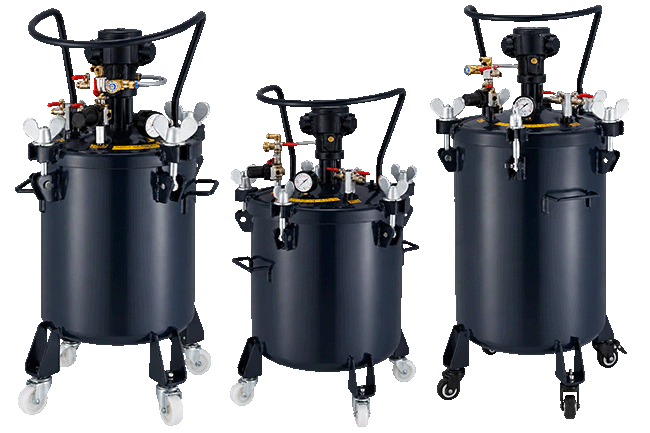
Selecting a Pressure Tank for Industrial Spray Painting
A pressure tank can provide a controlled supply of compatible coating material to a spray gun or coating system. Its suitability depends on more than tank capacity.
Before purchasing a paint pressure tank, evaluate:
- Required material flow: Estimate consumption during normal operation and peak production demand.
- Working pressure: Confirm the required operating range and the tank’s rated pressure.
- Coating compatibility: Check the tank construction, seals, fittings, and fluid passages against the paint’s chemical properties.
- Pressure regulation: Determine whether the system provides suitable pressure adjustment and monitoring.
- Cleaning requirements: Consider coating changes, maintenance access, and material residue.
- System integration: Verify compatibility with the spray gun, hose, pump, and production controls.
Never exceed the rated pressure of the tank or any connected component. Use the required pressure relief and safety devices, and follow applicable operating procedures.
Frequently Asked Questions
Why does spray paint pressure change during production?
Pressure can fluctuate because of air supply variations, changing material viscosity, hose resistance, regulator performance, or inconsistent fluid delivery.
Can a longer paint hose affect spray performance?
Yes. Hose length, internal diameter, fittings, and flow rate influence pressure loss. The delivery system should be sized for the required material flow and equipment specifications.
Should I increase spray paint pressure when the coating looks uneven?
Not automatically. Uneven coating may result from nozzle blockage, incorrect viscosity, unsuitable spray distance, poor atomization, or unstable material supply. Identify the cause before adjusting pressure.
How can I maintain consistent paint supply from a pressure tank?
Use a compatible tank and regulator, maintain stable operating conditions, inspect the fluid path, and verify material delivery during representative production cycles.
What information should I provide when purchasing an industrial paint pressure system?
Provide the coating type, viscosity, required flow rate, spray technology, hose configuration, operating pressure, production cycle, and any material compatibility requirements.
Build a More Reliable Industrial Spray Painting Process
Stable spray paint pressure depends on the complete coating system, from compressed air and material storage to fluid delivery and final atomization. A properly matched pressure control arrangement can help manufacturers reduce process variation and maintain repeatable coating quality.
For industrial applications, selecting the right pressure tank, regulator, hoses, and spray equipment should begin with the actual coating requirements and production conditions.
Contact an industrial pressure tank and fluid supply equipment supplier to discuss your material specifications, required flow rate, and pressure control needs. A properly configured system can help support more consistent spraying and efficient production.
