

Spray Paint Pressure | How to Match Pressure Settings to Paint and Surface Requirements
How Do You Choose the Right Spray Paint Pressure?
The right spray paint pressure depends on the coating material, spray equipment, nozzle configuration, and required surface finish. Instead of applying one pressure setting to every job, operators should match the pressure to the coating’s flow characteristics and the equipment manufacturer’s specifications.
A thin coating, a high-viscosity industrial paint, and a protective coating designed for heavy-duty applications may require different equipment configurations and operating conditions.
The objective is to achieve the required spray pattern, controlled material delivery, and consistent film formation without exceeding equipment limits or wasting coating material.
1. Start with the Paint, Not the Pressure Gauge
Paint properties determine how the material behaves as it travels through the delivery system and leaves the spray nozzle.
Before selecting a pressure setting, review the coating manufacturer’s technical data sheet.
Important factors include:
- Viscosity: Determines how readily the coating flows through the system.
- Solids content: Influences film formation and the amount of material required to achieve the target coating thickness.
- Solvent or water base: Affects material compatibility, preparation requirements, and application conditions.
- Recommended application method: Identifies suitable spray technologies and equipment requirements.
- Drying and curing characteristics: Influence how the applied coating forms its final surface.
A coating that flows poorly through an unsuitable nozzle may not be corrected simply by increasing pressure. The more effective solution may involve selecting compatible equipment, preparing the material according to its technical instructions, or adjusting the delivery configuration.
2. Match Spray Paint Pressure to the Application
Different coating tasks place different demands on the spraying system.
| Application | Main process objective | What to evaluate |
|---|---|---|
| Fine decorative finish | Smooth, uniform appearance | Atomization quality, nozzle condition, and gun distance |
| Large industrial components | Consistent coverage over a broad area | Material delivery rate, spray pattern, and operator movement |
| High-viscosity coatings | Reliable delivery of thicker material | Equipment compatibility, fluid pressure requirements, and nozzle capacity |
| Protective coatings | Consistent film coverage | Coating specifications, application thickness, and surface preparation |
| Automated production | Repeatable results across multiple parts | Pressure regulation, triggering sequence, and process repeatability |
These are selection guidelines rather than universal pressure prescriptions. The correct operating range must be established for the specific coating and spray equipment.
3. Understand the Relationship Between Nozzle Size and Pressure
Nozzle selection is an important part of spray paint pressure optimization.
The nozzle or spray tip determines how material exits the equipment and helps define the spray pattern and delivery characteristics. Its suitability depends on the coating, required output, and spray technology.
An unsuitable nozzle can produce poor coverage, excessive material delivery, or an inconsistent spray pattern.
When selecting a nozzle, consider:
Material compatibility: The coating must pass through the nozzle without unacceptable restriction or clogging.
Required output: The nozzle must support the desired application rate without overwhelming the delivery system.
Spray pattern: The fan width and distribution should suit the size and geometry of the workpiece.
Equipment limits: The nozzle must operate within the specified capabilities of the spray gun or pump.
For airless systems, the spray tip plays a direct role in determining fluid atomization and output. In conventional air spray systems, the air cap and fluid nozzle work together with the atomizing air supply.
Because these technologies operate differently, their pressure settings should not be compared as if they were interchangeable.
4. Use a Controlled Test to Establish the Best Setting
A practical spray test helps determine whether the selected pressure and equipment configuration suit the application.
Step 1: Prepare the coating. Follow the manufacturer’s instructions for mixing, filtration, temperature, and any permitted viscosity adjustment.
Step 2: Inspect the equipment. Check the nozzle, fluid passages, hoses, connections, and pressure regulators.
Step 3: Establish the recommended baseline. Use the equipment manufacturer’s specified starting conditions rather than choosing an arbitrary pressure value.
Step 4: Spray a test panel. Apply the coating using a consistent gun distance, angle, and movement speed.
Step 5: Evaluate the result. Inspect coverage, surface smoothness, runs, dry spray, overspray, and other visible defects.
Step 6: Adjust systematically. Change one relevant parameter at a time within the permitted operating range. Record the settings associated with acceptable results.
Step 7: Confirm repeatability. Repeat the test before using the settings for production work.
This process helps distinguish pressure-related issues from problems caused by material preparation, nozzle selection, or application technique.
5. Common Surface Defects and What to Check
A poor finish does not always indicate incorrect spray paint pressure. Several variables can produce similar symptoms.
- Orange peel: Review atomization, coating viscosity, application technique, and the coating manufacturer’s recommended film conditions.
- Runs and sags: Check material delivery, deposited film thickness, gun movement, and the coating’s ability to level and dry.
- Dry spray: Review spray distance, atomization conditions, airflow, and material behavior before changing pressure.
- Uneven coverage: Inspect the spray pattern, nozzle condition, gun angle, and overlap between passes.
- Excessive overspray: Evaluate the spray technology, pressure settings, gun distance, and application method.
The appropriate corrective action depends on the coating formulation and the actual equipment configuration. Always consult the coating supplier’s guidance when a defect cannot be resolved through routine setup adjustments.
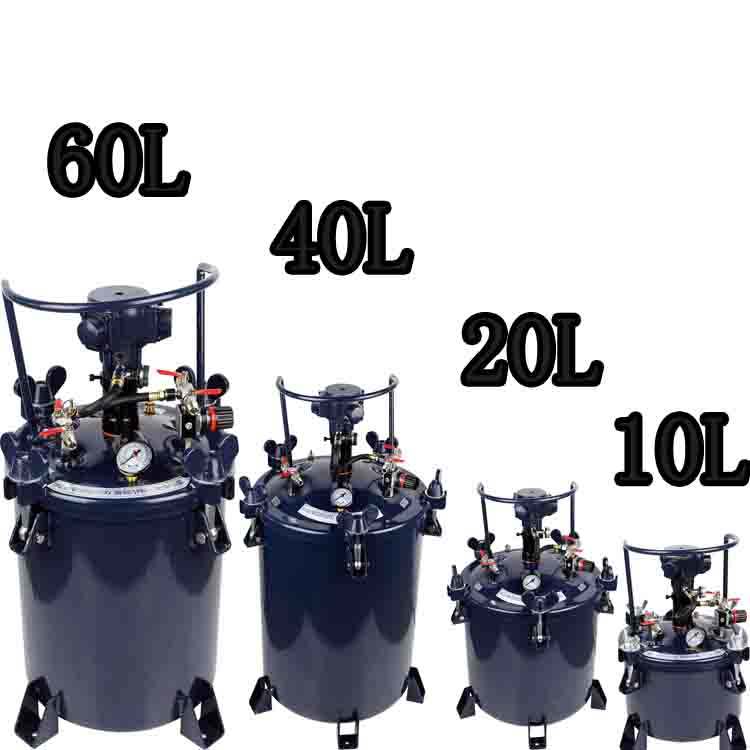
6. When Is a Paint Pressure Tank the Right Choice?
A paint pressure tank, also known as a pressure pot, can supply compatible coating material to a spray gun through a pressurized fluid line.
It may be suitable when an application requires a steady supply of paint, larger material volumes, or a delivery arrangement that reduces frequent manual refilling.
When evaluating a pressure tank system, consider:
- Required coating capacity and consumption rate.
- Material compatibility of the tank, seals, and fittings.
- Required fluid delivery pressure and flow rate.
- Compatibility with the selected spray gun and nozzle.
- Cleaning, maintenance, and operator safety requirements.
Tank pressure and atomizing air pressure perform different functions. A pressure tank supplies material, while the spray equipment determines how that material is applied. Both must be configured according to the system specifications.
Never exceed the rated pressure of the tank, hoses, or connected components. Use the required pressure relief devices and follow the manufacturer’s operating instructions.
Frequently Asked Questions
Is there one ideal spray paint pressure for every coating?
No. The appropriate setting depends on the coating, spray technology, nozzle configuration, and required finish. Follow the manufacturer’s recommendations and verify performance through testing.
Should I increase pressure when using thicker paint?
Not automatically. First confirm that the coating is suitable for the equipment and that its preparation follows the technical data sheet. A different nozzle or delivery system may be more appropriate.
Does nozzle size affect spray paint pressure?
Yes. Nozzle geometry influences material output and spray formation. The correct pressure and nozzle combination depends on the spray technology and coating requirements.
How can I reduce paint waste during spraying?
Use a suitable spray method, optimize the nozzle and operating settings, maintain appropriate gun distance, and apply the coating according to the manufacturer’s recommendations.
How do I choose a pressure tank for spray painting?
Consider the required capacity, material compatibility, rated pressure, fluid delivery requirements, regulator arrangement, and compatibility with the spray equipment.
Find the Right Spray Painting Equipment for Your Application
Choosing spray paint pressure is a process of matching material properties, spray equipment, nozzle design, and surface requirements. A carefully tested configuration can help achieve consistent coverage while reducing avoidable coating defects and material waste.
For industrial painting operations, the right combination of spray equipment and paint supply components can support a more repeatable application process.
Contact an industrial spray equipment or pressure tank supplier to discuss your coating type, required output, surface finish, and material delivery requirements.
