

Spray Paint Pressure | How to Measure and Calibrate Industrial Spray Systems
Why Accurate Spray Paint Pressure Measurement Matters
Spray paint pressure is easier to control when it is measured at the correct location and under realistic operating conditions. In industrial coating systems, the pressure shown on a supply regulator may differ from the pressure available at the spray gun because of hose resistance, flow demand, and equipment configuration.
Accurate measurement helps operators establish repeatable process settings, identify delivery problems, and reduce unnecessary adjustments. It is particularly useful when several spray stations share a compressed air supply or when paint is delivered from a pressurized tank.
For industrial manufacturers, the objective is to establish a reliable measurement method that can be repeated during equipment setup, production, and maintenance.
1. Understand Where Spray Pressure Should Be Measured
The correct measurement point depends on the type of spray equipment and the pressure being evaluated.
At the air regulator: This reading helps monitor the regulated air supply. However, it may not represent the pressure available at the spray gun during operation.
At the spray gun inlet: Measuring air pressure near the gun can provide a more representative indication of the conditions experienced by the equipment. Follow the manufacturer’s specified measurement method, including whether the gun must be triggered during measurement.
At the paint supply outlet: For a pressure tank or pump-fed system, this reading helps monitor the pressure used to deliver coating material.
Along the fluid line: Where necessary, measurements at suitable points can help identify pressure losses caused by hoses, fittings, filters, or restrictions.
Air pressure and fluid pressure should be measured and evaluated separately because they perform different functions.
2. Choose a Suitable Pressure Gauge
A pressure gauge should match the system’s operating range, required readability, connection type, and environmental conditions.
When selecting a gauge, consider the following factors:
- Measurement range: Choose a range appropriate for the expected operating pressure and the equipment manufacturer’s specifications.
- Readability: The scale should allow operators to distinguish meaningful changes during setup and troubleshooting.
- Accuracy: Select an instrument with suitable accuracy for the process requirements.
- Chemical compatibility: Gauges exposed to coating material require compatible wetted components and suitable installation.
- Environmental conditions: Vibration, temperature, moisture, and contamination may affect instrument performance.
- Maintenance requirements: Consider calibration intervals, replacement availability, and inspection procedures.
A gauge installed on the air supply is not automatically suitable for measuring paint pressure. Select the instrument for the specific medium and measurement point.
3. How to Calibrate a Spray Paint Pressure System
Calibration and adjustment are related but different activities. Calibration checks an instrument’s indication against a suitable reference, while adjustment changes the system setting to achieve the required operating condition.
A practical procedure includes the following steps.
Step 1 — Review equipment specifications. Identify the recommended air pressure, fluid pressure, and applicable operating limits for the spray gun, tank, pump, hoses, and regulators.
Step 2 — Inspect the system. Check fittings, hoses, regulators, filters, and pressure relief devices for damage, leakage, blockage, or signs of wear.
Step 3 — Verify the measuring instrument. Compare the gauge reading with a suitable reference instrument or follow an established calibration procedure.
Step 4 — Establish the operating condition. Run the system using the approved setup. If the manufacturer’s measurement method requires the spray gun to be triggered, take the reading under that condition.
Step 5 — Adjust the appropriate regulator. Make small changes within the specified operating range. Avoid compensating for an unknown restriction simply by increasing supply pressure.
Step 6 — Confirm material delivery. Observe the spray pattern and coating application while monitoring the relevant pressure readings.
Step 7 — Record the results. Document the measurement point, instrument used, operating settings, material, and test conditions.
For pressure vessels and other pressurized equipment, follow the approved safety procedures before disconnecting gauges or servicing components.
4. Identify Pressure Loss Between the Tank and Spray Gun
A pressure tank may show a stable reading while the spray gun receives insufficient or inconsistent material flow. This can happen when pressure losses develop along the delivery path.
Common factors include:
Long fluid hoses: Greater hose length can increase flow resistance, depending on the internal diameter, material viscosity, and delivery rate.
Restrictive fittings: Undersized connectors or unnecessary bends can limit material flow.
Blocked filters or passages: Contamination and accumulated coating residue can restrict the fluid path.
Changing material conditions: Viscosity changes can alter the pressure required to deliver the same flow rate.
Insufficient supply capacity: The system may be unable to maintain the required delivery conditions when demand increases.
To investigate, compare suitable pressure measurements under consistent operating conditions. Inspect the delivery path and verify material flow before changing the pressure setting.
5. Pressure Control for Paint Pressure Tanks
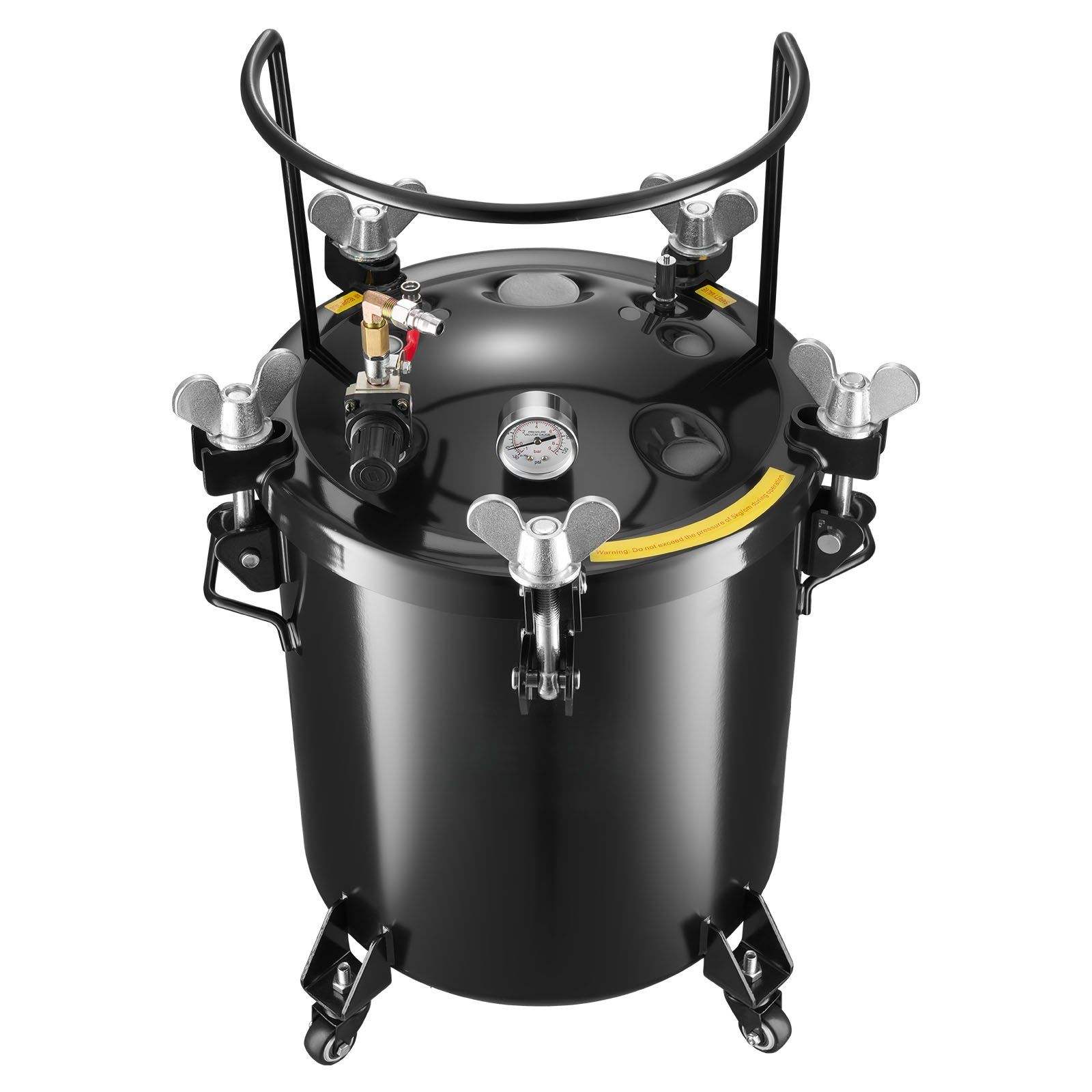
A paint pressure tank supplies coating material under controlled pressure. Its performance depends on the tank design, regulator arrangement, fluid outlet, hose configuration, and the requirements of the connected spray equipment.
For reliable operation, verify that the tank’s rated pressure and accessories are suitable for the intended application. The regulator should provide the required control range, while the gauge should allow operators to monitor the relevant pressure.
If multiple spray guns share a tank, evaluate their combined material demand and the system’s ability to maintain consistent delivery.
Never exceed the rated pressure of the tank, hoses, fittings, or connected equipment. Use the required pressure relief devices and never disable safety mechanisms to achieve a higher flow rate.
6. Create a Routine Pressure Inspection Checklist
A consistent inspection routine can help detect equipment problems before they affect coating quality.
Before production, check:
- Gauge condition and readability.
- Regulator operation and pressure stability.
- Air and fluid hose condition.
- Connections for leakage or damage.
- Filters and fluid passages for restrictions.
- Tank condition and required safety devices.
- Spray pattern and material delivery.
- Recorded operating settings against the approved process specification.
The inspection frequency should reflect equipment requirements, operating conditions, coating properties, and the consequences of process failure.
Frequently Asked Questions
Why is the pressure at the spray gun different from the regulator reading?
Pressure losses can occur through hoses, fittings, regulators, and other components. The difference also depends on flow demand and the measurement conditions.
Should spray paint pressure be measured while spraying?
Follow the spray equipment manufacturer’s specified method. For some systems, measuring under operating flow provides a more representative reading than measuring under static conditions.
How often should a spray pressure gauge be calibrated?
The appropriate interval depends on the instrument manufacturer’s recommendations, operating conditions, required measurement accuracy, and the site’s quality procedures.
Can a pressure tank regulator control spray gun air pressure?
Not necessarily. A paint pressure tank regulator generally controls tank or fluid supply pressure. Atomizing air pressure may require a separate regulator, depending on the spray system.
What should I check if the pressure reading is stable but paint flow is inconsistent?
Inspect material viscosity, filters, hose restrictions, fittings, nozzle condition, and supply capacity. A stable gauge reading alone does not confirm that material delivery is consistent.
Improve Your Industrial Spray Pressure Control
Reliable spray paint pressure measurement helps industrial manufacturers establish repeatable operating conditions and identify problems before they affect production quality.
The right combination of pressure gauges, regulators, compatible hoses, and paint supply equipment can improve process visibility and simplify maintenance.
Contact an industrial paint pressure tank or fluid supply equipment supplier to discuss your required pressure range, material characteristics, system configuration, and monitoring requirements.
