

Spray Paint Pressure | Designing a Reliable Industrial Paint Supply System
What Makes a Reliable Spray Paint Pressure System?
A reliable spray paint pressure system combines an appropriate air supply, pressure regulation, paint delivery equipment, compatible hoses, and a spray gun selected for the coating application. Each component must operate within its specified limits to provide consistent material delivery and predictable spraying performance.
For industrial manufacturers, choosing individual components separately without considering the complete system can lead to insufficient flow, unstable operation, difficult maintenance, or incompatible connections.
A well-designed system starts with the coating requirements and production demand, then matches the supply equipment to the spray gun and application process.
1. Start with the Compressed Air Supply
The air supply is a fundamental part of many industrial spray painting systems. In conventional air spray equipment, compressed air supports paint atomization, while pneumatic controls may also operate valves and other equipment.
When selecting an air compressor, evaluate more than its maximum pressure rating.
Air demand: Determine the combined air consumption of the spray guns and other pneumatic equipment expected to operate simultaneously.
Operating pressure: Confirm the pressure requirements specified by the equipment manufacturers.
Air quality: Consider moisture, oil contamination, and particles that could affect coating appearance or equipment performance.
Duty cycle: Select a compressor and air storage arrangement suitable for the expected operating schedule.
Expansion capacity: If additional spray stations may be installed later, account for their expected air demand when planning the supply system.
An undersized air supply may struggle to maintain the required operating conditions during continuous spraying. Conversely, selecting equipment solely by maximum pressure does not guarantee adequate air delivery.
2. Select Pressure Regulators for Different Functions
Industrial spray systems may require separate pressure regulation for different functions.
An air regulator controls the pressure supplied to compatible pneumatic equipment. A fluid regulator or pressure tank regulator controls paint delivery pressure, depending on the system design.
These functions should not be confused.
When selecting regulators, consider the required operating range, flow capacity, adjustment stability, connection size, and compatibility with the working medium.
Where air and paint require different settings, independent regulation allows operators to adjust each part of the process according to the spray gun and coating specifications.
Pressure gauges should be installed at suitable measurement points so that operators can monitor the relevant conditions. The gauge location matters because pressure at the supply source may differ from pressure at the equipment during operation.
3. Match the Paint Pressure Tank to Production Requirements
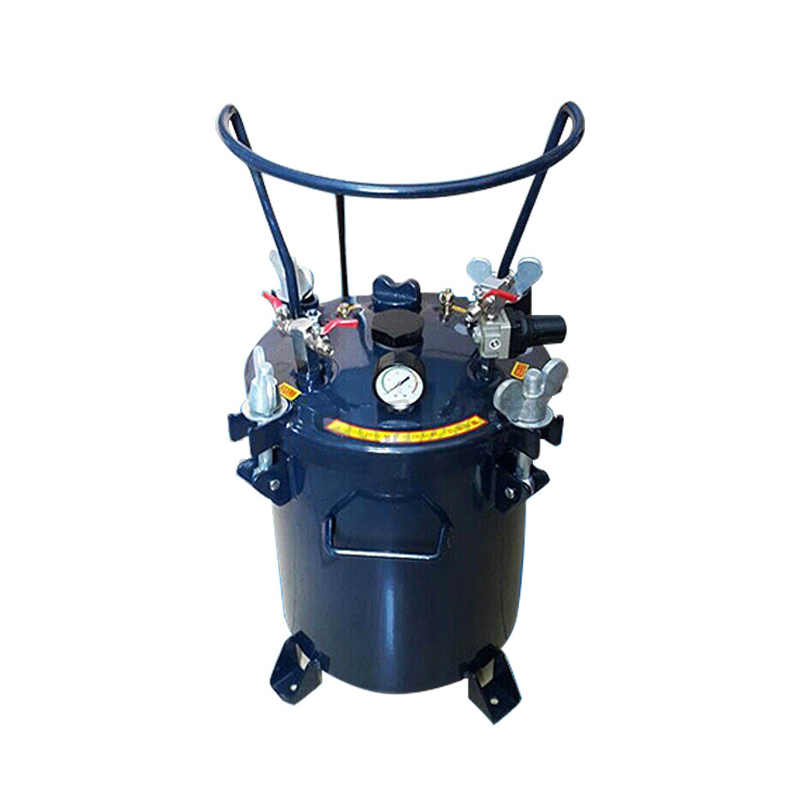
A paint pressure tank, also called a pressure pot, stores compatible coating material and supplies it through a pressurized fluid line.
It can be useful for industrial applications requiring a continuous supply of paint, reduced interruptions for refilling, or integration with a dedicated spray workstation.
When choosing a tank, evaluate the following factors:
- Capacity: Match the tank volume to coating consumption, batch size, and refill frequency.
- Working pressure: Verify the rated pressure and the intended operating conditions.
- Material compatibility: Confirm that the tank, seals, fittings, and fluid passages are suitable for the coating.
- Outlet configuration: Check that the fluid connection matches the hose and downstream equipment.
- Cleaning access: Consider how easily the tank can be inspected and cleaned during material changes.
- Safety equipment: Confirm the required pressure relief devices, gauges, and other protective components.
Tank capacity should reflect the actual process rather than simply choosing the largest available model. Larger capacity may reduce refilling frequency, but it can also increase cleaning effort and the quantity of material held in the system.
4. Design the Paint Delivery Line Carefully
The fluid hose connects the paint supply equipment to the spray gun. Its dimensions and routing influence pressure loss, material delivery, and ease of operation.
A suitable delivery line should account for paint viscosity, required flow rate, hose length, internal diameter, fitting restrictions, and chemical compatibility.
An excessively restrictive line can increase pressure loss and limit material delivery. A hose that is incompatible with the coating may deteriorate or introduce contamination.
For systems serving multiple spray guns, calculate the combined demand and verify that the supply arrangement can support the required flow under actual operating conditions.
Keep hose routing practical and inspectable. Avoid unnecessary bends, protect hoses from abrasion, and use connections rated for the intended service.
5. Coordinate the System with the Spray Gun
The spray gun is the final application component, but its requirements affect the design of the entire supply system.
Before choosing the supporting equipment, identify the spray technology, nozzle or air cap configuration, required material output, coating viscosity, and intended finish.
The supply system must provide the conditions required by the selected gun without exceeding any component’s limits.
For example, a gun requiring a particular atomizing air supply and a separate fluid feed needs both supplies to be configured correctly. A stable paint tank alone cannot compensate for insufficient atomizing air or an unsuitable spray gun.
Conduct a practical spray test after installation to confirm that the complete system delivers the required pattern and coating quality.
6. Common System Design Mistakes to Avoid
Choosing equipment by pressure rating alone: Maximum pressure does not indicate whether the compressor, regulator, or hose can deliver sufficient flow.
Using one regulator for incompatible functions: Air atomization and paint delivery may require different pressure settings and control arrangements.
Ignoring pressure losses: Long hoses, restrictive fittings, and unsuitable internal diameters can affect delivery performance.
Overlooking material compatibility: Seals and fluid passages must be suitable for the coating’s chemical properties.
Neglecting maintenance access: Difficult-to-clean systems can increase downtime during coating changes.
Exceeding equipment limits: Every pressurized component must remain within its specified operating range.
Avoiding these mistakes during system design can reduce commissioning problems and make future maintenance more manageable.
7. A Practical Checklist Before Purchasing
Before requesting a quotation for an industrial spray paint pressure system, prepare the following information:
- Coating type and material compatibility requirements.
- Coating viscosity and required material flow rate.
- Spray gun model and application technology.
- Required air supply and fluid delivery conditions.
- Expected operating hours and simultaneous spray stations.
- Paint tank capacity and refill requirements.
- Hose length, connection sizes, and installation layout.
- Cleaning procedures, safety requirements, and maintenance expectations.
Providing these details helps suppliers recommend equipment based on the actual process instead of relying on a generic pressure specification.
Frequently Asked Questions
What equipment is included in a spray paint pressure system?
A typical industrial system may include an air compressor, air treatment equipment, regulators, gauges, a paint pressure tank or pump, fluid hoses, and a compatible spray gun. The exact configuration depends on the application.
Does a larger compressor always improve spray painting?
No. The compressor must provide sufficient air delivery at the required operating conditions. Capacity, air quality, duty cycle, and system demand are all important.
Why does the spray gun receive less pressure than the supply source?
Pressure losses can occur through regulators, hoses, fittings, filters, and other components. The difference depends on flow demand and system configuration.
Is a paint pressure tank suitable for every coating?
No. Suitability depends on the coating’s chemical properties, viscosity, required delivery conditions, tank design, and applicable safety requirements.
How can I determine the correct tank capacity?
Estimate material consumption per production cycle, the desired operating time between refills, and the cleaning or changeover requirements. Then select a compatible tank based on the manufacturer’s specifications.
Build a Spray Paint Pressure System Around Your Process
Reliable industrial spraying requires the air supply, pressure regulation, paint storage, delivery lines, and spray gun to work as one coordinated system.
By evaluating the full process before purchasing equipment, manufacturers can improve system compatibility, simplify maintenance, and establish more consistent coating operations.
Contact an industrial paint pressure tank or fluid supply equipment supplier to discuss your coating requirements, production capacity, installation layout, and system configuration.
