

Automatic Fluid Supply Tank | Functions, Selection, and OEM Considerations
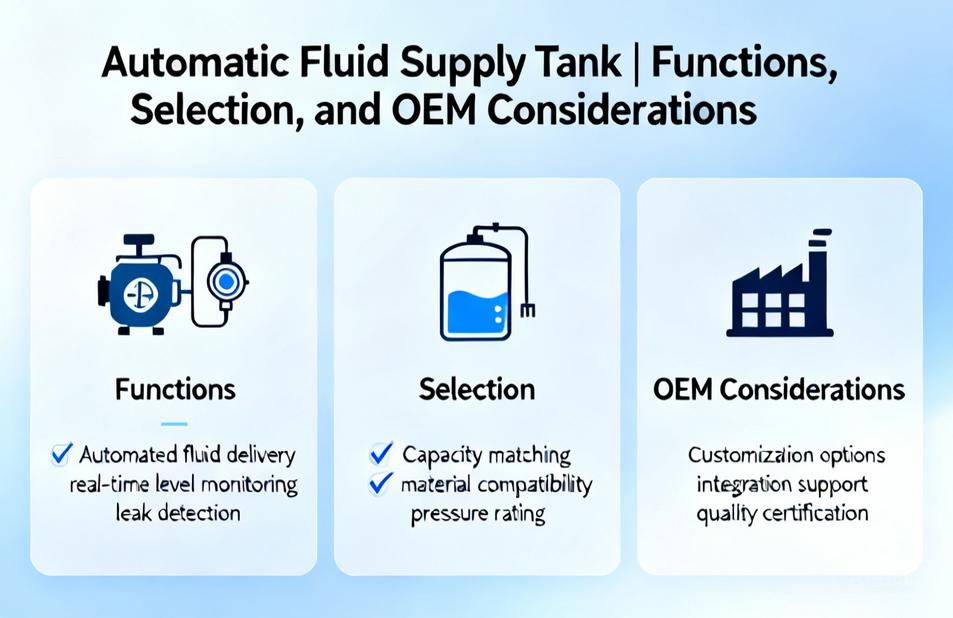
An automatic fluid supply tank is a key component in modern dispensing, lubrication, and fluid transfer systems. It is designed to maintain a consistent and uninterrupted supply of liquids such as adhesives, sealants, oils, coolants, or paints to production equipment. By automatically replenishing the fluid level based on consumption, these tanks help reduce manual intervention, minimize downtime, and improve process repeatability. Industrial buyers often search for a reliable automatic fluid supply tank manufacturer or supplier when upgrading their fluid management systems, as these units play a critical role in ensuring smooth operation in applications like CNC machining, automated assembly lines, and packaging equipment.
What Is an Automatic Fluid Supply Tank and How Does It Work?
An automatic fluid supply tank is a reservoir that regulates the delivery of fluid to a point of use. It typically includes a tank body, fluid level sensors, an inlet valve, and a control unit. The system monitors the fluid level in a secondary chamber or a dispensing line and automatically opens a valve or activates a pump to refill from a main storage tank when the level drops below a set point. This closed-loop approach maintains a nearly constant hydrostatic pressure or flow rate, which is essential for accurate dispensing in adhesive application or consistent lubrication in metalworking operations. Many industrial supply tank systems also incorporate filtration or agitation features to keep the fluid homogeneous and free of contamination.
Key Features to Look for in an Automatic Fluid Supply Tank
When evaluating an automatic fluid supply tank for your facility, consider these core attributes that influence performance and longevity:
- Level Control Accuracy: Optical, ultrasonic, or float-based sensors offer different degrees of precision. Choose a system that matches the acceptable variation in your process.
- Material Compatibility: The tank and wetted parts must resist corrosion and chemical attack from the fluid being handled. Stainless steel is common for industrial fluids, while some applications require polypropylene or PTFE linings.
- Pressure and Flow Range: Verify that the tank can supply fluid at the required working pressure and volumetric flow rate for your equipment.
- Cleanability and Maintenance: Easy access for cleaning and part replacement is vital, especially in food, pharmaceutical, or electronic assembly environments.
- Integration with Existing Controls: Many automatic fluid supply tanks can be connected to PLCs or factory automation systems via signals such as low-level alarms or remote indicators.
Materials and Construction
The construction material directly affects durability and compatibility. Common options include carbon steel with a protective coating for non-corrosive fluids, stainless steel (SS304 or SS316) for higher resistance and cleanliness, and food-grade plastics for low-pressure applications. For abrasive fluids, additional ceramic or tungsten carbide coatings on internal parts may be necessary. Welding quality, interior finish (e.g., electropolished surfaces), and the absence of crevices are important for preventing bacterial growth or material buildup. If your process involves solvents or acids, confirm that seals and gaskets are suited for continuous exposure.
Industrial Applications
Automatic fluid supply tanks are employed in numerous sectors. In the automotive industry, they supply lubricants and coolants to machining centers and transfer lines. In electronics manufacturing, they feed precise amounts of solder paste or conformal coatings. Packaging lines use them to deliver hot melt adhesives or labeling glue. Other applications include ink supply for printing presses, dosing of cleaning agents in bottling lines, and centralized lubrication systems for heavy machinery. In each case, the goal is to avoid empty running and guarantee a consistent application, which translates into fewer rejects and less waste.
How to Choose the Right Automatic Fluid Supply Tank
Selecting a suitable tank for your operation requires a review of several technical parameters:
- Fluid Characteristics: What is the viscosity, temperature, and abrasiveness of the fluid? Are there any solid particles? This influences pump selection, hose diameter, and fittings.
- Required Flow Rate: Calculate the maximum and average consumption of your application. The tank and control system must handle peak demand without pressure drops.
- Control Philosophy: Do you need a simple mechanical float valve or a more advanced electronic system with proportional valves and digital readouts? Remote monitoring features can be valuable for multi-line operations.
- Space and Installation: Assess available floor space, mounting orientations, and access for maintenance. Some tanks are designed for wall mounting or mobile carts.
- Environmental Conditions: Consider ambient temperature, humidity, and washdown requirements. A tank used in a cleanroom will have different needs than one in a machining shop.
Customization and OEM Possibilities
Many automatic fluid supply tank suppliers offer OEM and custom manufacturing services. Since each machine builder or end user often has unique specifications, it is common to request changes in tank capacity, port sizes, sensor types, and materials. Experienced manufacturers can adapt the design to fit limited spaces, integrate specific pumps or valves, or comply with regional regulations. When discussing custom requirements, provide a clear specification that includes fluid properties, system pressure, electrical supply, and any special assembly needs. A reliable factory will usually produce engineering drawings and samples before mass production.
Buying Considerations and Supplier Selection
While price and lead time are important factors, the long-term performance of an automatic fluid supply tank depends on the quality of components and after-sales support. Look for a manufacturer with experience in your industry and ask for case studies that demonstrate problem-solving capability. Check whether they provide clear documentation, spare parts availability, and responsive technical support. It is also wise to request a pilot unit for evaluation, especially if your process requires high precision or continuous operation. Ask about service life and common wear parts to estimate total cost of ownership. A trustworthy supplier should be able to recommend the most cost-effective solution without over-engineering.
Frequently Asked Questions
What fluids can be used with an automatic fluid supply tank?
Automatic fluid supply tanks are compatible with a wide range of low to medium viscosity fluids, including oils, coolants, water-based solutions, adhesives, and certain reactive materials. The exact compatibility depends on the tank material, seals, and pump type. Always consult the supplier for chemical resistance charts if you are handling solvents or aggressive liquids.
Can the tank be integrated into an existing production line?
Yes, most tanks are designed for straightforward integration. They typically come with standard inlet and outlet connections and can be controlled via simple on/off signals or more advanced fieldbus systems. You may need an adapter plate or hose kit, but many suppliers offer retrofit packages for common machines.
Is it possible to order an OEM version of this tank?
Yes, many manufacturers provide OEM services where the tank is built according to your drawings or a co-developed design. You can specify the dimensions, materials, sensor type, and even add your own branding. This is common for machine builders who want a consistent look and performance in their equipment.
How often does an automatic fluid supply tank require maintenance?
Maintenance frequency depends on fluid cleanliness, operating hours, and environmental factors. In general, you should inspect seals and sensors monthly and replace them as needed. Filters may need cleaning every few weeks in high-usage scenarios. A well-maintained tank can operate for many years without major issues.
Conclusion
Choosing the correct automatic fluid supply tank is about balancing technical performance, reliability, and total cost of ownership. By analyzing your fluid properties, required flow rate, and control needs, you can narrow down options and avoid costly errors. Whether you need a standard unit or a fully custom solution, working with a reputable manufacturer or supplier ensures that the tank fits your process and is built to last. If you are unsure about sizing, materials, or automation features, contact our engineering team with your specifications. We will help you identify the most efficient and dependable automatic fluid supply tank for your industrial application.