

Dispensing Machine Pressure Tank | Function, Selection, and OEM Considerations
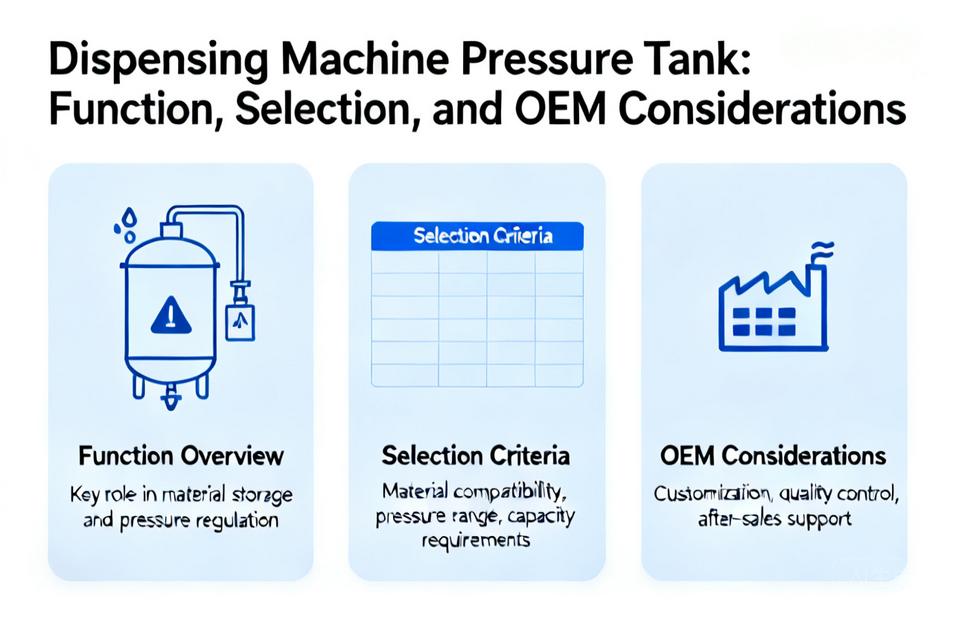
A dispensing machine pressure tank is a critical component in automated fluid dispensing systems, designed to store and deliver adhesives, sealants, lubricants, and other viscous materials under controlled pressure. This type of tank, often referred to as a pressure reservoir or fluid supply vessel, is widely used in industrial assembly lines, electronic manufacturing, and packaging operations where precision and consistent material flow are essential. By maintaining a steady pressure on the material, it ensures that the dispensing valve or robot receives a uniform supply, reducing waste and improving production efficiency. For B2B buyers, understanding the role of this component is the first step in selecting the right equipment for their specific application.
What Is a Dispensing Machine Pressure Tank and How Does It Work?
A dispensing machine pressure tank operates on a simple principle: compressed air or another gas is introduced into the sealed tank, forcing the fluid out through a outlet connected to a dispensing gun, valve, or robotic applicator. The tank is typically made of stainless steel or aluminum, with a lid that seals tightly to maintain pressure. The material inside can range from low-viscosity solvents to high-viscosity pastes, depending on the design of the tank and the type of pump or agitator used. In many systems, the pressure tank is paired with a regulator and gauge to control the air pressure precisely, allowing operators to adjust the flow rate and bead size. This setup is common in applications like gasketing, potting, bonding, and coating, where consistency is critical for quality control.
Key Components of a Pressure Tank for Dispensing
Typical components include the tank body, a pressure inlet with a filter regulator, a fluid outlet with a ball valve or diaphragm seal, and a safety valve to prevent over-pressurization. Some tanks also include a sight glass to monitor material level, and a lid with clamps for quick refill cycles. For high-volume production, larger tanks are often equipped with an agitator or stirrer to keep particles suspended in the material, preventing separation. Understanding these parts helps buyers evaluate which configuration fits their production line.
Key Features to Evaluate When Selecting a Dispensing Machine Pressure Tank
When comparing pressure tanks for dispensing machines, several features stand out as important for industrial buyers. First, material compatibility is crucial; for example, stainless steel 304 or 316 is preferred for corrosive chemicals, while aluminum might be suitable for low-corrosive adhesives. Second, the maximum operating pressure rating determines the range of materials that can be dispensed—higher pressure is needed for thicker fluids. Third, the capacity (usually from 1 liter to 30 liters or more) affects how often the tank needs to be refilled, impacting production uptime. Fourth, the design of the outlet and valve system should allow for easy cleaning and minimal dead space, especially when changing colors or materials. Fifth, the presence of a pressure relief valve is a standard safety requirement that should never be overlooked.
Capacity and Size Considerations
For small-scale lab or prototype work, a 1-5 liter tank is often sufficient. For mid-size production, 10-20 liter tanks are common. For continuous high-volume operations, such as in automotive or appliance assembly, larger tanks with automated filling systems are available. It is important to match the tank size to the dispensing machine’s flow rate and the cycle time, as an undersized tank can cause frequent interruptions, while an oversized tank may lead to material curing or settling before use.
Materials and Construction: What Matters for Durability
The construction of a dispensing machine pressure tank significantly influences its lifespan and maintenance requirements. Stainless steel is the standard for most industrial fluids due to its resistance to corrosion and ability to handle aggressive solvents. Look for tanks with a polished interior surface to reduce material buildup and facilitate cleaning. Seals and gaskets are typically made of PTFE (Teflon), Viton, or EPDM, each offering different chemical compatibility. A robust lid clamping mechanism, such as a quick-release clamp or bolted flange, ensures a tight seal under pressure. Welds should be smooth and free of defects to prevent leaks. For applications involving food or pharmaceutical products, additional surface finishes and hygienic designs may be required.
Common Applications of Pressure Tanks in Dispensing Systems
Dispensing machine pressure tanks are used across many industries where precise fluid application is needed. In electronics manufacturing, they are used for dispensing solder paste, UV adhesives, and conformal coatings. In automotive assembly, they supply sealants and structural adhesives for bonding parts. In appliance production, they handle gaskets and thermal compounds. Other applications include textile bonding, filter assembly, and medical device manufacturing, where repeatability and cleanliness are essential. In each case, the pressure tank acts as a buffer between the bulk material container and the dispense head, enabling a steady and consistent flow.
How to Choose the Right Pressure Tank for Your Process?
The selection process starts with analyzing the material’s properties, including viscosity, thixotropy, and chemical compatibility. Next, consider the required flow rate and shot accuracy. Then, evaluate the working environment—if the production area is cleanroom, a tank with no exposed threads and easy sterilizability is necessary. Also consider the dispensing machine’s control system: some tanks are equipped with level sensors that automatically trigger refill requests, integrating with the line control. Finally, think about future changes in material formulation or production volume to avoid outgrowing the tank’s capacity.
Customization and OEM Options for Pressure Tanks
In many industrial projects, standard off-the-shelf pressure tanks do not perfectly fit the application. That is why many buyers look for a manufacturer or supplier that offers custom pressure tanks. Customization can include special flange sizes, different outlet thread types (such as NPT, BSPP, or flared), integrated heating jackets for materials that need to be kept at a specific temperature, and special coatings for high-abrasive materials. OEM services are also common, where a factory produces tanks to the buyer’s specifications, often under the buyer’s brand name. When considering custom options, it is essential to provide detailed information about your fluid, pressure requirements, and mounting constraints to the supplier.
Buying Considerations: What to Look for in a Supplier
Choosing a reliable supplier for a dispensing machine pressure tank is as important as choosing the tank itself. First, verify that the manufacturer follows industry standards and has a quality management system in place. Ask for material certificates and pressure test reports to ensure each tank meets safety requirements. Second, consider the supplier’s experience with similar applications—an established factory will have a track record of solving specific challenges. Third, evaluate their lead times and spare parts availability; a pressure tank that is out of stock can halt production. Fourth, check if they offer after-sales support and documentation, such as drawings and manuals. Finally, if you require custom features, confirm that the supplier has the engineering capability and machining resources to implement them correctly.
Frequently Asked Questions
How do I determine the right pressure rating for my material?
The required pressure rating depends on the viscosity of the material. Higher viscosity fluids like thick pastes require more pressure to achieve a consistent flow rate. You should consult the material’s technical data sheet for recommended dispensing pressure, or conduct a trial with a pressure-adjustable tank. It is also advisable to choose a tank with a safety factor above the maximum working pressure to accommodate variations in temperature or batch consistency.
Can a pressure tank be used for both low and high viscosity materials?
Yes, but not always with the same tank. Low-viscosity materials like solvents or thin oils are easier to handle with low pressure and may require a more precise regulator to avoid dripping. High-viscosity materials may require a tank with a larger outlet, a ram or follower plate to push the material down, or a pump assist. Some tanks are designed to handle a wide range, but it is safer to discuss your specific material with the supplier to ensure the tank’s design is suitable.
What are the common signs of wear or failure in a pressure tank?
Common issues include a sudden drop in pressure, inconsistent flow, visible leaks around the lid or outlet, and difficulty in opening the lid after use. These can be caused by damaged seals, distorted gaskets, or clogged air filters. Regular inspection of the seals and safety valve is recommended. If you notice a persistent pressure drop even after tightening, it may be time to replace the tank or its components.
Is it better to buy a complete dispensing system from one manufacturer?
Buying a complete system from a single manufacturer can simplify integration and warranty responsibilities. However, if you already have a dispensing machine with a compatible control system, purchasing a pressure tank separately from a specialized supplier can offer more flexibility in terms of size and customization. In either case, ensure that the tank’s pressure range and flow characteristics match your existing equipment.
Conclusion
Selecting the right dispensing machine pressure tank is a balance between process requirements, material compatibility, safety, and supplier reliability. Start by defining your application’s key parameters, then evaluate tanks based on materials, pressure capacity, and ease of maintenance. For many projects, exploring custom and OEM options with a reputable factory can yield a solution that exactly fits your line. Discuss your specific needs with a knowledgeable supplier to get accurate recommendations for capacity, sealing materials, and additional features. By taking a systematic approach, you can ensure a stable and efficient dispensing process that maximizes productivity and quality.
If you are seeking a dependable dispensing machine pressure tank supplier with engineering support for custom designs, contact our team with your application details. We are ready to help you choose the right tank for your production environment.