

Spray Paint Pressure Tank for Stable and Efficient Industrial Coating
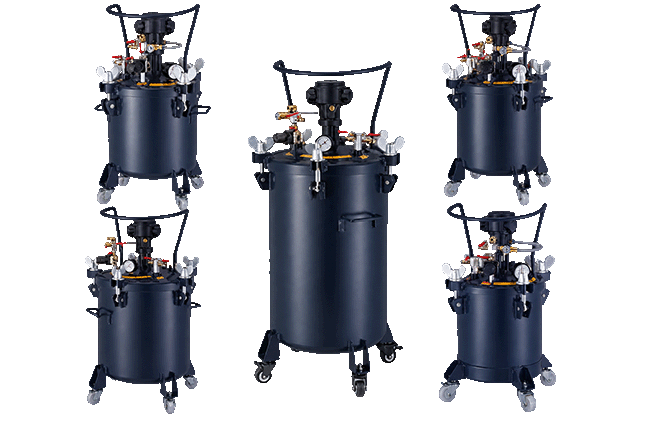
A spray paint pressure tank is a practical solution for supplying paint and coating materials continuously to spray guns and automated painting equipment. By using controlled air pressure, the tank delivers material at a stable flow rate, helping manufacturers achieve more consistent spraying results while reducing frequent refilling.
For industrial painting, furniture finishing, automotive coating, metal fabrication, and other professional applications, a reliable paint pressure tank for spray gun systems can improve both productivity and coating quality.
What Is a Spray Paint Pressure Tank?
A spray paint pressure tank is a sealed vessel designed to store paint, coatings, or other liquid materials under controlled pressure.
Compressed air enters the tank and applies pressure to the material inside. The liquid is then pushed through a fluid hose to a manual spray gun, automatic spray gun, or coating machine.
Unlike small paint cups mounted directly on spray guns, a pressure tank can hold a much larger amount of material. This allows operators to work for longer periods without repeatedly stopping to refill paint.
A typical spray paint pressure tank may include:
- Pressure regulator
- Pressure gauge
- Safety relief valve
- Air inlet
- Fluid outlet
- Sealed lid
- Stainless steel tank body
- Manual or pneumatic agitator
- Paint hose connections
- Adjustable pressure controls
Different configurations can be selected according to the paint type, viscosity, tank capacity, and production requirements.
Advantages of Using a Spray Paint Pressure Tank
Continuous Paint Supply
One of the biggest advantages of a pressure tank for spray painting is continuous fluid delivery.
Instead of stopping frequently to refill a small spray gun cup, operators can use a larger tank to supply paint over a longer production cycle.
This is particularly useful for large workpieces and continuous coating lines.
Stable Spray Performance
Stable material pressure helps provide a more consistent paint flow to the spray gun.
This can reduce fluctuations during spraying and contribute to more uniform coating thickness and surface quality.
Improved Production Efficiency
A larger paint storage capacity means fewer interruptions.
For factories handling repeated or high-volume spray painting, an industrial spray paint pressure tank can help increase working efficiency and reduce material handling time.
Flexible Connection With Spray Equipment
Pressure tanks can be integrated with a variety of equipment, including:
- Manual spray guns
- Automatic spray guns
- Robotic spray systems
- Coating machines
- Painting production lines
- Fluid dispensing systems
This flexibility makes them suitable for both standalone operations and automated industrial systems.
Stainless Steel Spray Paint Pressure Tank
For demanding industrial environments, a stainless steel spray paint pressure tank is a popular option.
Stainless steel offers good corrosion resistance, durability, and cleanability. It is suitable for many types of paints, coatings, solvents, and industrial liquids.
Common stainless steel materials include:
SUS304 Stainless Steel
Suitable for many general-purpose paints, coatings, and industrial fluid applications.
SUS316 Stainless Steel
Often selected when stronger corrosion resistance is required or when the tank is used with more aggressive liquid materials.
The appropriate stainless steel grade should be chosen according to the chemical characteristics of the fluid being processed.
Spray Paint Pressure Tank With Agitator
Some paints and coatings contain pigments or solid components that may settle over time.
In these applications, a spray paint pressure tank with agitator can help keep the material evenly mixed during production.
The agitator continuously or periodically stirs the paint inside the tank, helping maintain consistent material composition.
Common applications include:
- Automotive paint
- Wood coatings
- Industrial primers
- Protective coatings
- Color paints
- High-solids coatings
- Pigmented materials
- Specialty finishing liquids
Depending on the production process, the tank may use either a manual agitator or a pneumatic mixer.
Pneumatic agitation is widely used in industrial painting systems because it can operate with compressed air and integrate easily with existing equipment.
Typical Applications
A spray paint pressure pot can be used across many industries.
Automotive and Auto Parts
Pressure tanks are used for spraying primers, color coatings, protective finishes, and other materials on vehicle components.
Furniture and Woodworking
Woodworking factories use pressure tanks for lacquer, varnish, stains, paint, and decorative coatings.
Metal Fabrication
Metal cabinets, steel frames, machinery, tools, and fabricated parts often require stable coating delivery.
Machinery Manufacturing
Industrial equipment manufacturers can integrate pressure tanks into automatic or semi-automatic painting lines.
Plastic Products
Spray paint pressure tanks can also be used for decorative and protective coating of plastic housings and components.
General Industrial Finishing
They are also suitable for appliances, hardware, electrical enclosures, construction components, and many other manufactured products.
How to Select the Right Spray Paint Pressure Tank
Choosing the correct tank depends on the actual spraying process.
Tank Capacity
Capacity should match the amount of paint consumed during each production cycle.
Smaller tanks are suitable for sampling, repair work, or low-volume production, while larger tanks are better for continuous industrial operations.
Paint Viscosity
Thin and thick coatings behave differently under pressure.
Viscosity affects the required working pressure, hose size, outlet diameter, and spray equipment configuration.
Operating Pressure
Always select a tank with a working pressure suitable for the spraying system.
The pressure regulator, safety valve, fittings, and hoses should also be compatible with the required pressure range.
Material Compatibility
The tank material must be compatible with the paint, solvent, coating, or liquid being used.
For applications requiring corrosion resistance and easy cleaning, stainless steel is often preferred.
Agitation Requirements
If the coating contains pigments or tends to separate, a mixer or agitator should be considered.
Custom Spray Paint Pressure Tank Solutions
Industrial coating systems often require different capacities, fittings, pressure ranges, and accessories.
A professional spray paint pressure tank manufacturer can provide customized solutions for specific production requirements.
Customization options may include:
- Tank capacity
- SUS304 or SUS316 material
- Working pressure
- Air inlet size
- Fluid outlet size
- Pressure regulators
- Safety valves
- Pneumatic agitators
- Manual mixers
- Custom fittings
- Mobile frames
- Hose configurations
- OEM and ODM services
Customized tanks are particularly useful for coating equipment manufacturers, automation companies, distributors, and system integrators.
Choose a Reliable Spray Paint Pressure Tank Manufacturer
A high-quality spray paint pressure tank can help create a more stable, efficient, and professional painting process.
When selecting a supplier, buyers should consider tank construction, material quality, pressure rating, sealing performance, customization capability, and technical support.
Whether the application requires a small paint pressure pot for spray gun use or a larger industrial stainless steel spray paint pressure tank, choosing the correct configuration can improve material delivery, reduce production interruptions, and support consistent coating performance.
For OEM projects, automated painting systems, or custom industrial applications, working with an experienced pressure tank manufacturer can also make system integration easier and more reliable.