

How to Source a Stainless Steel Glue Dispensing Pressure Tank Manufacturer for Industrial Dispensing Systems
A stainless steel glue dispensing pressure tank is a sealed vessel that uses regulated air pressure to feed adhesive, sealant, or other viscous fluids from a bulk container to a dispensing valve, nozzle, or robotic applicator. When procurement teams search for a reliable Stainless Steel Glue Dispensing Pressure Tank Manufacturer, they are usually looking for a partner who understands both the material compatibility of the tank and the flow behavior of the adhesive inside it. These tanks are common in assembly lines, automotive plants, electronics manufacturing, furniture production, and packaging operations where consistent adhesive delivery is critical to product quality and line efficiency.
What a Stainless Steel Glue Dispensing Pressure Tank Does
Unlike a simple reservoir, a pressure tank creates a controlled head pressure on the adhesive surface. Compressed air enters the tank through a regulator, pushing the fluid through a dip tube or outlet port toward the dispense point. This arrangement keeps the adhesive under steady pressure, which helps maintain a repeatable bead or dot size even as the tank level changes. Stainless steel is often specified because it resists corrosion, handles water-based and solvent-based adhesives, and can be cleaned more thoroughly than many coated or mild steel alternatives. For buyers, the tank is not just a container; it is part of the fluid delivery system, and its design affects purge time, material waste, and maintenance frequency.
Typical Industrial Applications
Pressure tanks for glue dispensing appear across many production environments. In automotive assembly, they feed structural adhesives, gasketing materials, and thread sealants. In electronics, they supply conformal coatings, potting compounds, and thermally conductive adhesives. Woodworking and furniture factories use them for edge banding glue, assembly adhesives, and laminating resins. Packaging lines may use them for hot melt alternatives, cold glue systems, and labeling adhesives. Other industrial applications include filter bonding, appliance manufacturing, medical device assembly, and general product assembly where manual squeeze tubes or small cartridges are not practical for high-volume production.
Key Design Features Buyers Should Review
A well-built pressure tank for adhesive dispensing usually includes several practical features. The tank body, lid, and wetted parts should be made from compatible stainless steel grades so the adhesive does not react with the vessel. A secure lid closure with a gasket helps maintain pressure and prevents leakage. The air inlet should include a pressure regulator and gauge so operators can adjust flow without guesswork. A relief valve is important for safety and pressure control. The fluid outlet may be a bottom port, a dip tube, or a custom fitting designed to match the dispensing valve. Some tanks also include a level sensor, agitation, or heating options when the adhesive requires temperature control or stays still for long periods.
Capacity and Pressure Considerations
Capacity should match the production run and the frequency of refilling. A tank that is too small causes frequent downtime, while an oversized tank may expose adhesive to air for too long or make cleaning difficult. Pressure requirements depend on the adhesive viscosity, the length and diameter of the fluid line, and the dispense valve. The manufacturer should be able to explain how tank pressure, line size, and valve type work together, rather than simply quoting a tank volume. Buyers should also consider whether the tank will be used with a pressure pot, a pail unloader, or a bulk drum feeding system.
Materials and Construction Details
Stainless steel is selected for its corrosion resistance, cleanability, and mechanical strength. Common grades include 304 and 316, with 316 often chosen for more aggressive adhesives or washdown environments. The internal surface finish matters because rough welds or crevices can trap cured adhesive and become difficult to clean. A reputable supplier will discuss weld quality, passivation, and whether the tank is designed for easy disassembly. Seals and gaskets must also be compatible with the adhesive chemistry; some solvents can degrade certain rubber compounds, leading to leaks or contamination. For custom projects, the manufacturer may offer different port orientations, lid configurations, and mounting options to fit an existing dispense cell.
How to Choose the Right Tank for Your Dispensing System
Start by defining the adhesive or sealant, its viscosity, and whether it contains fillers or abrasive particles. Next, review the required flow rate and the dispense valve specifications. Then consider the working environment: is the area washed down, exposed to solvents, or subject to temperature changes? The tank mounting method, available floor space, and operator access for refilling and cleaning also matter. If the adhesive is moisture-sensitive, a sealed or nitrogen-blanketed design may be relevant. If the material is shear-sensitive, the tank and feed path should avoid unnecessary restrictions. A good manufacturer will ask these questions before recommending a standard model or a custom build.
OEM and Custom Manufacturing Options
Many overseas buyers need more than a catalog item. They may require private labeling, specific port layouts, non-standard dimensions, or integration with an existing pressure pot system. An experienced OEM manufacturer can produce tanks to drawing, modify standard models, or supply a complete dispensing package with regulators, gauges, hoses, and fittings. When discussing customization, it is important to provide clear drawings, adhesive data, and operating conditions. Avoid suppliers who promise a custom solution without asking about the fluid, pressure, or cleaning process. A practical factory will confirm the design intent and build a tank that fits the application rather than forcing the application to fit a stock tank.
Supplier Selection and Buying Considerations
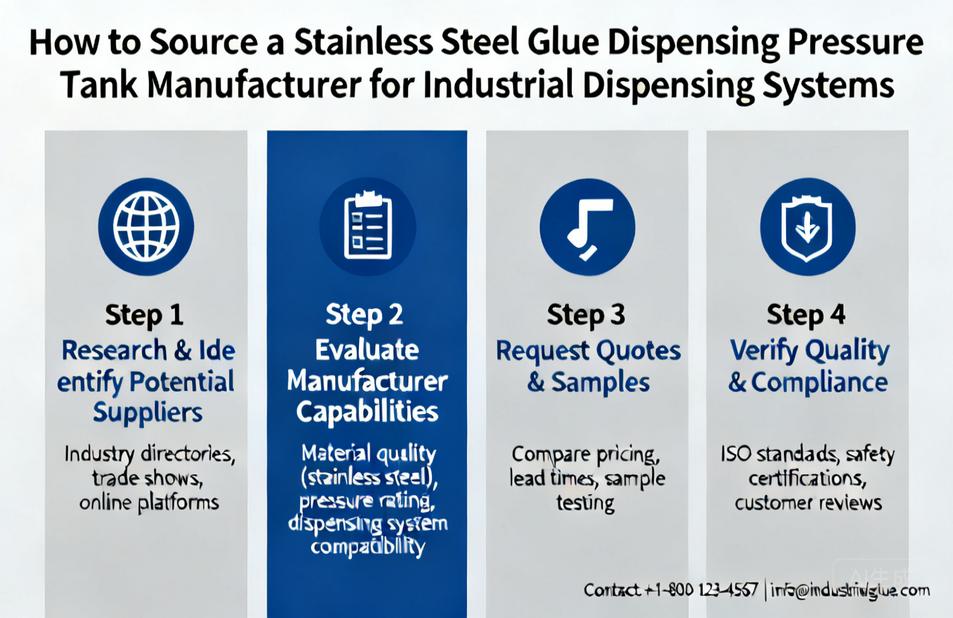
When comparing stainless steel glue dispensing pressure tank suppliers, look for evidence of experience with adhesive and fluid handling systems. Ask how they test pressure integrity, how they handle weld inspection, and what documentation they can provide for material certificates. Review whether the supplier can support replacement parts, seal kits, and technical guidance after the sale. Lead time, packaging, and export experience are also relevant for international buyers. Price should be evaluated together with build quality, cleanability, and the cost of downtime if the tank fails or is difficult to maintain. A supplier who understands dispensing systems can help prevent mismatches between the tank, the valve, and the adhesive.
Frequently Asked Questions
What type of adhesive can be used in a stainless steel pressure tank?
Many adhesives can be used, including water-based, solvent-based, epoxy, polyurethane, silicone, and some filled materials. The key is to confirm chemical compatibility with the tank materials, seals, and gaskets. The adhesive viscosity and curing behavior also affect the tank design.
Can a pressure tank be used with a robotic dispensing system?
Yes. Pressure tanks are often used as the fluid supply for robotic dispensers, provided the pressure and flow are regulated to match the valve. The tank outlet, hose size, and valve type should be selected together for consistent robot dispensing.
How do I clean a stainless steel glue dispensing pressure tank?
Cleaning depends on the adhesive. Many users flush the tank and lines with a compatible solvent, then disassemble accessible parts for manual cleaning. Smooth internal surfaces and removable lids make the process faster and more reliable.
Can the manufacturer provide custom tanks for OEM applications?
Many manufacturers offer OEM and custom fabrication, including special dimensions, port positions, lid styles, and material grades. Buyers should provide adhesive details, operating pressure, and connection requirements so the tank can be designed correctly.
Conclusion
Selecting a stainless steel glue dispensing pressure tank manufacturer is about matching the tank to the adhesive, the dispense valve, and the production environment. Buyers should focus on material compatibility, cleanability, pressure control, and the supplier’s ability to support custom or OEM requirements. Rather than comparing only price, evaluate how well the manufacturer understands industrial dispensing systems and whether they can provide practical guidance on capacity, fittings, and maintenance. If you are reviewing specifications for a new dispensing setup or replacing an existing pressure tank, contacting a supplier with fluid handling experience can help you clarify the right configuration for your application.