

Clamp Type Pressure Tank | A Buyer’s Guide for Industrial Fluid Systems
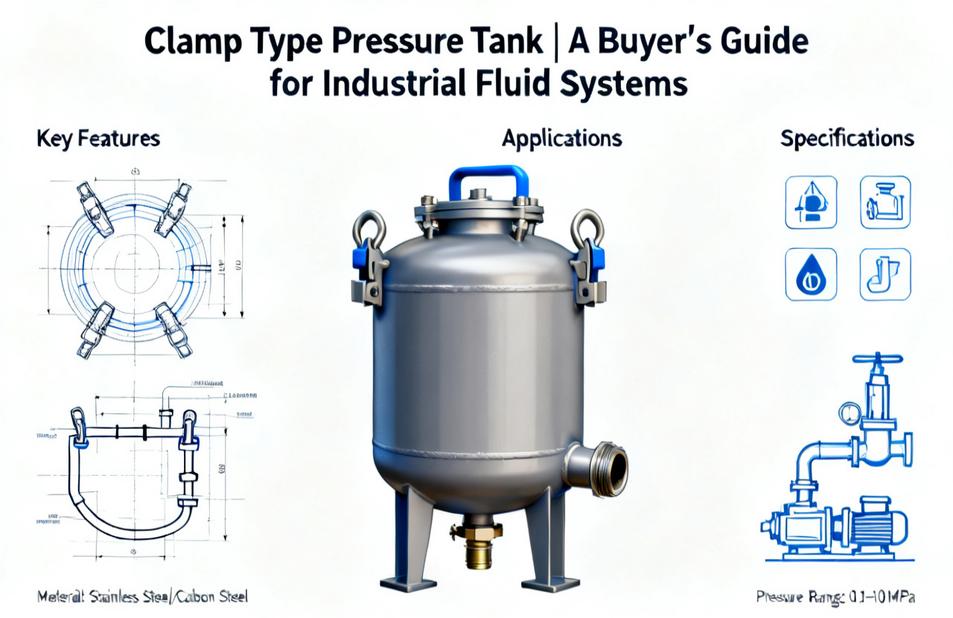
A clamp type pressure tank is a vessel designed to hold fluids or gases under pressure, with a clamping mechanism that secures the lid or connection points for quick access and reliable sealing. It is commonly used in industrial fluid dispensing, spraying, coating, and chemical transfer systems where frequent refilling or cleaning is required. For overseas buyers sourcing this equipment, understanding its construction, working principle, and customization options is essential for matching it to specific production needs.
What Is a Clamp Type Pressure Tank?
Unlike welded or bolted pressure vessels, a clamp type pressure tank uses a clamp ring or clamp band to hold the tank body and cover together. This design allows operators to open the tank quickly for filling, inspection, or cleaning without tools. The clamp ensures a uniform seal along the mating surfaces, which is critical for maintaining pressure and preventing leaks. These tanks are often used in systems that require frequent material changes or strict hygiene control, such as adhesive dispensing, paint circulation, and food-grade liquid transfer.
How Does a Clamp Type Pressure Tank Work?
The tank is filled with the process fluid, and compressed air or an inert gas is introduced into the headspace above the liquid. This pressure pushes the fluid out through a dip tube or outlet port to a dispensing valve, spray gun, or downstream equipment. The clamp mechanism maintains the seal between the body and cover, allowing the tank to hold pressure during operation. When the pressure is released, the clamp can be opened easily for refilling or maintenance. This simple yet effective design makes clamp type tanks suitable for both manual and automated production lines.
Key Features and Benefits
- Quick access: Clamp design enables fast opening and closing, reducing downtime during material changes.
- Uniform sealing: Clamp rings distribute pressure evenly, minimizing leakage risks.
- Flexible capacity: Available in various sizes to match different batch volumes.
- Material compatibility: Can be fabricated from stainless steel, carbon steel, or other alloys based on fluid properties.
- Customizable ports: Inlet, outlet, vent, and gauge ports can be configured for specific system integration.
Materials and Construction
The choice of material depends on the fluid being processed, operating environment, and regulatory requirements. Stainless steel grades such as 304 and 316L are common for their corrosion resistance and cleanability, making them suitable for food, beverage, pharmaceutical, and chemical applications. Carbon steel may be used for non-corrosive fluids where cost is a primary concern. The clamp itself is typically made from stainless steel or plated steel to withstand repeated opening and closing. Seals and gaskets are selected based on chemical compatibility and temperature range. As a custom manufacturer, we work with buyers to select the appropriate material combination for their specific application.
Typical Industrial Applications
Clamp type pressure tanks serve a wide range of industries. In adhesive and sealant dispensing, they provide a pressurized supply to manual or automated dispensing valves. In paint and coating operations, they feed spray guns or circulation lines. Chemical processing plants use them for metering and transferring reactive or hazardous fluids. Food and beverage producers rely on sanitary clamp tanks for flavorings, syrups, and cleaning solutions. Pharmaceutical manufacturers use them in cleanroom environments where quick dismantling and sterilization are required. Other applications include ink supply systems, lubricant delivery, and water treatment chemical dosing.
How to Choose the Right Clamp Type Pressure Tank
Selecting the correct tank involves several factors. First, determine the required capacity based on your batch size and refill frequency. Second, identify the maximum operating pressure of your system, and ensure the tank is rated accordingly. Third, evaluate the chemical compatibility of the wetted materials with your fluid. Fourth, consider the port configuration and connection types to match your existing piping or hoses. Fifth, assess the working environment, including temperature, humidity, and potential exposure to corrosive atmospheres. Finally, think about maintenance access and cleaning requirements. A supplier with experience in your industry can help you navigate these variables.
Customization and OEM Options
Many industrial buyers require customized pressure tanks to fit specific equipment or processes. Common customization requests include non-standard dimensions, special port layouts, alternative materials, surface finishes, and mounting arrangements. OEM services allow companies to private-label the tank or integrate it into their own product line. When discussing customization with a manufacturer, provide detailed specifications such as drawings, fluid characteristics, operating pressure, temperature range, and connection standards. A capable factory will review these requirements and propose a design that meets both functional and regulatory needs without over-engineering.
Buying Considerations for Overseas Procurement
When sourcing clamp type pressure tanks from international suppliers, pay attention to documentation, quality control, and communication. Request material certificates, dimensional drawings, and inspection reports to verify compliance with your specifications. Clarify the scope of supply, including whether fittings, gauges, and safety valves are included. Discuss packaging and shipping methods to prevent damage during transit. Establish a clear understanding of lead times, payment terms, and after-sales support. Working with a supplier who has experience in export markets can reduce risks and streamline the procurement process.
How to Select a Reliable Supplier or Manufacturer
Start by evaluating the supplier’s technical capability. Can they provide engineering support and respond to customization requests? Review their manufacturing processes and quality assurance procedures. Ask for references or examples of similar projects, but avoid relying solely on claims. Consider their experience with your specific industry and their familiarity with relevant standards. Communication is also key: a responsive supplier who asks detailed questions is more likely to deliver a suitable product. If possible, visit the factory or request a video audit to assess production facilities and quality control practices.
Frequently Asked Questions
What is the maximum pressure a clamp type pressure tank can handle?
The maximum working pressure depends on the tank design, material thickness, clamp strength, and seal type. It is not a fixed value. Buyers should provide their required operating pressure so the manufacturer can recommend a suitable configuration and verify safety margins.
Can clamp type pressure tanks be used for food-grade applications?
Yes, when constructed from appropriate stainless steel grades and with sanitary fittings, clamp type tanks are suitable for food and beverage processing. The clamp design allows for easy cleaning and inspection, which helps maintain hygiene standards.
Are custom sizes and port configurations available?
Many manufacturers offer custom fabrication. You can specify capacity, dimensions, port sizes, port locations, and connection types. Providing detailed drawings or samples helps ensure the final product matches your system.
What information should I provide when requesting a quote?
Include the fluid type and concentration, required capacity, operating pressure and temperature, connection standards, material preferences, and any specific industry standards you need to meet. This information enables the supplier to offer an accurate and suitable solution.
Conclusion
Choosing a clamp type pressure tank involves balancing capacity, pressure rating, material compatibility, and customization needs. By understanding how these tanks work and what factors affect performance, overseas buyers can make informed decisions and avoid costly mismatches. Working with a manufacturer or supplier who offers OEM and custom fabrication services can further ensure the tank integrates smoothly into your production line. If you are evaluating options for your next project, consider reaching out to discuss your specifications, application details, or customization requirements with a qualified supplier.