

Adhesive Pressure Tank Manufacturer | How to Choose the Right Tank for Your Dispensing System
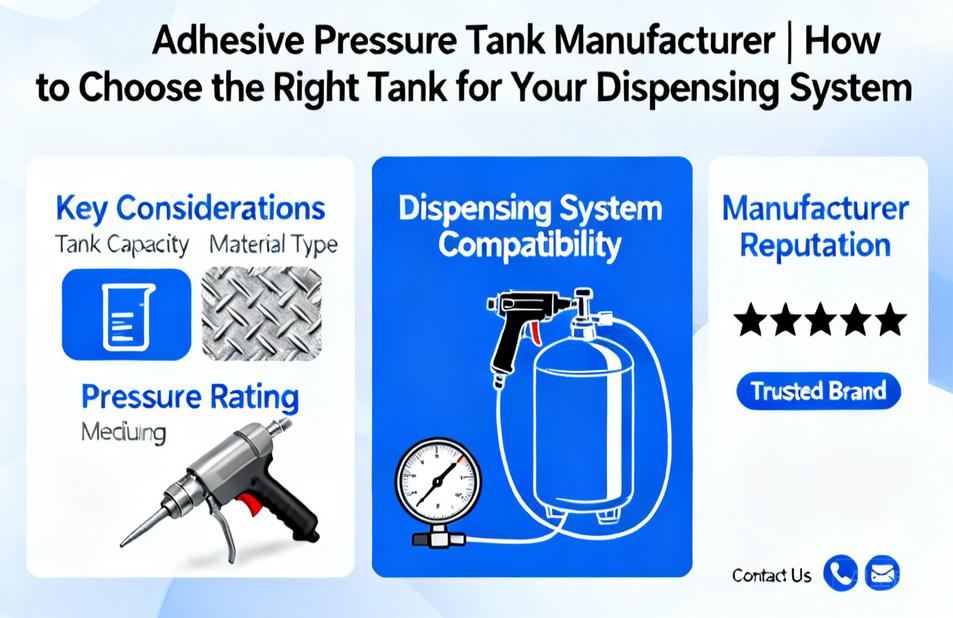
An adhesive pressure tank is a vessel that holds adhesive, sealant, or other viscous material under controlled air pressure so it can be delivered consistently to dispensing valves, guns, or nozzles. As an experienced adhesive pressure tank manufacturer, we design these tanks to handle the flow characteristics of glues, silicones, polyurethanes, and other industrial fluids. They are commonly used in automotive assembly, furniture manufacturing, electronics potting, packaging lines, and general industrial bonding operations where repeatable material delivery is critical.
For overseas buyers, choosing the right tank involves more than matching a volume or pressure rating. The tank must be compatible with the adhesive chemistry, the dispensing equipment, and the production environment. This guide explains how adhesive pressure tanks work, what design factors matter, and how to evaluate a supplier or factory for OEM and custom projects.
What Is an Adhesive Pressure Tank and How Does It Work?
An adhesive pressure tank, sometimes called a pressure pot or material pressure vessel, uses compressed air to pressurize the material inside the tank. The pressure pushes the adhesive through a hose to a dispensing valve or applicator. The operator or a control system regulates the air pressure to adjust flow rate and bead size.
The basic system includes a tank body, a lid with an air inlet and pressure regulator, a material outlet, and often a follower plate or stirring mechanism for high-viscosity adhesives. Some tanks are designed for single-component materials, while others support two-component mixing when paired with metering equipment.
Because the tank keeps the adhesive under constant pressure, the dispensing process remains stable even as the material level drops. This consistency reduces waste, improves bond quality, and supports automated production lines.
Key Features Buyers Look for in an Adhesive Pressure Tank
Different applications require different tank features. When sourcing from an adhesive pressure tank supplier, consider the following:
- Pressure regulation: A reliable air regulator and gauge help maintain consistent output pressure.
- Material compatibility: Wetted parts must resist the adhesive chemistry, whether solvent-based, water-based, or reactive.
- Follower plate: For high-viscosity adhesives, a follower plate helps push material toward the outlet and minimizes waste.
- Agitation: Some adhesives separate or cure quickly, so a stirrer or recirculation option may be necessary.
- Level monitoring: Low-level sensors or sight glasses help operators know when to refill.
- Heating or cooling: Temperature control may be required for hot-melt adhesives or temperature-sensitive materials.
- Portability: Casters or mounting brackets make it easier to move the tank between workstations.
These features should match your dispensing system and material specifications. A good manufacturer will ask about your adhesive type, viscosity, flow rate, and duty cycle before recommending a configuration.
Materials and Construction Considerations
Adhesive pressure tanks are typically made from stainless steel, carbon steel, or aluminum. Stainless steel is common in applications where corrosion resistance or cleanliness is important. Carbon steel may be suitable for certain solvent-based adhesives when properly coated. Aluminum offers lighter weight but may not be compatible with all chemistries.
Seals, gaskets, and hoses must also be compatible with the adhesive. For example, some solvents can degrade certain elastomers, leading to leaks or contamination. Discuss your material with the supplier so they can select appropriate wetted components.
Construction quality affects safety and service life. Look for tanks with proper pressure ratings, welded or seamless bodies, and secure lid locking mechanisms. If the tank will be used in a hazardous area, explosion-proof options may be required.
Typical Industrial Applications
Adhesive pressure tanks serve a wide range of industries. Common applications include:
- Automotive: applying sealants, adhesives, and sound-deadening materials.
- Furniture and woodworking: gluing edges, panels, and joints.
- Electronics: potting, encapsulating, and conformal coating.
- Packaging: carton sealing, labeling, and tray forming.
- Construction: dispensing sealants and structural adhesives.
- General assembly: bonding metal, plastic, glass, and composite parts.
In each case, the tank must deliver adhesive at a consistent rate to match the production speed and quality requirements.
How to Choose the Right Adhesive Pressure Tank
Start by defining your material and process. What is the adhesive viscosity? Is it single-component or two-component? What flow rate and pressure range does your dispensing valve require? How many hours per day will the system operate?
Next, consider the tank size. Larger tanks reduce refill frequency but take up more space and may be harder to clean. Smaller tanks offer flexibility but require more frequent material changes. The right balance depends on your production volume and material shelf life.
Check the pressure rating and safety features. The tank should be rated for the maximum pressure your process needs, with a safety margin. Relief valves, pressure gauges, and secure closures are important.
Finally, think about integration. Will the tank connect directly to your existing dispensing equipment? Do you need custom fittings, a specific outlet size, or a particular mounting arrangement? A manufacturer with engineering support can help you match the tank to your system.
Customization and OEM Options
Many adhesive pressure tank manufacturers offer OEM and custom fabrication services. Customization can include tank volume, port configurations, material selection, surface finish, and mounting options. Some suppliers also integrate regulators, gauges, agitators, and level sensors into the tank assembly.
If you have a unique adhesive or a specialized dispensing process, custom work may be necessary. Provide detailed drawings or specifications, and ask the factory about their engineering capabilities and production lead times. A supplier experienced in OEM projects can often adapt standard designs to meet specific requirements without starting from scratch.
Buying Considerations for International Buyers
When sourcing from overseas, consider documentation, packaging, and support. Ask for dimensional drawings, material certificates, and operating manuals. Confirm that the tank will be properly packaged for transport and that spare parts are available.
Communication is also important. A responsive supplier will answer technical questions, provide updates during production, and offer after-sales support. If possible, request references from other industrial customers in your region or application.
Price should be evaluated alongside quality, lead time, and service. The lowest-cost tank may not be the most economical if it fails prematurely or causes production downtime.
How to Evaluate an Adhesive Pressure Tank Supplier
Look for a manufacturer with experience in your industry. They should understand adhesive behavior, dispensing systems, and safety requirements. Ask about their quality control process, testing procedures, and warranty terms.
Visit the factory if possible, or request a video audit. Check whether they have in-house machining, welding, and assembly capabilities. This indicates better control over quality and lead times.
Review their communication and responsiveness. A supplier who asks detailed questions about your application is more likely to deliver a suitable product than one who simply quotes a price.
Frequently Asked Questions
What information do I need to provide to get a quote for an adhesive pressure tank?
Provide the adhesive type, viscosity, required pressure and flow rate, tank volume preference, wetted material requirements, and any special features such as agitation or heating. Also share details about your dispensing equipment and production environment.
Can adhesive pressure tanks be customized for specific adhesives?
Yes. Many manufacturers offer custom wetted materials, seals, and internal components to match specific adhesive chemistries. Custom port sizes, mounting options, and control integrations are also available.
How do I maintain an adhesive pressure tank?
Regular cleaning, seal inspection, and pressure system checks are important. Follow the manufacturer maintenance schedule and use compatible cleaning agents. Keep spare seals and gaskets on hand to minimize downtime.
What is the difference between a pressure tank and a pump-based dispensing system?
A pressure tank uses air pressure to move material, which is simple and suitable for many adhesives. Pump systems may be better for very high viscosity materials or long-distance delivery. The choice depends on your material and process requirements.
Conclusion
Selecting an adhesive pressure tank manufacturer is about more than finding a supplier who can provide a tank. It is about finding a partner who understands your adhesive, your dispensing process, and your production goals. Focus on material compatibility, pressure control, safety, and customization options. Evaluate the factory engineering support, quality control, and communication.
If you are planning a new dispensing system or upgrading an existing one, contact us with your specifications. We can discuss standard models, OEM requirements, or fully custom adhesive pressure tanks to match your application.
