

Spray Valve Adhesive Dispenser | A Guide to Precision Spray Application
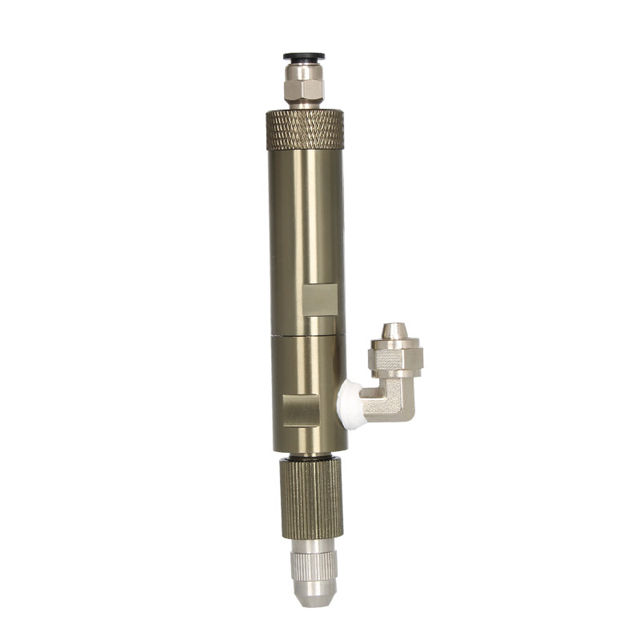
What Is a Spray Valve Adhesive Dispenser?
A spray valve adhesive dispenser is a specialized dispensing device designed to apply compatible adhesives and coating materials as a controlled spray. By combining fluid flow control with an appropriate atomization mechanism, it distributes material across a target surface without relying solely on conventional bead or dot dispensing.
Unlike standard dispensing valves that deposit adhesive in specific points or continuous lines, a spray valve adhesive dispenser can create a broader application pattern. This makes it suitable for processes that require thin, even adhesive coverage over complex surfaces or multiple components.
Depending on the valve design and material properties, spray dispensing systems can be used with sprayable adhesives, primers, protective coatings, and other compatible industrial fluids.
For manufacturers looking to improve application consistency and automate surface treatment processes, selecting the right adhesive spray valve is an important step toward more efficient production.
How Does a Spray Valve Adhesive Dispenser Work?
A typical spray dispensing system consists of a fluid supply, a spray valve, an actuation mechanism, an atomization air supply where applicable, and a controller.
The process generally follows four steps:
1. Fluid Supply
The adhesive or coating material is delivered to the valve under controlled pressure. Stable fluid delivery helps maintain consistent spray output.
2. Valve Activation
A control signal activates the valve, regulating the release of material. Pneumatically actuated models use compressed air to operate the valve mechanism.
3. Spray Atomization
Depending on the design, compressed air or another engineered atomization mechanism breaks the fluid into smaller droplets and forms the desired spray pattern.
4. Controlled Surface Application
The material is directed toward the target surface. Spray distance, nozzle configuration, fluid pressure, and operating parameters influence coverage and transfer efficiency.
The final result depends on the complete dispensing setup, including adhesive viscosity, surface geometry, environmental conditions, and the characteristics of the material being applied.
Key Benefits of an Adhesive Spray Dispensing Valve
1. Uniform Surface Coverage
A properly configured spray valve can distribute compatible adhesive materials across a defined area. This is useful when conventional dot or bead dispensing cannot provide the required coverage.
2. Flexible Spray Patterns
Different nozzle and valve configurations can produce different spray widths and patterns. This flexibility helps manufacturers adapt the dispensing process to different component shapes and application requirements.
3. Improved Process Consistency
Automated valve control can help maintain repeatable dispensing cycles. When fluid pressure, spray distance, and other parameters are controlled, manufacturers can achieve more consistent application results.
4. Support for Automated Production
Spray dispensing valves can be integrated into robotic systems, automated assembly equipment, and production lines that require repeatable material application.
5. Potential Reduction in Material Waste
Correctly configured spray equipment can help control the amount of material applied. Actual material savings depend on the spray pattern, transfer efficiency, overspray control, and process settings.
Industrial Applications of Spray Valve Adhesive Dispensers
Spray valve adhesive dispensers serve a variety of industrial manufacturing applications.
- Electronics manufacturing: Applying compatible protective coatings, primers, and adhesive materials to electronic assemblies.
- Automotive production: Spraying suitable adhesives, surface treatments, and protective materials onto selected components.
- Consumer electronics: Applying functional coatings or sprayable bonding materials to designated surfaces.
- Medical device manufacturing: Applying compatible coatings and adhesives when the equipment and process meet the required manufacturing standards.
- Industrial assembly: Distributing suitable adhesive materials across larger bonding areas or complex component surfaces.
- Surface coating processes: Applying sprayable primers and functional coatings where controlled coverage is required.
The appropriate equipment depends on the fluid formulation, required coating thickness, target area, production speed, and application environment.
How to Choose the Right Spray Valve Adhesive Dispenser
Choosing a spray valve adhesive dispenser requires matching the equipment to the material and production process.
Adhesive viscosity: Check whether the valve can handle the material’s viscosity and flow characteristics. High-viscosity adhesives may require specialized equipment or may not be suitable for atomized spraying.
Spray pattern: Determine whether the application requires a narrow spray, a wide fan pattern, or another specific distribution.
Droplet size and coverage: Evaluate the required coating uniformity and material distribution. These depend on the fluid properties, nozzle design, and atomization conditions.
Fluid compatibility: Confirm that the valve body, seals, nozzle, and other wetted components are compatible with the adhesive or coating material.
Operating parameters: Review fluid pressure, atomization pressure where applicable, spray distance, cycle frequency, and control requirements.
Automation compatibility: Check whether the valve can integrate with your existing controller, robotic system, or production equipment.
Maintenance and cleaning: Consider material buildup, nozzle blockage, cleaning procedures, replacement parts, and long-term maintenance requirements.
Before purchasing, provide the supplier with your material specifications, application photos, target coverage area, production requirements, and operating conditions. These details help identify a suitable configuration.
Why Choose a Professional Spray Valve Supplier?
A professional spray valve supplier should help customers evaluate material compatibility, dispensing performance, spray pattern requirements, and integration with existing equipment.
When comparing suppliers, review product specifications, technical documentation, manufacturing quality, customization options, and after-sales support. For demanding applications, testing the valve with the actual material is an effective way to verify spray quality and process suitability before full-scale production.
The right dispensing solution should meet your application requirements while balancing material consumption, production efficiency, maintenance needs, and operating costs.
Frequently Asked Questions
What is a spray valve adhesive dispenser used for?
It is used to apply compatible adhesives, primers, and coating materials in a controlled spray pattern. Common applications include electronics manufacturing, automotive assembly, industrial bonding, and surface treatment.
What is the difference between a spray valve and a standard dispensing valve?
A standard dispensing valve typically deposits material as dots, lines, or controlled fluid shots. A spray valve is designed to distribute compatible materials over a wider area through an atomization mechanism.
Can a spray valve adhesive dispenser handle high-viscosity adhesives?
Not every spray valve can handle high-viscosity materials. Suitability depends on the valve design, nozzle configuration, fluid properties, and atomization mechanism. Confirm compatibility with the equipment manufacturer.
How can I improve adhesive spray consistency?
Maintain stable fluid supply conditions, use a suitable nozzle, control spray distance, and optimize the valve timing and atomization parameters. Regular inspection and cleaning also help maintain consistent performance.
How do I select a suitable adhesive spray valve?
Start with the adhesive type, viscosity, required spray pattern, target coverage area, operating pressure, and production cycle. Consult a supplier to determine which valve configuration best matches your application.
Find the Right Spray Valve Adhesive Dispenser for Your Application
Consistent adhesive spraying starts with the right combination of valve design, fluid control, and atomization technology.
Whether you are developing a new automated production line or improving an existing coating process, a suitable spray valve adhesive dispenser can help achieve controlled surface coverage and repeatable application results.
Contact an experienced dispensing equipment supplier to discuss your material requirements, compare available valve configurations, and identify the right solution for your manufacturing process.
