

Liquid Gasket Dispensing Valve Selection | Specs, Materials, and Setup
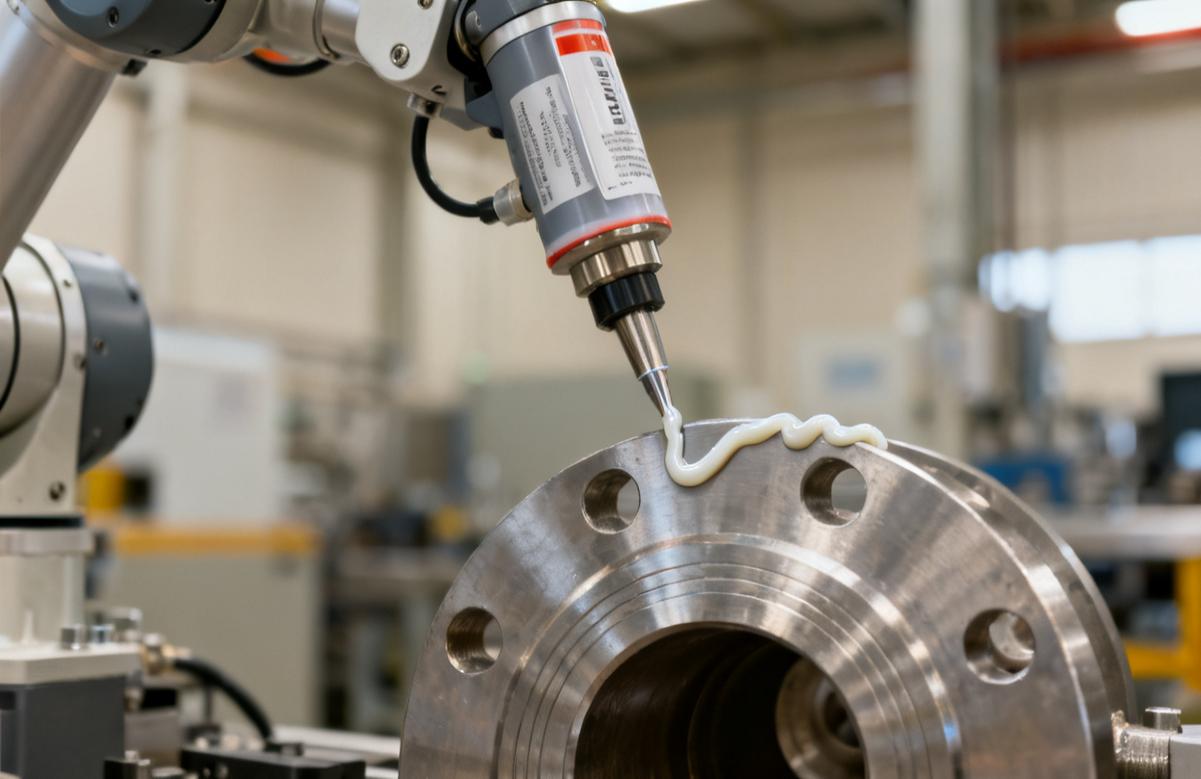
A liquid gasket dispensing valve is a fluid-control component that starts and stops the flow of a form-in-place gasket material, usually an anaerobic, silicone, or solvent-based sealant, so a robot or operator can lay a consistent bead on a flange or housing. Selection hinges on the valve style, wetted materials, needle or orifice size, actuation method, and supply system; because these parameters vary by model and fluid, confirm them against the manufacturer datasheet and run trials with the actual gasket material.
What the Valve Does and Where It Fits
A liquid gasket valve is a dispensing valve, not a pressure vessel. Its job is timing and metering: open to let material through, close cleanly, and avoid drips or stringing at the end of the bead. Upstream, the material is usually held in a cartridge, pail, or pressure tank and delivered by a pump, follower plate, or pressure feed. The valve sits at the end of that chain, often mounted on a robot, gantry, or benchtop fixture.
Do not expect a dispensing valve to regulate and store material. If the process requires continuous supply, choose a supply tank or pump separately and specify its nameplate limits for the actual gasket material.
How Liquid Gasket Valves Work
Most designs use one of three operating principles, and each has trade-offs for bead quality and maintenance.
Needle and seat valves
A needle retracts from a seat to open a controlled annular gap. They suit small beads, sharp start/stop points, and lower-viscosity gasket materials. Needle and seat wear depends on the sealant’s filler content and cycle count.
Snuff-back valves
A snuff-back design pulls material back slightly at closure to break the bead and reduce drool. They are often chosen for low-viscosity or stringy anaerobics, but the suction behavior must be matched to the material and tubing length.
Pinch and diaphragm valves
These isolate the actuator from the fluid. They can suit abrasive or moisture-sensitive materials, but check the wetted elastomer against the gasket chemistry.
Selection Criteria That Matter Most
Buyers should treat the valve and the material as one system. The table below groups the decisions that most often determine success.
| Decision area | What to confirm | Why it matters |
|---|---|---|
| Valve type | Needle/seat, snuff-back, pinch, or diaphragm | Affects bead cutoff, drool, and maintenance frequency |
| Wetted materials | Body, seat, seal, and needle material against the gasket chemistry | Prevents swelling, curing, or contamination |
| Orifice or needle size | Bead width and target flow rate | Sets the achievable bead profile and pressure drop |
| Actuation | Pneumatic, electric, or manual | Determines speed, repeatability, and control integration |
| Supply pressure | Operating range and material viscosity | Affects flow stability and valve response |
| Mounting interface | Robot flange, bracket, or fixture | Influences bead path accuracy |
Materials and Fluid Compatibility
Liquid gasket materials range from anaerobic flange sealants to RTV silicones and solvent-borne formulations. Each behaves differently in a valve. Anaerobic materials can cure in air-exposed passages if the valve is not purged or cleaned, while silicones may be sensitive to certain elastomers and to moisture. Solvent-based products can attack seals and dry out to leave residue.
Ask the valve supplier for the standard wetted-material combination and confirm compatibility with the specific product data sheet from the gasket manufacturer. Do not assume a stainless-steel body is automatically suitable for every fluid; the seat and seal materials often determine service life. Where process cleanliness matters, specify the cleaning method and whether the valve can be flushed or disassembled.
Matching Orifice, Bead, and Supply Pressure
The bead width, dispensing speed, and material viscosity together define the required flow rate and pressure at the valve. A valve with a larger orifice can flow more material but may struggle to close cleanly, while a small needle may suit fine beads but restrict flow at low pressure. Because these relationships are model- and fluid-specific, request flow curves or sample testing instead of assuming a rating from a catalog heading.
Information to prepare for a quotation
- Gasket material name, manufacturer, and product data sheet
- Target bead width, height, and length per part
- Cycle time and dispense speed required by the production line
- Supply method: cartridge, pail, or pressure tank
- Actuation preference and control signal type
- Robot or fixture mounting constraints
- Cleaning and purge requirements between runs
Installation and Start-Up Checks
- Verify the valve nameplate and datasheet limits against the material supply pressure before connecting.
- Purge the line and valve to remove air and previous materials.
- Set supply pressure with the actual gasket material, not water or solvent.
- Adjust the valve open time and robot speed together to reach the target bead profile.
- Inspect the first parts for bead width, continuity, and cutoff quality before full production.
- Record settings so they can be repeated after maintenance or material lot changes.
Limitations and When a Different Valve Fits Better
A liquid gasket dispensing valve is not the best choice for every sealant process. If the material is highly filled or abrasive, a pinch or diaphragm design may last longer than a needle valve. If the process needs a wide sprayed coating rather than a bead, a spray valve is more appropriate. If two components must be mixed at the point of use, a two-component dispensing valve is the relevant family. For high-flow filling of large flanges, a larger-flow valve may be needed instead of a precision needle valve.
Buyer Checklist for Supplier Evaluation
- Can the supplier provide wetted-material and fluid-compatibility data?
- Are flow, pressure, and cycle-rate limits documented in the datasheet?
- Is sample testing available with the actual gasket material?
- Are spare needles, seats, and seals readily available?
- Can the valve be integrated with your robot or controller?
- Are cleaning and maintenance procedures documented?
Because bead quality depends on the combined supply, valve, and motion system, evaluate the complete dispensing chain rather than the valve alone. Confirm all pressure, temperature, flow, and material suitability with the manufacturer and qualified engineering review before production use.
Frequently Asked Questions
What is a liquid gasket dispensing valve used for?
It dispenses a form-in-place gasket material, such as an anaerobic, silicone, or solvent-based sealant, in a controlled bead on a flange or housing. It controls start, stop, and cutoff quality, while the supply tank or pump handles storage and delivery.
How do I choose between a needle valve and a snuff-back valve for gasket material?
A needle and seat valve is often selected for small beads and sharp cutoff, while a snuff-back valve is chosen when drool or stringing at the end of the bead is a concern. The right choice depends on the gasket material’s viscosity and behavior, so confirm with the valve supplier and a sample trial.
Can any dispensing valve handle any liquid gasket material?
No. Wetted materials, seals, and internal clearances must match the gasket chemistry. Anaerobic materials, silicones, and solvent-based products behave differently, and compatibility should be confirmed against the gasket manufacturer’s product data sheet and the valve supplier’s wetted-material list.
What information should I send to get a valve quotation?
Provide the gasket material and data sheet, target bead width and length, required cycle time, supply method, actuation preference, mounting constraints, and cleaning requirements. These factors drive valve selection and quotation; specific prices and lead times should come from the supplier.
Why does the bead look uneven or drip after the valve closes?
Uneven beads can come from air in the line, unstable supply pressure, incorrect open time relative to robot speed, or a valve type that does not suit the material. Dripping after closure may indicate a cutoff design or needle/seat issue; check the supply system and consult the manufacturer for the correct valve configuration.
