

What Is an Industrial Pressure Tank? A Buyer’s Guide to Selection and
An industrial pressure tank, often called a pressure pot or material supply tank, is a vessel that holds a fluid—such as adhesive, paint, coating, or sealant—and uses compressed gas to pressurize it for delivery to a dispensing valve, spray gun, or metering system. Its primary use case is to provide a consistent, pressurized fluid supply in industrial processes where reliable flow and pressure are critical. This article explains how these tanks work, what to consider when selecting one, and the information you need to evaluate a supplier.
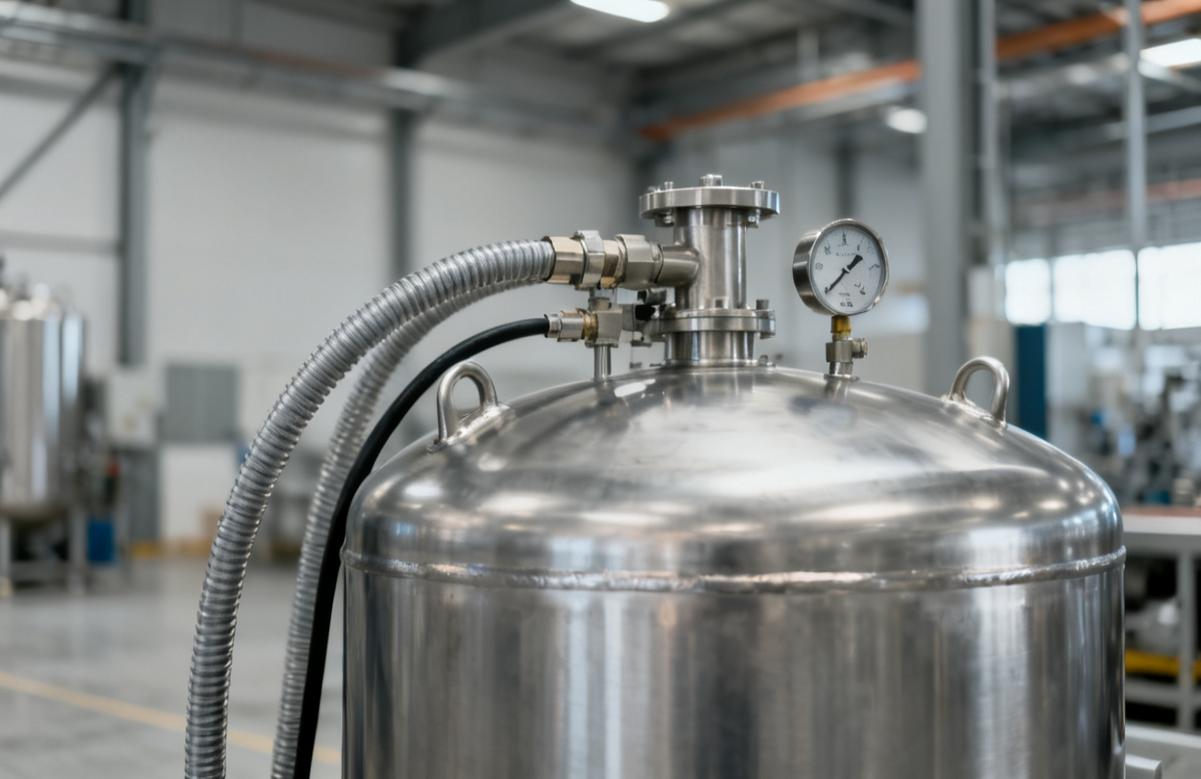
How an Industrial Pressure Tank Works
Compressed air (or another gas) is introduced into the sealed tank above the fluid, creating pressure that forces the fluid out through a discharge line. A pressure regulator controls the gas pressure, which in turn determines the fluid output pressure. The tank may include features such as a fill port, a fluid level indicator, a safety relief valve, and a drain. The design must suit the fluid’s characteristics, the required pressure, and the operating environment.
Key Selection Factors
Selecting the right tank requires matching several parameters to your process. The table below summarizes the main considerations.
| Factor | Considerations | Why It Matters |
|---|---|---|
| Fluid compatibility | Material of construction (e.g., stainless steel, carbon steel, or plastic), wetted parts, and seals must resist the fluid’s chemistry and viscosity. | Prevents corrosion, contamination, and seal failure. |
| Rated pressure | The maximum allowable working pressure must exceed your required dispensing pressure with a safety margin, as per applicable codes. | Ensures safe operation and prevents tank rupture. |
| Capacity | Tank volume should match your consumption rate and refill frequency, avoiding excessive downtime. | Balances productivity and material waste. |
| Ports and connections | Size and type of fluid outlet, gas inlet, fill port, and any agitation or heating provisions. | Ensures compatibility with existing lines and accessories. |
| Certifications and standards | Verify compliance with local pressure vessel regulations (e.g., ASME, PED) as applicable to your region. | Legal and safety requirement; may affect insurance. |
Materials and Compatibility
The tank material must be compatible with the fluid and the cleaning method. Stainless steel is common for waterborne or solvent-based materials and for hygienic applications; carbon steel may be suitable for non-corrosive fluids. Seals (e.g., PTFE, Viton) must also be chemically compatible. Always confirm material compatibility with the fluid supplier and the tank manufacturer. For abrasive or shear-sensitive fluids, consider design features such as gentle agitation or a diaphragm to isolate the pressurizing gas.
Pressure and Capacity: Getting the Numbers Right
Determine the required fluid pressure at the dispensing point, then add allowances for line losses. The tank’s rated pressure must exceed this value; however, do not specify a higher pressure than necessary, as this may increase cost and complexity. Capacity should be sized based on fluid consumption per shift, refill logistics, and the need for buffer inventory. For example, a tank that is too small causes frequent refills and downtime; one that is too large may lead to fluid waste or stagnation. There is no universal capacity or pressure rating—these vary by model and must be confirmed with the manufacturer.
Typical Use Cases
Pressure tanks are used in adhesive and sealant dispensing, paint and coating supply, and other fluid delivery systems. They are suitable when a pressurized, consistent flow is needed and when the fluid can be stored in a tank. They may be less suitable for fluids that cure rapidly, settle heavily, or require frequent recipe changes; in such cases, alternative supply methods or additional features like agitation may be needed.
Installation and Maintenance
Install the tank in a well-ventilated area, away from ignition sources if flammable fluids are used. Follow the manufacturer’s instructions for safe depressurization before maintenance. Regular checks should include the relief valve, seals, and pressure gauge. Establish a maintenance schedule based on the fluid and operating conditions. Always use the tank within its nameplate limits and applicable local requirements.
Customization and Supplier Evaluation
Many suppliers offer customizations such as special port sizes, agitation, heating jackets, or level sensors. When evaluating a supplier, ask for: (1) evidence of quality management (e.g., ISO certification), (2) pressure vessel certifications for your region, (3) material certificates for wetted parts, (4) a clear datasheet with pressure and capacity ratings, and (5) references from similar applications. Do not rely on verbal claims; request documentation.
Buyer Checklist
- Fluid type, viscosity, and corrosiveness
- Required output pressure and flow rate
- Maximum allowable working pressure and certification requirements
- Capacity and refill frequency
- Port sizes and types
- Material compatibility of tank and seals
- Cleaning and maintenance requirements
- Supplier documentation and certifications
Always verify critical parameters against the manufacturer’s datasheet and consult a qualified engineer for pressure-containing equipment.
Frequently Asked Questions
What is the difference between a pressure tank and a pressure pot?
The terms are often used interchangeably in industrial fluid supply. Both refer to a vessel that holds fluid under pressure for delivery. However, some suppliers may use ‘pressure pot’ specifically for smaller, portable units, while ‘pressure tank’ might imply larger or stationary vessels. Always confirm the intended use and specifications with the supplier.
Can I use a pressure tank for both adhesive and paint?
It depends on the tank’s material compatibility and cleaning provisions. Adhesives and paints have different chemistries and viscosities. A tank configured for one may not be suitable for the other without proper cleaning and material verification. Consult the manufacturer for multi-fluid use.
How do I determine the right size for my pressure tank?
Calculate your fluid consumption per hour or shift, then consider refill logistics and downtime. A larger tank reduces refill frequency but may increase material waste and cleaning effort. The manufacturer can help size the tank based on your process data.
What safety features should a pressure tank have?
Essential safety features include a pressure relief valve, a pressure gauge, and a proper fill port with a secure closure. The tank should be rated for the maximum pressure and certified according to local regulations. Regular inspection and maintenance are also critical.
Do I need a certification for my pressure tank?
Certification requirements depend on your location and the tank’s pressure and volume. Many regions require compliance with pressure vessel codes such as ASME in the US or PED in Europe. Check with local authorities and request certification documents from the supplier.
Company Information and Technical Inquiries
Company: Hejikang (Guangdong) Metal Surface Treatment Co., Ltd.
Address: No. 3, Liuhua Industrial Road, Dongcheng Subdistrict, Dongguan, Guangdong, China
Phone: +8613253611781
Email: 847317465@qq.com
