

Pneumatic Mixer Pressure Tank | How It Works and What to Consider When Buying
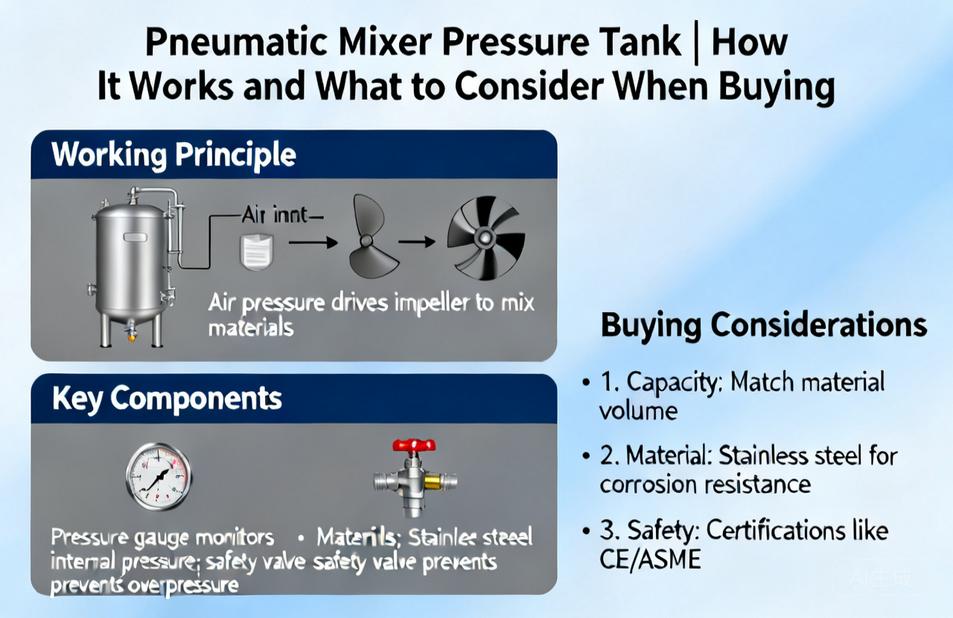
A pneumatic mixer pressure tank is a specialized vessel that combines air-driven agitation with pressure-based material discharge, commonly used for mixing and dispensing paints, coatings, adhesives, sealants, and other medium-viscosity fluids. This equipment is widely adopted in industrial finishing lines, ink supply systems, and automated fluid application processes where consistent mixture quality and steady output are critical. For B2B buyers looking into such systems, understanding the core functions and selection factors is essential before contacting a reliable manufacturer or supplier.
Product Overview of a Pneumatic Mixer Pressure Tank
This type of tank integrates two main functions: pneumatic mixing and pressure discharge. The mixing mechanism typically uses a top-mounted air motor that drives an agitator shaft and impeller to keep the fluid homogeneous, preventing pigment settling or separation. Meanwhile, the tank itself is pressurized with compressed air, pushing the mixed material out through a discharge line to spray guns, extrusion heads, or other application tools. This combination is particularly useful for shear-sensitive or settling-prone materials that require continuous agitation during the dispensing process.
Pneumatic mixer pressure tanks are often built from stainless steel to handle a broad range of chemicals and solvents. The internal components, such as the agitator blade and shaft, are designed to provide thorough mixing even in narrow or tall vessels. Common capacity ranges vary from small 10-liter laboratory units to large 120-liter industrial drums, although custom sizes are available from OEM factories.
Key Features and Benefits
One of the main advantages of using a pneumatic mixer pressure tank is the elimination of complicated electric drives in potentially hazardous areas. Since pneumatic motors are intrinsically spark-free, these tanks are safer for flammable solvents and coatings. Another benefit is precise pressure control, which allows operators to adjust the discharge rate smoothly without pulsation. This is critical in spray finishing where consistent flow prevents defects like orange peel or sagging.
Furthermore, the mixing action ensures that the material stays uniform over extended production runs. Without continuous agitation, fillers and pigments often settle at the bottom, causing inconsistent color or viscosity. A pneumatic mixer pressure tank avoids this problem by maintaining a homogeneous mixture right up to the point of discharge. This reduces waste and improves product quality, especially for two-component systems that need careful handling.
Maintenance is also streamlined because pneumatic motors have few moving parts, and the tank design typically allows for easy cleaning and inspection. Many units feature quick-release clamps and removable agitators, which shortens changeover time between different materials or colors.
Materials and Construction
The construction material is a critical consideration when selecting a pneumatic mixer pressure tank. Stainless steel 304 is standard for many water-based and mildly acidic fluids, while 316 stainless steel is preferred for more corrosive chemicals or marine environments. The tank interior should be smooth and without crevices to minimize material buildup and simplify sanitation. The pressure vessel itself must comply with relevant safety standards, though the specific certifications depend on the destination country and the intended use.
The agitator assembly usually includes an air motor, reduction gearbox, and shaft seal. The seal type is vital because it must prevent both air leakage and material contamination. Lip seals or double mechanical seals may be used depending on the viscosity and abrasiveness of the fluid. Some advanced models also include a variable speed control on the air motor, allowing operators to adjust mixing intensity based on the product requirements.
Other construction details include the pressure relief valve, pressure gauge, and safety lock. These components ensure that the tank cannot be over-pressurized, and they provide the operator with clear readings of the internal pressure. A well-designed tank will also have a bottom outlet valve that can be fully opened for quick draining and cleaning.
Industrial Applications
Pneumatic mixer pressure tanks are used across many industries. In the paint and coating sector, they supply finishing lines with consistent color batches. In the adhesive and sealant industry, they handle thick materials such as butyl tapes and PU sealants that require gentle but constant stirring. Ink manufacturers use them to keep printing inks homogeneous, especially in flexographic and gravure printing presses. The food and pharmaceutical industries also utilize such tanks for mixing syrups, creams, and other viscous products that must be dispensed under sanitary conditions.
Beyond fluid delivery, these tanks serve as centralized mixing stations in manufacturing plants. They can be integrated into automated dispensing robots or manual application stations. For high-volume production, multiple tanks can be linked in a manifold system to provide uninterrupted material supply. In such setups, the pneumatic mixer pressure tank becomes a key component of the production line, directly affecting throughput and quality consistency.
How to Choose the Right Pneumatic Mixer Pressure Tank
When selecting a pneumatic mixer pressure tank, several factors require careful evaluation. First, determine the material characteristics, including viscosity, solids content, thixotropy, and chemical compatibility. A high-viscosity paste requires a more powerful air motor and possibly a different agitator design than a low-viscosity liquid. Second, consider the required flow rate and discharge pressure. Higher pressure may be needed for long hose runs or for atomizing thick materials.
Tank capacity should align with production needs, but larger tanks are not always better because they require more flush solvent and cleaning time. A practical approach is to size the tank so that it can hold between one and two hours of consumption, balancing the need for continuous operation against changeover flexibility. Also, verify that the tank’s pressure rating is suitable for your air supply system and that it includes a proper pressure regulator and gauge.
Another important aspect is the mixer’s speed control. Some materials are shear-sensitive and will degrade if agitated too vigorously. In such cases, choose a model with a variable speed air motor or a gear reducer that keeps the impeller speed below a certain limit. The agitator blade geometry also matters: pitched-blade turbines provide axial flow for lifting solids, while high-shear discs are better for dispersing agglomerates.
Customization and OEM Options
Many buyers require custom configurations for their existing systems. A reputable pneumatic mixer pressure tank manufacturer often offers OEM services, allowing you to specify dimensions, pressure rating, mixing speed, and connection sizes. Customization may also involve adding a heating jacket for temperature-sensitive materials or a vacuum port for degassing. When discussing requirements with a supplier, provide a detailed technical file that includes the fluid properties, operating environment, and target performance.
Because these tanks are often part of a larger material supply system, compatibility with pumps, filters, and spray guns is essential. An experienced factory can adapt the outlet threading and hose size to match your current equipment, minimizing the need for adapters. Also, ask about the availability of spare parts, such as seals and air motor kits, because downtime in a production facility is costly.
Buying Considerations from a Supplier
When evaluating a pneumatic mixer pressure tank supplier, first verify their production experience and quality control processes. Ask for material certificates, mechanical drawings, and pressure test reports. Although we do not provide specific certifications by default, a serious manufacturer will be willing to share such documents. Inquire about the lead time and whether they stock standard models or build to order. Also, clarify the warranty terms and after-sales technical support.
International buyers should consider the shipping logistics and the availability of instruction manuals in English. It is beneficial to request a video demonstration of the tank’s mixing action and pressure control to verify that it performs as described. A reliable supplier will also offer guidance on installation and commissioning, even if it is through online communication.
Frequently Asked Questions
What is the difference between a pneumatic mixer pressure tank and a regular pressure tank?
A regular pressure tank only pressurizes and discharges the material, assuming the fluid is already homogeneous. A pneumatic mixer pressure tank adds an air-driven agitator that continuously stirs the contents, preventing settling and maintaining consistency. This is necessary for materials like paints and inks that separate over time.
How do I clean a pneumatic mixer pressure tank between batches?
Cleaning involves releasing the pressure, draining the remaining material, and then flushing the tank with an appropriate solvent. Many tanks have a removable lid and agitator assembly, which allows for manual cleaning. Quick-connect fittings and smooth interior surfaces simplify the process. Always follow the safety instructions for the specific solvent being used.
Can I use a pneumatic mixer pressure tank for food products?
Yes, if the tank is made of food-grade stainless steel and uses seals that comply with food safety regulations. However, the design must allow for thorough cleaning and sanitization. Discuss your specific application with the manufacturer to ensure the tank meets the necessary hygiene standards.
What safety devices are typically included?
Standard safety features include a pressure relief valve, an accurate pressure gauge, and a shut-off valve on the air supply. Some models also have a burst disc for overpressure protection. The agitator should have an interlock that prevents operation when the lid is open, ensuring operator safety.
Conclusion
A pneumatic mixer pressure tank is a vital piece of equipment for any facility that needs to mix and dispense viscous fluids with consistent quality. By understanding the working principle, material compatibility, and key selection criteria, you can choose a model that matches your production requirements. Whether you need a standard unit or a fully customized solution, working with an experienced manufacturer or supplier ensures that the tank integrates seamlessly into your operation. For specific specifications, OEM inquiries, or technical consultation, contact a professional supplier who can provide detailed guidance and a responsive quote.