

60L Paint Pressure Tank | Industrial Application, Selection and Supplier Guide
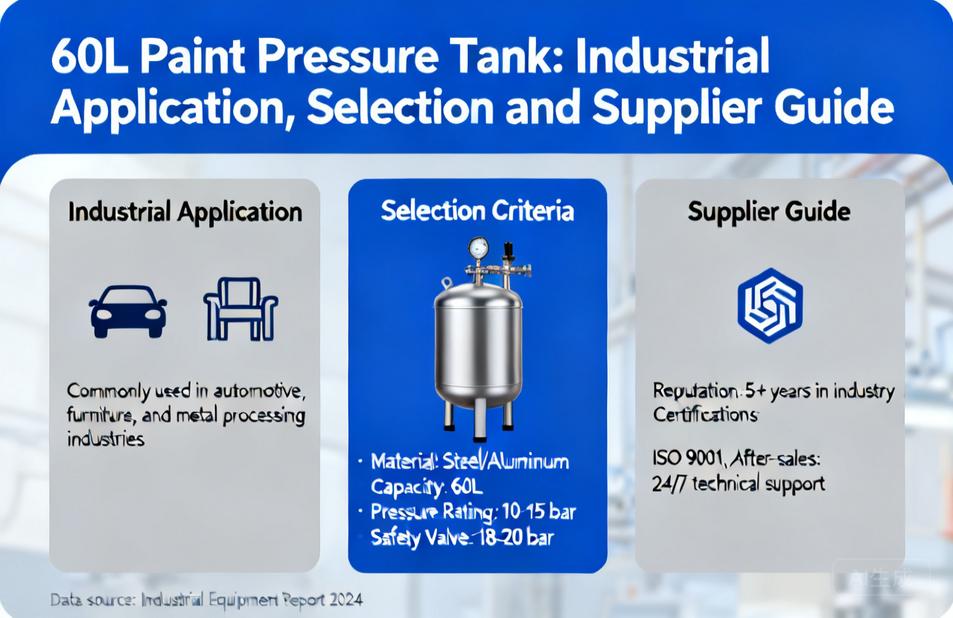
A 60L paint pressure tank is a pressurized vessel designed to store and deliver paint, coatings, adhesives, and other medium-viscosity fluids in industrial finishing and manufacturing environments. It provides a steady, controlled flow of material to spray guns or applicators, enabling consistent coating thickness and reducing downtime caused by frequent refilling. This tank size is particularly suited for high-volume paint circulation systems, large-area coating projects, and production lines that demand continuous material supply. For buyers seeking a 60L paint pressure tank, understanding its construction, operational benefits, and key selection criteria is essential for making a cost-effective investment that matches their specific application requirements.
What Is a 60L Paint Pressure Tank and How Does It Work?
A 60L paint pressure tank, also referred to as a pressure pot, paint pot, or material pressure vessel, works by using compressed air to pressurize the tank’s interior, forcing the paint or fluid through a fluid hose to a spray gun or automatic applicator. The operator adjusts the incoming air pressure to control the fluid delivery rate, ensuring a consistent spray pattern without pulsation. The tank typically includes a lid with a quick-release clamp, a pressure gauge, a safety valve, an air regulator, and a fluid outlet valve. The larger 60-liter capacity minimizes the frequency of refilling, making it an efficient solution for continuous coating operations, such as those found in automotive refinishing, wood finishing, metal fabrication, and industrial maintenance.
Key Features and Construction of a 60L Paint Pressure Tank
When evaluating a 60L paint pressure tank from a manufacturer or supplier, the materials and build quality directly affect longevity and safety. Most industrial tanks are constructed from carbon steel with a corrosion-resistant interior lining, or from stainless steel for applications involving water-based or corrosive fluids. The tank’s lid seal and clamping mechanism must provide an airtight closure to maintain consistent pressure and prevent leaks. Other essential features include a pressure relief valve for overpressure protection, a fluid outlet with a compatible thread size, and a safety lock to avoid accidental opening while pressurized. Depending on the OEM or custom order, tanks can also be equipped with agitators to keep pigments suspended, level sensors for automatic refill control, or caster wheels for portability.
Materials and Surface Treatment
For solvent-based paints and coatings, a carbon steel tank with an epoxy or polyurethane lining is common because it offers robustness at a lower cost. For water-based or mildly corrosive fluids, stainless steel tanks provide better resistance to rust and contamination. Surface treatment inside the tank is crucial, as any rough spots can trap dried paint or cause contamination of subsequent batches. A quality factory will offer the option of a smooth internal finish, electro-polishing, or a specific lining material compatible with the fluid to be dispensed.
Pressure Rating and Safety Components
The working pressure range of a 60L paint pressure tank varies by model, and while exact specifications must be confirmed with the supplier, most industrial units operate within a typical range suitable for spray applications. The pressure gauge and regulator allow precise control, while the safety relief valve ensures the tank cannot exceed its rated pressure. Buyers should always verify compliance with relevant pressure vessel standards, such as CE, ASME, or other regional certifications, although the specific certification must be confirmed with the manufacturer as it depends on the delivery destination and model.
Applications of a 60L Paint Pressure Tank
A tank of this capacity is widely used in professional painting and coating operations that require a continuous supply of material. Common applications include spray painting of metal structures, furniture finishing, automotive refinishing, marine coating, and the application of protective coatings in heavy equipment manufacturing. It is also used for dispensing adhesives, sealants, and release agents in assembly lines. The 60L size is a practical choice for facilities that run multiple spray guns or that use a circulation system where paint is continuously recirculated to prevent settling. In high-volume production environments, this tank reduces operator intervention and promotes uniform film thickness, leading to fewer rejects and reworks.
How to Choose the Right 60L Paint Pressure Tank
Selecting a suitable 60L paint pressure tank involves more than comparing capacity. First, assess the type of fluid you will use. Solvent-based paints, high-solid coatings, and water-based materials may require different seal materials and tank linings. Second, consider the outlet port size and thread type to ensure compatibility with your existing fluid hoses and spray guns. Third, evaluate the working pressure needed for your specific spray equipment. Fourth, think about the environment where the tank will be used; if it is stationary, a fixed mount may be sufficient, but for mobile use, a tank with wheels and a handle is more practical.
Compatibility with Existing Spray Systems
Before purchasing, check whether the tank’s fluid outlet and air inlet connections match your current system. If you are replacing an older unit, you may need an adapter or a custom outlet configuration. Many suppliers offer OEM services to provide a tank that matches your existing setup, including specific thread sizes, fluid hose fittings, and gauge placements. If you are building a new system, choose a tank that integrates easily with your chosen spray guns and air compressors.
Customization and OEM Options
Numerous paint pressure tank manufacturers and factories accept OEM and custom orders. Customization can include a different tank volume within the same series, a special lining material, an agitator, a sight glass to monitor fluid level, or a custom color and branding. For large-scale buyers, a supplier that can provide private-label tanks or modify the standard product to meet unique operational requirements is a valuable partner. When requesting a quote, provide detailed information about the fluid being used, the expected daily consumption, and any required safety standards to ensure the final product is suitable.
Supplier Selection and Purchasing Considerations
The reliability of a 60L paint pressure tank supplier directly impacts your operational uptime and safety. Look for a manufacturer that has experience in building pressure vessels and can provide clear documentation regarding materials, testing, and safety features. Inquire about the after-sales support, availability of spare parts, and warranty terms. Since shipping large tanks can be costly, consider the supplier’s proximity or their ability to handle export logistics efficiently. Additionally, request a product specification sheet that lists all components and their material grades, as this allows you to compare different suppliers objectively.
Frequently Asked Questions
What is the difference between a 60L and a smaller paint pressure tank?
The main difference is capacity. A 60L tank holds more material, allowing longer continuous operation without refilling. It is more suitable for high-volume production or when using a circulation system. Smaller tanks, such as 10L or 20L, are more portable and easier to clean, but require more frequent refills. The choice depends on your production volume and the fluid viscosity.
Can a 60L paint pressure tank be used for water-based paints?
Yes, but it is essential to select a tank with a lining and seal material compatible with water-based fluids. Stainless steel tanks are often recommended for water-based paints to prevent rust and contamination. Always confirm with the manufacturer that the internal lining and seals are suitable for the specific formulation of your coating.
How do I maintain and clean a 60L paint pressure tank?
Regular maintenance involves releasing the pressure before opening the lid, cleaning the interior with an appropriate solvent or cleaning solution, and inspecting the seals and safety valve for wear. The frequency of cleaning depends on the type of paint used and the production schedule. Follow the manufacturer’s guidelines and always disconnect the air supply before performing any maintenance.
What safety features should I look for in a pressure tank?
Look for a pressure relief valve, a pressure gauge, and a lid locking mechanism that prevents accidental opening while pressurized. The tank should be built to meet recognized pressure vessel standards, and the supplier should provide a certificate of conformity or test report. Ensure that all operators are trained in the safe use of the equipment.
Conclusion
Choosing the right 60L paint pressure tank involves a careful evaluation of your fluid type, spray system, and production requirements. The tank’s capacity, materials, safety features, and customization possibilities all play a role in ensuring efficient and safe operation. Working with a reputable manufacturer or supplier that can provide detailed specifications and OEM options will help you obtain a tank that fits your workflow and lasts for many years. For additional guidance, contact a supplier to discuss your specific application, required features, and potential custom modifications. A well-selected tank not only improves coating consistency but also contributes to reduced material waste and higher productivity in your finishing operations.