

Adhesive Supply Tank | How It Works, Applications, and How to Choose the Right One
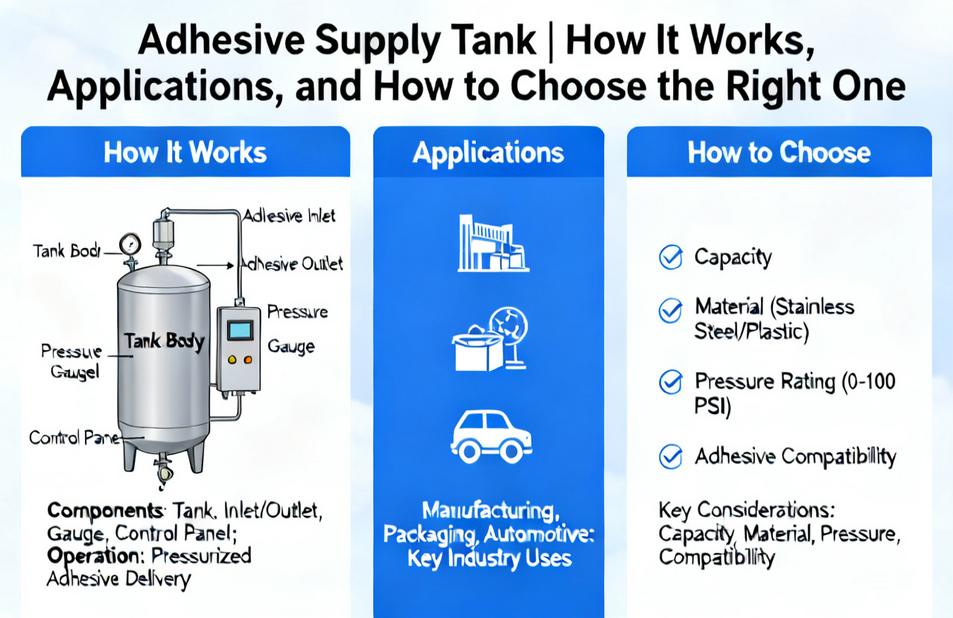
An adhesive supply tank is a key component in many industrial glue dispensing and bonding processes, especially in automated production lines where adhesives, sealants, or other high-viscosity fluids must be delivered consistently and reliably. Also referred to as a glue tank, adhesive reservoir, or pressure pot for glue, this equipment stores adhesive material under controlled conditions and feeds it to dispensing valves, applicators, or nozzles. It is commonly used in industries such as packaging, woodworking, automotive assembly, electronics, and filter manufacturing, where precise adhesive application is essential for product quality and operational efficiency.
What Is an Adhesive Supply Tank?
An adhesive supply tank is a closed or open vessel designed to hold liquid or semi-liquid adhesives before they are pumped or pressure-fed to a dispenser. In most industrial setups, the tank works together with a pump, pressure control unit, and dispensing gun. The adhesive material is kept in the tank, often with a sealed lid to prevent contamination and solvent evaporation, and then delivered through hoses to the point of application. Depending on the design, the tank may be heated, agitated, or pressurized to maintain the adhesive at the correct viscosity and temperature for optimal performance.
How Does an Adhesive Supply Tank Work?
The basic working principle of an adhesive supply tank is simple: it holds a volume of adhesive and maintains it in a usable state. For pressure-fed systems, compressed air pushes the adhesive from the tank through a hose to a dispensing valve. A regulator controls the air pressure, which determines the flow rate and output volume. In pump-based systems, a drum pump or piston pump transfers the adhesive from the tank to the applicator. Many tanks include a heater to keep the adhesive at a stable temperature, while others use a stirrer to keep fillers or thickeners evenly dispersed. The tank’s design directly affects how well the material performs during long production runs.
Key Features to Consider in an Adhesive Supply Tank
When evaluating adhesive supply tanks for an industrial application, several features should be examined closely. First, the material of construction is critical. Most tanks are made of stainless steel or carbon steel, with stainless steel being the preferred choice for its corrosion resistance and ease of cleaning. The tank’s capacity also varies, from small portable units of a few liters to large stationary tanks of several hundred liters. Another important feature is the sealing method. A durable lid with a gasket prevents air and moisture from entering, which can degrade certain adhesives. Additionally, the tank’s connection ports for air, adhesive output, and pressure gauges should be compatible with your existing system. Some tanks include a sight glass or level indicator, which helps operators monitor the adhesive level without opening the tank.
Heating and Viscosity Control
For adhesives that are highly viscous at room temperature, such as hot melt adhesives or reactive polyurethane glues, temperature control is essential. A heated adhesive supply tank usually includes an electric heating element, thermostat, and insulated jacket to maintain the adhesive within a specific temperature range. This ensures a consistent viscosity, which directly affects the quality of the glue line and the speed of the assembly line. If you are working with moisture-curable adhesives, the tank must also prevent moisture ingress, which may require a desiccant dryer or a nitrogen blanket.
Applications of Adhesive Supply Tanks
Adhesive supply tanks are used in a broad range of industries and processes. In woodworking, they supply glue for edge banding, laminating, and finger jointing. In the packaging industry, they are used to apply hot melt adhesives for carton sealing, tray forming, and label application. In electronics, small precision tanks deliver adhesives for component mounting and encapsulation. Automotive manufacturers use them for structural bonding and sound deadening material application. Other common applications include air filter manufacturing, bookbinding, textile bonding, and furniture production. The common thread is the need for a steady, low-maintenance supply of adhesive to a high-speed production line.
How to Choose the Right Adhesive Supply Tank
Choosing the correct adhesive supply tank involves evaluating your production requirements, the type of adhesive, and your existing equipment. Start by identifying the adhesive’s chemical composition and viscosity. Some adhesives contain solvents that evaporate quickly, requiring a sealed tank to maintain pot life. Others are thermoplastic and need heating. Then calculate the required output rate, which depends on the size of the dispensing valve and the line speed. The tank must be large enough to hold sufficient adhesive for a reasonable time, but not so large that the adhesive sits unused for too long. Also, consider the tank’s footprint and mounting options. Wall-mounted, stand-alone, and mobile options are available.
Integration with Dispensing Systems
An adhesive supply tank does not work in isolation. It must integrate with your pump, filter, hoses, and applicator. Check the thread sizes and port types on your current system. For example, if you use a metered dispensing gun, the tank’s output pressure and flow control must match the gun’s requirements. Many suppliers offer custom adapters and connection kits. When in doubt, consult with an experienced adhesive equipment manufacturer or supplier. They can help you assess your needs and recommend a tank configuration that will work reliably.
Custom and OEM Options
Most adhesive supply tank manufacturers offer custom or OEM services to meet specific production needs. This could include a special tank capacity, different heating capacity, a custom stirring mechanism, or ports tailored to your hoses and fittings. OEM partnerships are common for machinery builders who incorporate adhesive supply tanks into larger dispensing stations. If you are planning a new production line, it is wise to discuss your requirements early with the manufacturer so they can design a tank that matches your layout, safety requirements, and adhesive type.
Key Buying Considerations for Adhesive Supply Tanks
When you are ready to purchase, there are several practical considerations to keep in mind. First, ease of cleaning and maintenance is essential to reduce downtime. Tanks with removable lids, smooth interiors, and minimal dead zones are easier to clean. Second, verify the availability of spare parts, such as seals, heating elements, and pressure gauges. Third, consider the manufacturer’s after-sales support, including installation instructions and technical documentation. Fourth, ask about the tank’s compatibility with different adhesive brands. A good supplier will be transparent about the limitations of their equipment.
Selecting a Reliable Manufacturer or Supplier
The reliability of an adhesive supply tank supplier can have a major impact on your production uptime. Look for a manufacturer with a long track record in fluid and adhesive handling equipment. Ask for references, but also visit their facility or request a product demonstration if possible. Inquire about their quality control processes and whether they test each tank before shipment. Also, check if they provide a clear warranty and technical support after the sale. A reputable supplier will be happy to discuss your application and provide recommendations without pushing a one-size-fits-all product.
Frequently Asked Questions
Can I use one adhesive supply tank for different types of adhesive?
Yes, but you must clean the tank thoroughly between changes. Some adhesives are reactive and may contaminate the next material. If your production requires frequent changes, consider using smaller, portable tanks that are easier to swap and clean.
What is the difference between a pressure-fed and pump-fed adhesive tank?
In a pressure-fed tank, compressed air pushes the adhesive through a hose. This is simpler and often used for lower-output applications. In a pump-fed system, a pump draws adhesive from the tank, which is suitable for higher volumes and more viscous materials. Your choice depends on your output rate and adhesive viscosity.
How often do I need to clean an adhesive supply tank?
Cleaning frequency depends on the adhesive type. For solvent-based adhesives, you should clean the tank at the end of each shift to prevent skinning. For hot melt adhesives, cleaning once a day or when changing the adhesive grade is common. Always follow the adhesive manufacturer’s recommendations.
Can the tank be heated to keep adhesive at a specific temperature?
Yes, many adhesive supply tanks come with an integrated heating system. You can set the desired temperature, and the thermostat will maintain it. This is crucial for hot melt adhesives that need to be kept at a precise temperature for optimal application.
Conclusion
An adhesive supply tank is not just a simple container but a vital part of your adhesive application system. It helps maintain adhesive quality, reduces waste, and ensures a continuous production flow. When selecting a tank, focus on the material of construction, capacity, heating options, and compatibility with your existing dispensing equipment. Don’t overlook the importance of a reliable supplier or manufacturer who can offer technical advice and support. If you are unsure which configuration suits your process, reach out to an experienced adhesive equipment expert. They can help you evaluate your needs and provide a solution that matches your production goals. Remember to discuss your specific adhesive type, line speed, and any custom or OEM requirements so you get a tank that works efficiently for your business.