

Clamp Lid Pressure Tank | A Practical Guide for Industrial Buyers
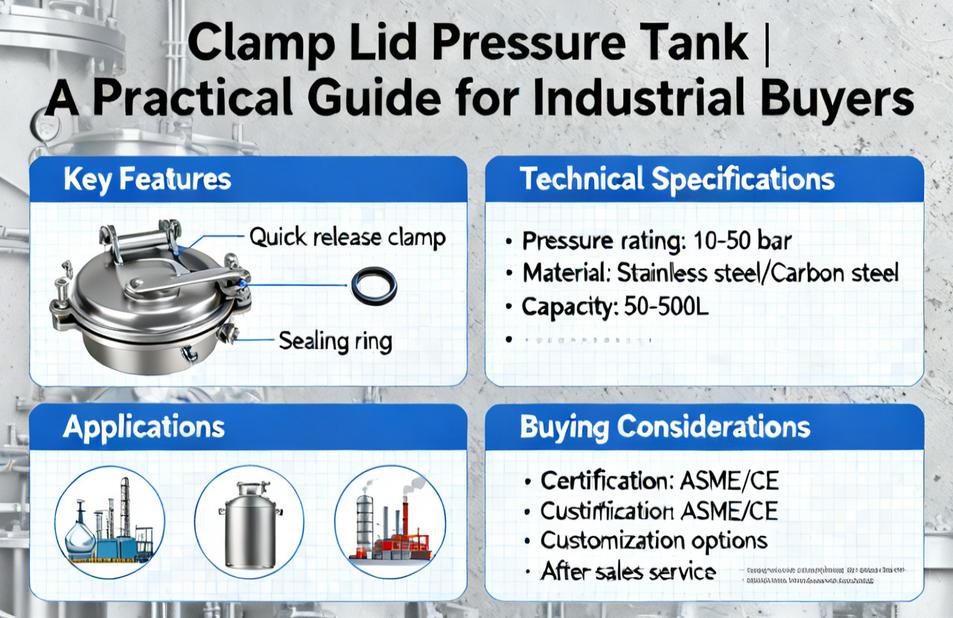
A clamp lid pressure tank is a type of pressure vessel designed for dispensing fluids, adhesives, sealants, and other materials in industrial processes. It features a quick-opening lid secured by a clamp ring, which allows for fast and easy refilling and cleaning. This design makes it a popular choice in manufacturing lines, laboratories, and maintenance operations where efficiency and reliability are essential. These tanks are often used with pneumatic systems to apply consistent pressure to the liquid inside, ensuring a steady flow through hoses and dispensing equipment. For companies looking to improve precision and speed in their fluid handling operations, understanding the structure and selection criteria of a clamp lid pressure tank is critical.
What Is a Clamp Lid Pressure Tank and How Does It Work?
A clamp lid pressure tank is a closed vessel that holds fluid and uses compressed air or gas to push the fluid out through an outlet. The tank body is typically made of stainless steel or carbon steel, depending on the application and the chemicals involved. The lid is held in place by a clamp, which can be opened quickly without tools, making it easy to add material or clean the interior. When the lid is sealed, air pressure is introduced through a regulator, forcing the fluid through a dip tube and out to the point of use. This mechanism is common in adhesive dispensing, oil lubrication, paint circulation, and food processing applications. The clamp design is particularly valued in settings where frequent batch changes or cleaning cycles are required.
Key Features to Consider in a Clamp Lid Pressure Tank
Material and Corrosion Resistance
The material of the tank determines its compatibility with different fluids. Stainless steel tanks, such as 304 or 316 grades, offer excellent corrosion resistance and are suitable for water-based adhesives, chemicals, and food products. Carbon steel tanks are more cost-effective for non-corrosive fluids like oils and lubricants. Buyers should evaluate the chemical properties of their materials and consult with suppliers about the best material choice. Additionally, surface finishes, such as polished or sandblasted, can affect cleaning ease and durability.
Pressure Rating and Capacity
Pressure tanks come in various capacities, typically ranging from a few liters to over 100 liters. The pressure rating, often between 0.5 to 10 bar, must match the requirements of the dispensing system. Higher pressure is needed for high-viscosity fluids or for long-distance transfer. It is crucial to select a tank with a pressure rating that provides a safety margin above the maximum working pressure. Always refer to the manufacturer’s specifications and industry standards when choosing these parameters.
Clamp Mechanism and Seal
The clamp mechanism is the most distinctive feature of this tank type. A robust clamp ring made of stainless steel ensures a tight seal and even distribution of pressure. The lid gasket, typically made of EPDM, PTFE, or silicone rubber, must be compatible with the fluid and provide a reliable seal over many open-close cycles. Buyers should ask about replacement gaskets and the ease of maintenance.
Accessories and Customization
Many manufacturers offer tanks with optional accessories such as pressure gauges, safety valves, fluid-level indicators, and different outlet connections. For specific applications, agitators or heating jackets can be integrated. If you require a custom size, port configuration, or specific material finish, it is advisable to work with a manufacturer that provides OEM and custom services. Discussing your requirements early can prevent compatibility issues later.
Applications of Clamp Lid Pressure Tanks
Clamp lid pressure tanks are versatile across many industries. They are commonly used in automotive assembly for applying adhesives and sealants, in electronics manufacturing for dispensing conformal coatings, and in packaging for glue application. They are also found in laboratory settings for controlled fluid delivery, in food processing for transferring sauces or syrups, and in printing industries for ink circulation. The key advantage is the ability to maintain a consistent flow rate regardless of the fluid level in the tank, which is essential for precise dosing.
How to Choose the Right Clamp Lid Pressure Tank
Selecting the appropriate pressure tank involves several factors. First, define your fluid properties, including viscosity, chemical reactivity, and temperature. This determines the material, seal type, and whether a heating or agitation feature is necessary. Second, determine the required flow rate and pressure based on your application. Oversizing the tank may increase initial cost, but undersizing could lead to frequent refills. Third, consider the environment, such as exposure to extreme temperatures or humidity, which might affect the tank’s durability. Finally, evaluate the total cost of ownership, including maintenance, spare parts, and expected lifespan. Asking for detailed datasheets and installation guidelines from a reputable supplier is a good practice.
Why Work with a Reliable Manufacturer or Supplier
When purchasing a clamp lid pressure tank, working directly with a reliable manufacturer or supplier offers several benefits. A factory with engineering expertise can provide guidance on customization, whether you need a special inlet, a different lid style, or a custom mounting arrangement. Established suppliers often have experience with various industries and can recommend proven solutions. Moreover, they can provide documentation such as pressure test certificates and material certifications, which are essential for quality assurance. Look for a supplier that communicates clearly, provides responsive aftersales support, and offers a warranty on their products. Building a long-term relationship with a trustworthy factory can also lead to better pricing and priority in production schedules.
Frequently Asked Questions
What is the typical lifespan of a clamp lid pressure tank?
The lifespan is largely dependent on the tank material, the nature of the fluid, and the frequency of use. A stainless steel tank used with non-abrasive, non-corrosive fluids can last for many years with proper maintenance. Regularly inspecting for wear on seals and replacing the gasket when necessary will help extend the service life. The manufacturer can often provide an expected operational life based on your specific conditions.
Can I use a clamp lid pressure tank for high-viscosity fluids?
Yes, but it requires careful consideration of the pressure rating and the outlet diameter. High-viscosity fluids need higher pressure to flow, so ensure the tank and regulator can achieve the required PSI. Some tanks can be fitted with a larger dip tube or an agitator to facilitate the flow. It is recommended to discuss your fluid characteristics with the supplier to ensure the tank is properly sized and configured.
Is it possible to get a custom clamp lid pressure tank for a unique application?
Many factories offer custom manufacturing services for pressure tanks. This includes custom dimensions, special ports, different materials, and additional features like level sensors or mixers. OEM projects are also common, where the tank is branded for a specific equipment manufacturer. To pursue a custom solution, you should provide detailed specifications and acceptance criteria to the manufacturer, who will then advise on feasibility and production timelines.
Conclusion
A clamp lid pressure tank is an efficient and practical solution for fluid dispensing applications that require frequent refilling and cleaning. By focusing on material compatibility, pressure capacity, and the quality of the clamp and seal, you can select a tank that enhances your production efficiency. Whether you are looking for a standard model or a fully customized version, partnering with an experienced manufacturer or supplier ensures you get a product that meets your technical demands and quality expectations. Contact a trusted supplier today to discuss your specific requirements and to request a proposal tailored to your operation.