

Electric Agitator Pressure Tank | Functions, Selection Guide, and OEM Options
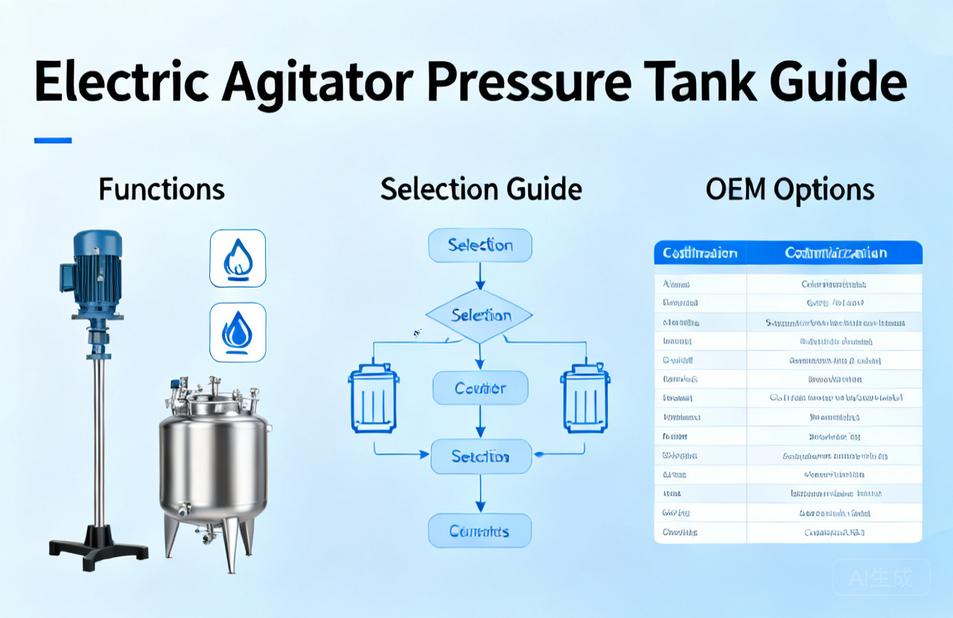
An electric agitator pressure tank is a specialized pressure vessel designed to store, mix, and dispense fluids or semi-solid materials under controlled pressure while continuously stirring the contents. This equipment is widely used in industrial processes where sedimentation, separation, or inconsistent viscosity could compromise product quality. By combining an electric motor-driven stirrer with a sealed pressure chamber, the unit ensures homogeneous mixing and steady material output. For many manufacturers and factories in sectors such as coatings, adhesives, chemicals, and food processing, an electric agitator pressure tank is a practical solution for handling viscous or reactive liquids that require agitation during dispensing.
How an Electric Agitator Pressure Tank Works
In a typical pressure tank system, compressed air or an inert gas is introduced into the sealed vessel from a regulator or compressor. This pressure pushes the fluid through an outlet pipe to a dispensing gun, spray nozzle, or filling line. The integrated electric agitator, usually mounted on the top or side of the tank, rotates a shaft and impeller inside the vessel. The continuous stirring keeps particles suspended, prevents settling, and breaks down lumps or air pockets that might otherwise form in high-viscosity media. This combination of pneumatic pressure and mechanical agitation is especially important when the material being handled has a short shelf life or a tendency to separate, such as filled primer, conductive coatings, or two-part adhesives that have been premixed.
Key Features and Construction Considerations
When evaluating an electric agitator pressure tank from a manufacturer or supplier, several design aspects determine its reliability and ease of use. The tank body is typically made from stainless steel or carbon steel with an internal anti-corrosion lining, depending on the chemical compatibility required. Pressure ratings, capacity sizes, and inlet/outlet connections must match the production line infrastructure. The agitator motor should be compatible with the viscosity of the fluid and the required stirring speed; variable-speed drives are common in custom configurations. Sealing systems must prevent leaks around the agitator shaft even under working pressure. In addition, the tank should include a pressure gauge, safety valve, and a pressure release mechanism for safe operation. A well-designed unit also allows easy cleaning, often through a hinged top lid or a detachable agitator assembly.
Materials and Build Quality
For most industrial applications, stainless steel is preferred because it resists corrosion and contamination. Carbon steel with epoxy or PTFE lining is sometimes used to reduce cost, but it is less suitable for food-grade or highly reactive chemicals. The quality of welding, internal surface finish, and the type of gaskets all affect long-term performance. A reputable factory will provide detailed material certificates and pressure test reports, but you should always confirm these documents rather than assume compliance with specific standards such as ASME or PED, since those requirements vary by region and application.
Common Industrial Applications
Electric agitator pressure tanks are used across a wide range of industries. In the paint and coatings sector, they keep pigment particles uniformly dispersed during spray painting. In adhesive production, they maintain consistent viscosity of sealants or glues before dispensing. Chemical manufacturers use them to mix and transfer reactive solutions under inert gas blanketing to avoid moisture contamination. Food and beverage plants may use them for syrups, flavorings, or viscous sauces where homogeneity is critical. Additionally, these units are found in pharmaceutical compounding, lubricant blending, and cosmetic manufacturing, where batch consistency must be tightly controlled.
How to Choose the Right Electric Agitator Pressure Tank
Selecting a suitable unit begins with a clear assessment of your process parameters. First, define the working pressure and required flow rate. Higher pressure allows thick materials to flow faster, but it also raises safety requirements. Second, consider the tank volume in relation to production batch size; a larger tank does not always mean better efficiency because you must balance fill time and dispensing time. Third, evaluate the fluid properties, including viscosity, abrasiveness, specific gravity, and chemical compatibility with both the tank lining and the agitator materials. Fourth, determine the level of agitation needed. For low-viscosity liquids, a standard propeller may be enough, but for thixotropic pastes, a heavy-duty helical or paddle-type agitator is necessary. Finally, consider the operating environment, such as hazardous-area classification, cleaning protocols, and available power supply.
Customization and OEM Options
Many industrial buyers require an electric agitator pressure tank that is not exactly a standard catalog model. A reliable manufacturer should offer custom options such as different tank capacities, custom flange sizes, special motor voltages (e.g., 220V, 380V), explosion-proof motors, lifting handles, casters, or a jacketed outer shell for heating or cooling. OEM production is also common in this industry; you can request your own brand label, modified inlet/outlet positions, or a specialized agitator blade design. Before starting an OEM project, discuss the minimum order quantity, lead time, and whether the supplier provides design engineering support or only follows your drawings.
Buying Considerations and Supplier Selection
When you compare quotes from different suppliers, look beyond the unit price. Ask about the availability of spare parts, such as the agitator seal, motor coupling, and pressure relief valve. Inquire about after-sales service, technical documentation, and whether the supplier offers installation assistance or remote troubleshooting. Shipping costs and packaging for heavy pressure vessels can also significantly affect the total cost. A printed catalog or website may list a standard model, but it is wise to request a detailed technical drawing and a list of included accessories. If you are importing from overseas, confirm the supplier’s experience with export packing and customs documentation.
Frequently Asked Questions
What is the difference between a standard pressure tank and an electric agitator pressure tank?
A standard pressure tank relies solely on compressed gas to push material out, which is sufficient for stable, low-viscosity fluids. An electric agitator pressure tank adds a motor-driven stirrer to keep the contents mixed, preventing solids from settling or viscosity from changing during operation. This makes it suitable for suspensions, high-viscosity adhesives, or materials that require continuous homogeneity.
Can I use an electric agitator pressure tank for food-grade products?
It is possible if the tank and agitator are made from food-grade stainless steel and the seals are certified for food contact. However, you must verify that the entire system, including the motor and any lubricants, meets local food safety regulations. Some suppliers offer specific models with sanitary tri-clamp connections and smooth internal surfaces for easier cleaning.
How do I determine the correct agitator speed for my material?
The required speed depends on the viscosity and shear sensitivity of your material. For most low-viscosity liquids, a speed of 100–300 RPM is adequate. For thicker pastes or suspensions, heavier mixing may require lower speeds with larger blades. If your product is shear-thinning, you might need a variable speed drive to adjust the stirring intensity without overworking the material.
What safety features should I look for in an electric agitator pressure tank?
Look for a pressure relief valve, a burst disc or rupture panel, and a pressure gauge that is easy to read. The agitator shaft seal must be designed for pressure containment, and the electrical motor should be sized correctly for the load. If you operate in a hazardous environment, choose an explosion-proof motor and conform to applicable electrical codes. Always follow the manufacturer’s operating instructions and inspect the tank regularly for signs of wear or corrosion.
Conclusion
An electric agitator pressure tank is a versatile piece of equipment that helps maintain product consistency and ensures reliable dispensing in many industrial settings. The key to a successful purchase is to evaluate your process requirements thoroughly, including fluid characteristics, operating pressure, and mixing demands. Do not overlook the importance of construction materials, safety features, and the availability of custom or OEM options. When you contact a supplier, provide them with a complete description of your application and ask for recommendations on tank size, agitator type, and any necessary accessories. A reputable factory will be transparent about its manufacturing capabilities and willing to adjust the design to fit your process. We encourage you to reach out to multiple manufacturers, compare their technical proposals, and request samples or trial runs if feasible before placing a bulk order. This careful approach will help you find a reliable partner for your blending and dispensing operations.