

Pressure Tank with Agitator | A Practical Guide for Industrial Buyers and OEM Projects
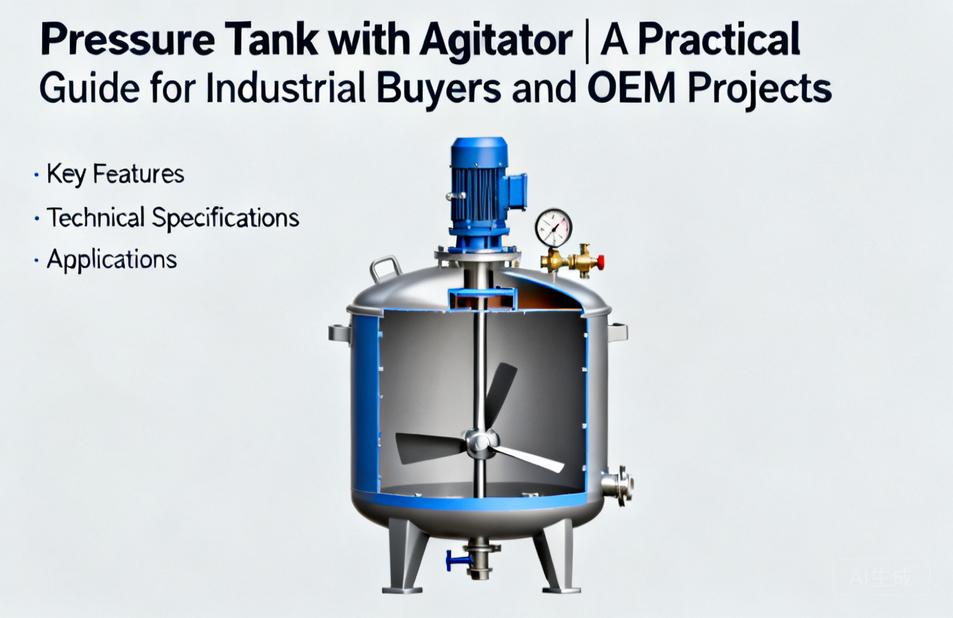
A pressure tank with agitator is a specialized vessel that combines pressurized liquid or semi-fluid material discharge with continuous mechanical stirring. In industrial settings, these tanks are used to keep coatings, adhesives, inks, slurries, and other mixtures homogeneous while being dispensed under pressure. For B2B buyers, understanding the design, applications, and selection criteria of this equipment is essential to improving production efficiency and product consistency. This article provides a practical overview for engineers, procurement professionals, and plant managers evaluating pressure tanks with agitators for their operations.
What Is a Pressure Tank with Agitator?
A pressure tank with agitator typically consists of a sealed cylindrical vessel, a built-in stirring mechanism (such as a paddle, propeller, or turbine), and a pressure control system. The agitator keeps solid particles or viscous components suspended and evenly distributed, while compressed air or inert gas is introduced to push the material out through a discharge valve or hose. This combination is especially useful when handling materials that tend to settle, separate, or thicken over time, such as ceramic slurries, food pastes, chemical solutions, or heavy-duty adhesives.
Unlike a standard pressure tank that only relies on pressure to move the fluid, the integration of an agitator ensures that the discharged material maintains its intended viscosity and composition from the start to the end of the batch. This reduces waste, improves process repeatability, and minimizes manual mixing steps.
How Does a Pressure Tank with Agitator Work?
The operation of a pressure tank with agitator follows a straightforward cycle. First, the tank is filled through an opening or port. Then, the agitator is started to mix the contents, either continuously or intermittently depending on the application. Meanwhile, compressed air or another gas is introduced into the headspace of the tank, creating internal pressure that forces the material through a bottom outlet or a dip tube. The discharge rate can be regulated by adjusting the inlet air pressure and the size of the outlet valve.
Key components include the tank body, agitator motor and shaft, seal system, pressure regulator, safety valve, and discharge assembly. Depending on the model, the agitator may be top-mounted or side-mounted, and the speed may be fixed or variable. For high-viscosity materials, a heavy-duty gear motor might be required, while for simple slurries, a direct-drive motor may suffice.
Key Features to Consider in a Pressure Tank with Agitator
When evaluating a pressure tank with agitator, several features directly impact performance and maintenance. These include:
- Material of Construction: Stainless steel is common for food, chemical, and pharmaceutical applications due to corrosion resistance and ease of cleaning. Carbon steel may be used for less demanding processes but requires proper coating or lining.
- Agitator Design: The type of impeller or paddle affects mixing efficiency and suitability for different viscosities. High-shear applications may need specialized rotors.
- Sealing System: The shaft seal prevents leaks and pressure loss. Cartridge seals or mechanical seals are preferred for long service life.
- Pressure Rating: The tank must be rated for the maximum operating pressure of your system. Common ratings range from 3 to 10 bar, but ensure your supplier offers a tank that meets your specific requirements.
- Safety Devices: A pressure relief valve and a pressure gauge are mandatory for safe operation.
- Cleaning and Accessibility: For batch changes or food applications, easy access for cleaning is critical. A swing-open or hinged lid can simplify maintenance.
Common Applications and Industries
Pressure tanks with agitators are versatile equipment used across many sectors. Typical applications include:
- Spraying and dispensing adhesives, sealants, or lubricants in assembly lines.
- Dispensing paints, coatings, and inks where pigment settling must be avoided.
- Transferring chemical solutions or suspensions in water treatment or processing plants.
- Feeding semi-solid materials like creams, pastes, or gels in cosmetics and food production.
- Supplying ceramic slurries or metal powders in manufacturing processes.
In each case, the agitator ensures consistent quality and prevents blockages in pipes or spray nozzles caused by settled solids.
How to Choose a Pressure Tank with Agitator
Selecting the right pressure tank with agitator requires a clear understanding of your process conditions. Here are the main factors to evaluate:
1. Operating Pressure and Air Supply
Check your facility’s available compressed air or gas pressure. The tank’s maximum working pressure must be compatible with your existing system, and a pressure regulator should be used to control discharge pressure.
2. Material Viscosity and Solids Content
The viscosity and density of your material determine the required agitator torque and speed. For high-viscosity pastes, you may need a slow-speed, high-torque agitator with paddle blades. For low-viscosity fluids, a simple propeller may be enough.
3. Volume and Batch Size
Tank capacity should match your typical batch size, ranging from a few liters for lab scale to thousands of liters for industrial production. Consider the footprint and available floor space.
4. Chemical Compatibility
Ensure the tank body, agitator shaft, and seals are compatible with the chemicals you handle. Some solvents may attack elastomeric seals or degrade certain metal alloys.
5. Mixing Requirements
Determine whether you need continuous mixing, batch mixing, or mixing only during discharge. Variable speed drives can offer flexibility for different products.
6. Cleanability and Hygiene
For food, pharmaceutical, or cosmetic applications, look for designs that facilitate CIP (Clean-in-Place) or easy disassembly. Stainless steel surfaces should be polished to a suitable finish.
Customization and OEM Opportunities
Many manufacturers offer custom pressure tanks with agitators to meet unique process requirements. Customization may include:
- Adjustable agitator speed or torque.
- Custom inlet/outlet thread sizes or flanges.
- Heating jackets or insulation for temperature control.
- Bundled control panels with timers and alarms.
- Special materials like Hastelloy or PTFE lining for aggressive chemicals.
If you are an OEM or equipment integrator, you can work with a factory to develop a tank that fits your machine dimensions, pressure ratings, and control interface. This often results in better integration and long-term supply reliability.
Buying Considerations and Supplier Selection
When purchasing a pressure tank with agitator in bulk or for a single installation, it is important to assess the supplier’s engineering capabilities and quality control. Here are a few tips:
- Look for a manufacturer that has experience in your industry and can provide references or case studies (non-confidential).
- Ask about the testing procedure for pressure vessels, including hydrostatic tests and inspection reports. However, do not accept unverified certifications; always request official documentation.
- Check the warranty and after-sales support, including spare parts availability.
- If you require custom solutions, confirm whether they offer engineering support for design, layout, and integration.
You can source pressure tanks with agitators directly from a factory or through a local distributor. If you are importing, consider factors like shipping costs, lead times, and compliance with your local pressure equipment regulations.
Frequently Asked Questions
Can I use a pressure tank without an agitator for materials that settle?
Using a non-agitated pressure tank is possible for very short-term discharge where settling is minimal, but it often leads to inconsistent composition and clogging. For reliable results, especially with slurries or pigment-containing materials, an agitator is recommended.
How do I clean a pressure tank with agitator?
Most tanks have a removable lid or a large opening for cleaning. For food or pharmaceutical use, look for designs that allow removal of the agitator shaft and impeller for manual cleaning or that are compatible with CIP systems. Always follow the manufacturer’s cleaning instructions.
What’s the difference between a pressure tank and a pressure vessel?
A pressure vessel is a broad term for any container designed to hold gases or liquids under pressure. A pressure tank typically refers to a vessel used for liquid discharge, often equipped with valves and a lid. A pressure tank with an agitator is a specific type of pressure vessel that also includes mixing capability.
Can I retrofit an agitator to an existing pressure tank?
It may be possible, but it is often not recommended due to structural integrity, seal compatibility, and mixing performance issues. Retrofitting may void the original tank’s certification. Consulting an expert and a qualified manufacturer is always the safest approach.
Conclusion
A pressure tank with agitator is a valuable investment for processes that require consistent material quality and efficient dispensing. By understanding the operating principle, key features, and selection criteria, buyers can make informed decisions that improve production outcomes and reduce downtime. When evaluating suppliers, focus on engineering capability, customization options, and compliance with relevant standards. If you have specific requirements or need assistance with sizing and configuration, do not hesitate to contact a reliable manufacturer or supplier for a detailed consultation. They can help you select the right pressure tank with agitator for your application, and many offer OEM support to meet your unique specifications.