

Industrial Pressure Tank Selection Guide for B2B Buyers and OEM Projects
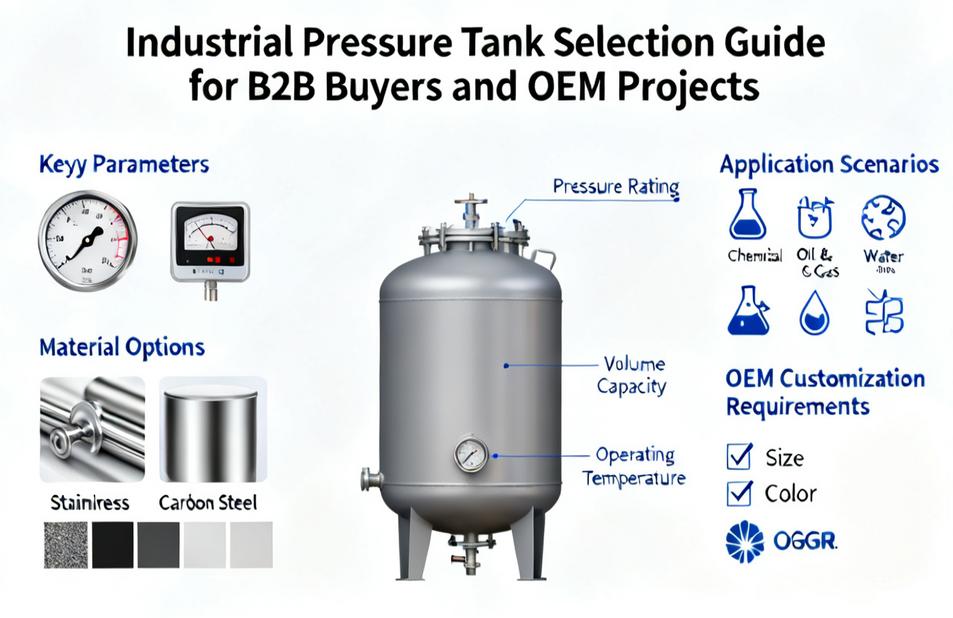
An industrial pressure tank is a sealed vessel that stores liquids or gases under pressure to regulate flow, absorb pulsation, or deliver media consistently in a production process. In factories, the tank often works as a buffer between a pump, compressor, or chemical supply line and the point of use, helping maintain stable pressure and reduce equipment cycling. Whether you are designing a new fluid system or replacing a failed vessel, understanding the tank role, construction, and selection criteria is essential before contacting a manufacturer or supplier.
What an Industrial Pressure Tank Does in a System
Unlike a simple storage container, a pressure tank operates under internal pressure and is connected to a pump, compressor, or process line. Its primary functions include pressure stabilization, pulsation damping, liquid storage, and media separation in some designs. In water treatment, a pressure vessel helps maintain line pressure between pump cycles. In compressed air systems, it acts as a receiver to smooth demand spikes. In chemical and food processing, it may serve as a day tank or pressure pot that feeds material to a dispensing valve or spray nozzle.
The tank does not generate pressure by itself. It works with a pump, compressor, or external gas source. The vessel size, orientation, and internal design determine how well it matches the process. A vertical tank saves floor space, while a horizontal tank may fit under a low ceiling or be easier to service. Engineers often select the orientation based on available room, piping layout, and maintenance access.
Key Features Buyers Look For
When purchasing an industrial pressure tank, buyers typically review pressure rating, volume, material, port configuration, and mounting method. The pressure rating must meet or exceed the maximum working pressure of the system with a suitable safety margin. Volume is selected according to drawdown requirements, pump cycle frequency, or the amount of material needed between refills. Ports should match existing piping and instrumentation, including inlet, outlet, drain, vent, and gauge connections.
Other features may include internal coatings, level indicators, sight glasses, dip tubes, and removable lids for cleaning. In sanitary applications, the tank interior may require a smooth finish and drainable design to prevent product buildup. For aggressive chemicals, wetted parts must be compatible with the media. These details are usually defined during the inquiry stage with a supplier or OEM partner.
Materials and Construction
Industrial pressure tanks are commonly made from carbon steel, stainless steel, or specialty alloys. Carbon steel is often chosen for compressed air and non-corrosive fluids where cost and strength are priorities. Stainless steel is preferred in food, pharmaceutical, and chemical service because it resists corrosion and supports cleanable surfaces. The wall thickness, weld quality, and head type affect the tank ability to withstand pressure cycles and fatigue.
Construction may involve welded or bolted heads, threaded or flanged connections, and internal or external surface treatments. Some tanks use a bladder or diaphragm to separate gas from liquid, which helps maintain pressure and prevent contamination. In other designs, the tank is a simple pressure vessel without a bladder. The choice depends on the process, the media, and the acceptable level of maintenance.
Typical Industrial Applications
Pressure tanks appear across many industries and processes. Common applications include water booster systems, reverse osmosis and filtration skids, compressed air receivers, adhesive and sealant dispensing, paint circulation, ink supply, and chemical dosing. In food and beverage plants, they may hold ingredients, cleaning solutions, or CIP fluids. In manufacturing, they support pneumatic tools, spray equipment, and automated lubrication systems.
Because the tank interacts with pumps, valves, and controls, it is rarely a standalone item. Buyers should consider the whole fluid circuit when specifying a vessel. For example, a pressure tank for a dispensing system must match the flow rate, viscosity, and operating pressure of the dispense valve. A tank for a water system must account for pump curve, pressure switch settings, and fixture demand.
How to Choose the Right Industrial Pressure Tank
Selection starts with the process requirements. Define the media, maximum working pressure, temperature range, flow rate, and required drawdown volume. Then review the available space, mounting orientation, and connection sizes. Material compatibility is critical: the wetted parts must resist corrosion, contamination, and temperature extremes. If the tank will be cleaned frequently, consider a design with easy access and drainable geometry.
Next, evaluate the pressure rating and safety features. The vessel should be designed and built to the applicable code or standard for the destination market. Documentation, material certificates, and test reports may be required for compliance or internal quality records. Buyers should ask the supplier how the tank is tested and what paperwork is provided, without assuming specific certifications before verification.
Finally, consider the supplier capability. A reliable manufacturer or factory should be able to review your drawing, recommend modifications, and provide a clear quotation with dimensions, materials, and lead time. If the application is unique, an OEM or custom build may be more suitable than a catalog model.
Customization and OEM Options
Many industrial pressure tanks are available as custom or OEM products. Customization can include size, orientation, port layout, material grade, surface finish, mounting brackets, and labeling. OEM programs may involve private labeling, special packaging, or a dedicated model number for a distributor or equipment builder. When requesting a custom tank, provide a detailed specification or drawing that shows dimensions, connections, and performance requirements.
Prototyping may be possible for new designs, but buyers should discuss tooling, minimum order quantity, and validation steps with the supplier. A good supplier will ask about the operating environment, media, and maintenance plan before recommending a configuration. This helps avoid costly changes after production begins.
Buying Considerations and Supplier Selection
Price is only one factor in the purchasing decision. Buyers should compare total cost of ownership, including installation, maintenance, and downtime risk. A tank that is undersized or made from the wrong material may fail early or require frequent repairs. Ask for dimensional drawings, material specifications, and warranty terms. If the tank is part of a regulated process, confirm that the supplier can provide the required documentation.
When evaluating a supplier, look for experience in your industry, responsiveness to technical questions, and willingness to support customization. A factory with in-house welding, forming, and testing capabilities may offer better control over quality and lead time. For international buyers, communication and export experience matter as much as manufacturing skill. Request references or sample documentation where appropriate, and verify claims rather than relying on marketing language.
Frequently Asked Questions
How do I determine the right size for an industrial pressure tank?
Size depends on the required drawdown volume, pump cycle frequency, and acceptable pressure fluctuation. Start with the system flow rate and pressure settings, then calculate the volume needed between pump starts. For pulsation damping, the tank volume relates to compressor or pump displacement and the desired smoothing effect. A supplier or engineer can help with the calculation based on your process data.
Can an industrial pressure tank be customized for my equipment?
Yes. Many manufacturers offer custom and OEM pressure tanks with modified dimensions, port locations, materials, and finishes. Provide a drawing or detailed specification, including operating pressure, temperature, media, and connection types. The supplier can then confirm feasibility, tooling requirements, and production lead time.
What information should I provide when requesting a quote?
Include the media, maximum working pressure, temperature range, required volume, orientation, connection sizes, material preference, and any documentation needs. If the tank will replace an existing unit, provide dimensions and photos. Clear input helps the supplier recommend a suitable design and avoid back-and-forth clarification.
How can I verify the quality of a pressure tank supplier?
Ask about their manufacturing process, testing methods, and quality control procedures. Review sample drawings, material certificates, and past project experience in your industry. A supplier that answers technical questions clearly and provides verifiable documentation is generally a safer choice than one that offers only general promises.
Conclusion
Choosing an industrial pressure tank requires a clear understanding of the process, the media, and the system pressure requirements. Focus on material compatibility, pressure rating, volume, and connection layout, then confirm customization or OEM options with the manufacturer. A supplier who communicates openly about specifications, testing, and lead time can help you avoid costly mistakes. If you are sourcing a pressure vessel for a specific application, share your requirements with a qualified supplier to discuss the right configuration, custom features, or OEM program for your project.
