

Pneumatic Pressure Tank Selection Guide for Industrial Fluid and Air Systems
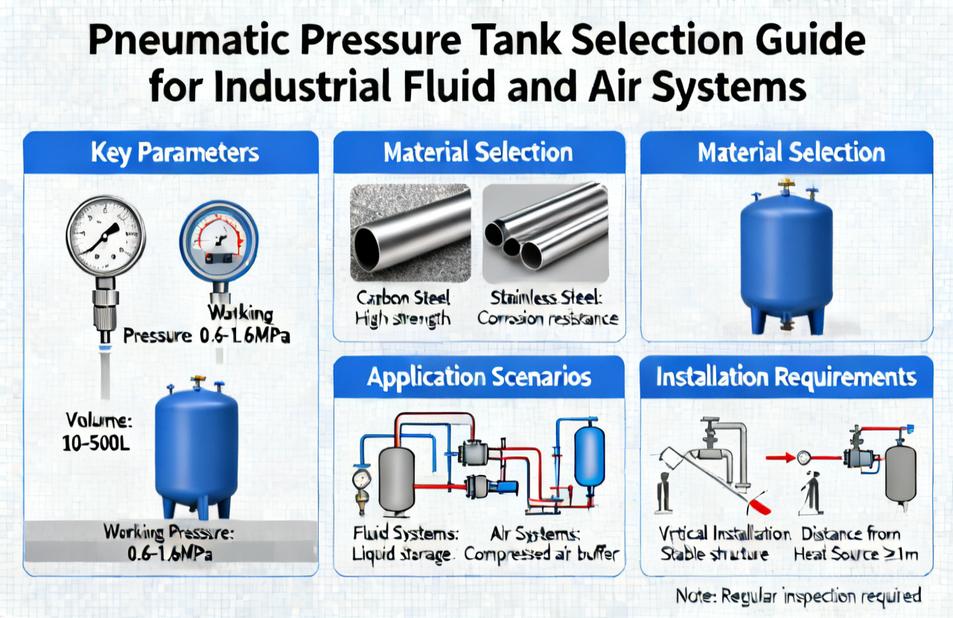
A pneumatic pressure tank is a vessel that stores compressed air or gas to stabilize pressure, absorb pulsation, and provide a buffer volume in pneumatic systems. It is commonly used in compressed air networks, pneumatic controls, fluid dispensing, and industrial processes where consistent pressure and smooth flow are required. For overseas buyers, understanding how a pneumatic pressure tank works and how to match it to an existing system is essential before requesting a quotation or discussing OEM requirements.
What Is a Pneumatic Pressure Tank?
A pneumatic pressure tank, sometimes called an air receiver tank or pneumatic buffer tank, is designed to hold compressed air or gas under pressure. It connects to a compressor, a pneumatic circuit, or a process line. The tank reduces pressure fluctuations, stores a reserve of compressed air, and helps the system respond to sudden demand without constant compressor cycling. In fluid handling, a similar tank may be used to pressurize liquids for dispensing, spraying, or transfer. The working principle is straightforward: the tank provides volume and pressure stability, while valves, gauges, and safety devices control how the stored medium enters and leaves the system.
Unlike a simple storage vessel, a pneumatic pressure tank is often part of a controlled system. It may include inlet and outlet ports, a drain, a pressure relief valve, and connections for instruments. The exact configuration depends on whether the tank serves an air compressor, a pneumatic actuator circuit, or a liquid dispensing line. This is why buyers should define the application before comparing suppliers.
Key Functions in Pneumatic and Fluid Systems
The main role of a pneumatic pressure tank is to smooth pressure changes. When a compressor or pump cycles, the tank absorbs the pulse and releases stored energy when demand increases. This reduces wear on the compressor, improves control accuracy, and helps maintain a steady flow at the point of use. In pneumatic automation, a buffer tank can also provide emergency air volume for valve actuation during brief compressor downtime or peak demand.
In fluid dispensing, a pressure tank may be used to push adhesive, paint, solvent, or other liquids through a nozzle or valve. The tank is pressurized with air, and the liquid is discharged at a controlled rate. This method is common in applications where the fluid should not pass through a pump, or where a simple, reliable pressure source is preferred. The tank material and internal finish must be compatible with the fluid to avoid contamination or corrosion.
Typical Industrial Applications
Pneumatic pressure tanks are found in many industries because compressed air and pressurized fluids are widely used. Common applications include:
- Compressed air systems for workshops, factories, and processing plants
- Pneumatic control panels and automated valve systems
- Adhesive and sealant dispensing in assembly operations
- Paint and coating supply in finishing lines
- Chemical transfer and dosing systems
- Water treatment and filtration support equipment
- Packaging machinery and labeling systems
- Automotive service and tire inflation stations
Each application places different demands on the tank. A compressed air receiver may prioritize volume and pressure rating, while a dispensing tank may require a specific interior finish, agitation, or heating. Buyers should share the medium, operating pressure, temperature, and flow requirement with the supplier so the tank can be configured correctly.
Materials and Construction
Pneumatic pressure tanks are typically made from carbon steel, stainless steel, or aluminum. Carbon steel is common for compressed air receivers and general industrial service, often with a protective coating inside or outside. Stainless steel is chosen for corrosive environments, clean fluids, and applications where contamination must be minimized. Aluminum may be used for smaller, portable, or lightweight tanks.
Construction details matter for safety and service life. The tank body, end caps, and ports should be properly welded and finished. Internal surfaces should be smooth and free from defects that could trap fluid or promote corrosion. Threaded or flanged connections must match the system. Drain ports, lifting points, and mounting feet are practical features that affect installation and maintenance. When reviewing a drawing or datasheet, buyers should confirm the shell thickness, connection sizes, and orientation of ports.
How to Choose a Pneumatic Pressure Tank
Selecting the right tank starts with the application. First, identify the medium: compressed air, nitrogen, water, adhesive, solvent, or another fluid. Second, determine the required working pressure and temperature range. Third, estimate the volume needed to stabilize pressure or supply the process between compressor cycles. Fourth, check the flow rate and connection size to avoid unnecessary pressure drop. Fifth, consider the environment: indoor or outdoor, corrosive atmosphere, washdown, or hazardous area.
After the technical requirements are clear, review the tank configuration. Vertical tanks save floor space, while horizontal tanks may fit under equipment or along a wall. Port locations should match the piping layout. If the tank will be used with a specific brand of compressor or dispensing valve, confirm compatibility. For OEM projects, the tank can often be adapted with custom brackets, labels, and connection arrangements.
Customization and OEM Options
Many manufacturers and suppliers offer customization for pneumatic pressure tanks. Common options include custom dimensions, connection sizes and types, material selection, surface treatment, and private labeling. OEM production is suitable for equipment builders that need a tank matched to their machine footprint or branding. Custom fabrication may also include internal coatings, baffles, dip tubes, or level indicators, depending on the application.
When requesting a custom tank, provide a clear specification or drawing. Include the medium, pressure, temperature, volume, port sizes, and any space limitations. If the tank is part of a larger system, share the interface details. A reliable factory will review the requirements and propose a feasible design rather than simply quoting a standard model. Buyers should ask about the production process, quality control steps, and documentation available for the finished tank.
Buying Considerations for Overseas Procurement
Price is only one factor in tank procurement. Buyers should also evaluate the supplier’s technical support, production capability, and communication. A pneumatic pressure tank is a pressure-containing component, so safety and consistency are important. Ask how the manufacturer controls welding quality, pressure testing, and surface preparation. Request a dimensional drawing and material certificate if available. Confirm the packaging method for sea freight, especially for larger tanks that may be prone to transport damage.
Another consideration is after-sales support. Spare parts such as valves, gauges, and fittings should be available. If the tank is part of a production line, downtime can be costly, so response time matters. Working with a supplier that understands pneumatic and fluid systems can reduce installation problems and improve long-term reliability.
How to Evaluate a Supplier or Factory
When comparing suppliers, look for experience in industrial pressure vessels and pneumatic components. A qualified manufacturer should be able to discuss wall thickness, weld quality, port layout, and testing procedures. Ask for references from similar applications, but keep in mind that specific client names may be confidential. Review the supplier’s engineering support: can they read a P&ID, suggest a tank size, or modify a standard design? Can they provide drawings for approval before production?
Communication is also a practical indicator. Clear quotations, realistic lead times, and consistent follow-up help avoid misunderstandings. If the supplier asks detailed questions about the application, that is usually a positive sign. For OEM and custom projects, confirm the sample or drawing approval process before mass production.
Frequently Asked Questions
What is the difference between a pneumatic pressure tank and an air receiver?
An air receiver is a type of pneumatic pressure tank used specifically in compressed air systems. The broader term pneumatic pressure tank can also refer to tanks used for pressurized fluids or gases in other pneumatic circuits. The basic function is similar: store pressure and stabilize flow.
Can a pneumatic pressure tank be customized for my equipment?
Yes. Many manufacturers offer custom dimensions, port configurations, materials, and mounting options. For OEM projects, provide a drawing or detailed specification so the factory can match the tank to your machine or system.
What information should I provide when requesting a quote?
Share the medium, working pressure, temperature, required volume, connection sizes, orientation, and any space restrictions. If the tank will be used with a specific compressor, pump, or valve, include that detail. This helps the supplier recommend a suitable configuration.
How do I choose between carbon steel and stainless steel?
Choose carbon steel for general compressed air and non-corrosive service where cost and strength are priorities. Choose stainless steel for corrosive environments, clean fluids, or applications where contamination must be minimized. The final choice depends on the medium and operating conditions.
Conclusion
Choosing a pneumatic pressure tank requires a clear understanding of the application, the medium, and the system requirements. Buyers should focus on pressure rating, volume, material, port layout, and compatibility with existing equipment. For custom or OEM projects, early technical communication with the manufacturer or supplier can prevent costly adjustments later. If you are sourcing pneumatic pressure tanks for an industrial application, contact a qualified factory with your specifications and let them help you select or design a tank that fits your system.
