

Pressurized Dispensing Tank Guide for Industrial Fluid and Adhesive Systems
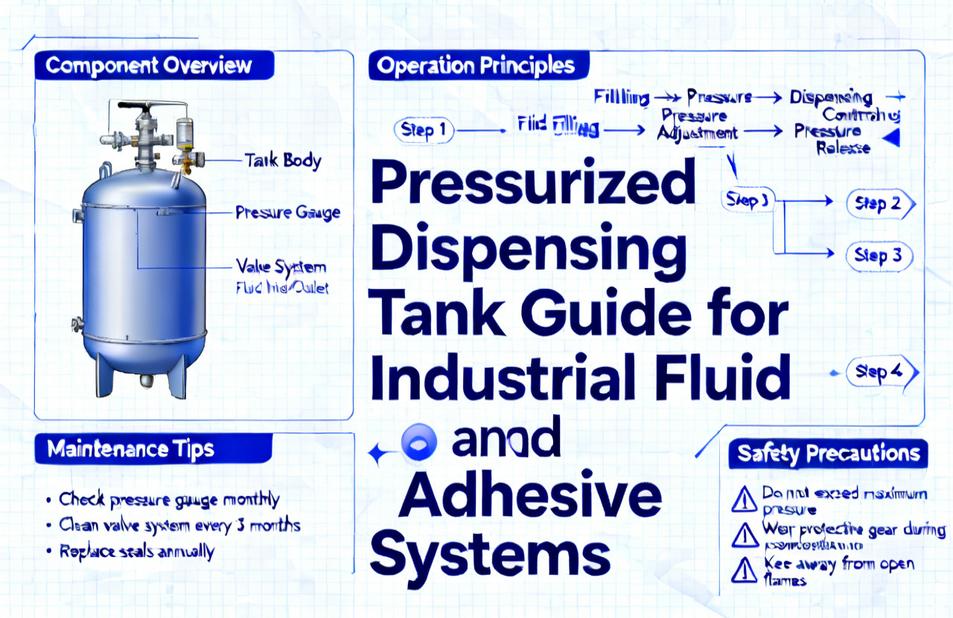
A pressurized dispensing tank is a sealed vessel that holds liquid or semi-liquid material under controlled air or gas pressure so it can be delivered to a dispenser, valve, spray gun, or dispensing robot at a steady flow rate. In industrial production, these tanks are commonly used for adhesives, sealants, inks, solvents, lubricants, coatings, and other fluids where consistent pressure and clean material handling are important. For manufacturers setting up or upgrading a fluid delivery system, understanding how a pressurized dispensing tank works and what to evaluate before buying helps avoid downtime, material waste, and inconsistent dispensing results.
What a Pressurized Dispensing Tank Does
Unlike a simple gravity-fed container, a pressurized tank uses compressed air or inert gas to push material from the tank to the point of use. The tank typically includes a pressure vessel body, a removable lid or clamp system, a pressure regulator, a safety relief valve, an air inlet, and a fluid outlet. Some models also include a agitator, level sensor, or liner. The internal pressure forces the fluid through a hose to a dispensing valve, nozzle, or gun. When the valve opens, material flows; when it closes, pressure holds the material ready for the next cycle. This makes the system suitable for continuous or intermittent dispensing in automated and manual production lines.
The main advantage is that the material stays enclosed and under steady pressure, which supports repeatable shot sizes and reduces exposure to air, moisture, and contaminants. For high-viscosity adhesives or two-part materials, a pressure tank can be paired with a pump, static mixer, or plural-component system, depending on the process requirement.
Typical Industrial Applications
Pressurized dispensing tanks appear in many industries because they handle a wide range of fluids and viscosities. Common industrial applications include:
- Adhesive and sealant dispensing in automotive, appliance, and electronics assembly
- Potting, encapsulating, and bonding in electrical and electronic manufacturing
- Ink and coating supply for printing, marking, and surface treatment lines
- Lubricant and grease delivery in maintenance and assembly operations
- Solvent, cleaning fluid, and chemical transfer in controlled processes
- Food and pharmaceutical fluid handling where hygienic construction is required
Because material properties vary widely, the same tank design is not suitable for every application. A tank used for a low-viscosity solvent needs different seals, wetted materials, and outlet sizing than one used for a filled adhesive or a food-grade syrup.
Key Features Buyers Should Review
When evaluating a pressurized dispensing tank, buyers should look beyond the tank volume. Several design details affect performance, maintenance, and safety.
Pressure Control and Safety
The regulator and relief valve are critical for stable flow and safe operation. The working pressure range should match the dispensing valve or gun requirement. A pressure gauge helps operators monitor and adjust the system. Safety relief protection should be part of the vessel design, and the tank should be operated within its rated limits.
Wetted Materials and Construction
Tanks are often made from stainless steel for corrosion resistance and easy cleaning. Carbon steel may be used for certain non-corrosive fluids, while PTFE or other coatings can improve chemical compatibility. Seals, gaskets, and diaphragms must be compatible with the fluid being dispensed. For food, pharmaceutical, or high-purity applications, surface finish and cleanability become important selection points.
Agitation and Level Monitoring
Materials that settle, separate, or require consistent suspension may need an agitator. Level sensors or sight glasses help operators know when to refill, reducing the risk of running dry or introducing air into the line. For automated cells, level signals can be integrated into the control system.
Ports, Fittings, and Outlet Size
The number and type of ports affect how easily the tank connects to fill lines, air supply, venting, and fluid outlets. Outlet size should suit the flow rate and viscosity of the material. Quick-disconnect fittings and sanitary connections can simplify changeovers in multi-material production.
How to Choose the Right Tank for Your Process
Choosing a pressurized dispensing tank starts with the material. Identify viscosity, solids content, chemical compatibility, and whether the material is shear-sensitive or requires agitation. Next, define the required flow rate, dispense volume, and duty cycle. A tank that is too small causes frequent refills; one that is too large may be difficult to pressurize quickly or clean efficiently.
Consider the operating environment as well. If the tank will be used in a cleanroom, washdown area, or hazardous location, the construction and controls should match those conditions. For automated dispensing, the tank should integrate with the existing PLC, robot, or valve controller. Buyers should also confirm that spare parts, seals, and replacement components are available for the expected service life of the equipment.
It is also useful to compare gravity-fed, pressure-fed, and pump-fed systems. A pressure tank offers a simple, compact solution for many medium- to high-viscosity materials, but if the process requires very high flow or precise metering, a pump or metering system may be more suitable. In some cases, a pressure tank is best used as a material supply source feeding a separate metering device.
OEM and Customization Options
Many industrial buyers need a tank that fits an existing production line rather than a standard catalog model. OEM and custom manufacturing can cover tank volume, connection type, port layout, mounting, material grade, surface finish, and control integration. A custom pressurized dispensing tank may also include agitator selection, level sensor type, heating or cooling jacket, and special outlet geometry. When requesting a custom design, provide the material data, required pressure range, flow rate, available space, and utility connections. Clear specifications help the manufacturer propose a workable configuration and reduce the risk of costly modifications after delivery.
Buying Considerations and Supplier Selection
Price alone is a poor guide when selecting a pressurized dispensing tank. A lower-cost unit may use incompatible seals or thin materials that lead to leaks, pressure drift, or premature failure. Instead, compare total cost of ownership, including maintenance, replacement parts, and downtime risk. Ask about the manufacturer’s experience with your specific material and application. A supplier that understands fluid behavior, valve matching, and system integration can often recommend a better setup than a generic catalog listing.
When sourcing from a pressurized dispensing tank manufacturer or supplier, confirm which parts are standard and which are made to order. For overseas buyers, documentation, packaging, and after-sales support matter as much as the tank itself. A factory with in-house fabrication and testing can respond more efficiently to custom requirements and quality concerns. If the tank is part of a larger dispensing system, ask whether the supplier can support the full assembly, including hoses, fittings, valves, and controls.
Frequently Asked Questions
What materials can a pressurized dispensing tank handle?
These tanks can handle many liquids and semi-liquids, including adhesives, sealants, inks, solvents, lubricants, coatings, and some food or pharmaceutical fluids. The correct choice depends on chemical compatibility, viscosity, and whether the material requires agitation or temperature control.
How do I determine the right tank size?
Tank size depends on production volume, refill frequency, available space, and material shelf life. Buyers should calculate the material consumed per shift and consider how often operators can safely refill the tank without interrupting production.
Can a pressurized dispensing tank be used with an existing dispenser?
In many cases, yes. The tank outlet, pressure range, and fittings must match the dispenser or valve requirements. Sharing the dispenser model, required flow rate, and material details with the tank supplier helps confirm compatibility.
Is OEM or custom fabrication available?
Many manufacturers offer OEM and custom options for volume, port layout, material grade, mounting, agitation, and level sensing. Custom work is most successful when the buyer provides clear process data and system interface requirements.
Conclusion
Selecting a pressurized dispensing tank is a process decision, not just a component purchase. Focus on material compatibility, pressure control, safety, flow consistency, and how the tank integrates with the rest of the dispensing system. For specialized materials or space-limited installations, custom and OEM options can provide a better fit than a standard unit. If you are reviewing options for an upcoming project, contact a qualified supplier with your material properties, flow requirements, and application details so they can recommend a suitable configuration.
