

Paint Pressure Tank | What It Is, How to Choose, and Where It Fits
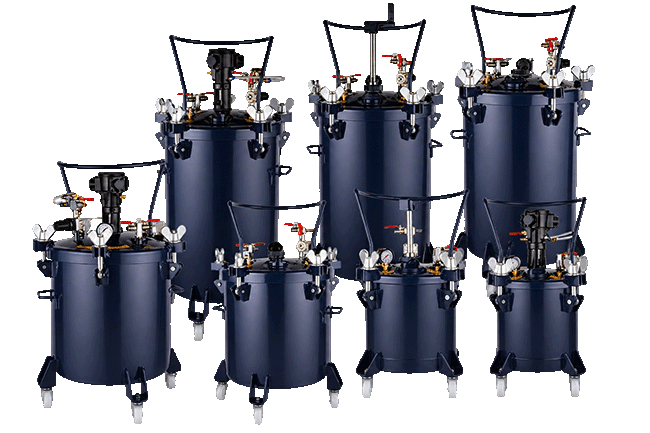
Paint Pressure Tank: What It Is, How to Choose, and Where It Fits
A paint pressure tank is an industrial pressure vessel that stores paint or coating material and delivers it under controlled compressed-air pressure to spray guns, automatic spray systems, or coating lines. Its purpose is to keep paint flow and pressure stable so that atomization, coating thickness, and surface finish remain consistent during production.
If you are comparing paint pressure tanks for a coating process, the main decision points are material compatibility, tank capacity, working pressure, agitation needs, outlet configuration, and whether the tank will feed manual guns or an automated line.
What a Paint Pressure Tank Does
A paint pressure tank is not simply a container. It is a material supply device. Compressed air pressurizes the tank interior, pushing paint through an outlet to the spray equipment. This creates a continuous feed instead of relying on gravity or manual refilling.
Typical functions include:
- Stable paint delivery to spray guns or automated coating equipment
- Continuous coating supply during production runs
- Pressure control for consistent atomization
- Reduced manual handling and refilling interruptions
- Support for repeatable coating quality
In industrial painting and coating, unstable paint delivery can cause uneven coating thickness, poor atomization, material waste, and downtime. A pressure tank helps reduce those problems by maintaining a controlled material supply.
How to Choose a Paint Pressure Tank
Selection should follow the coating material and the production setup, not the other way around. The following criteria are commonly used when specifying a paint pressure tank.
1. Material Compatibility and Tank Construction
The tank material must be compatible with the paint, solvent, or coating being used. Stainless steel is widely used for industrial pressure tanks because it offers corrosion resistance, mechanical strength, and easy cleaning. Common grades include SUS304 and SUS316. SUS304 is suitable for many industrial applications, while SUS316 may be preferred when stronger corrosion resistance is required.
Material selection should consider:
- Fluid composition and chemical compatibility
- Operating pressure
- Working temperature
- Cleaning requirements
- Production environment
2. Tank Capacity
Capacity affects refill frequency and how well the tank fits the production line. Small tanks suit low-volume or intermittent spraying. Larger tanks support longer continuous runs and reduce refill downtime. The right size depends on paint consumption rate, available space, and how often operators can refill.
3. Working Pressure and Pressure Control
The tank must be rated for the pressure required by the spray equipment and the coating process. Pressure control affects paint flow and spray pattern. A tank that cannot maintain stable pressure may produce inconsistent coating results.
4. Agitation and Mixing
Some coatings settle or separate during use. In those cases, a paint pressure tank with an agitator or mixing function can help maintain material uniformity. Whether agitation is needed depends on the paint formulation and how long the material stays in the tank.
5. Outlet and Feed Configuration
The outlet arrangement should match the spray gun or automated coating system. Consider whether the tank will feed one gun or multiple points, and whether the setup requires a single outlet or a manifold. The feed configuration affects pressure stability across the system.
6. Manual vs. Automated Coating Lines
A tank used with a manual spray gun has different demands than one feeding a robotic spray system or automatic coating machine. Automated lines typically require more consistent pressure and continuous supply, so the tank and its controls should be selected accordingly.
Where Paint Pressure Tanks Are Used
Paint pressure tanks are used in applications where consistent surface quality and continuous production matter. Common areas include:
- Automotive manufacturing and refinishing
- Metal finishing
- Furniture coating
- Machinery protection and industrial painting
- Automated spray lines
- General industrial coating and finishing
They are also used in related fluid supply and dispensing systems where paint, coating, adhesive, or other materials must be delivered under controlled pressure.
Practical Notes Before Buying
- Match the tank to the material. Not every paint or coating behaves the same way. Viscosity, solvent content, and settling tendency all affect tank choice.
- Confirm pressure requirements. The tank rating and the spray equipment requirements should align.
- Plan for cleaning and maintenance. Easy-to-clean surfaces and accessible components reduce downtime.
- Consider refill logistics. Tank size should fit the production rhythm and available operator time.
- Check customization options. Some suppliers provide OEM and custom fabrication for special production requirements.
About DGYAKOO
DGYAKOO is a manufacturer of glue pressure tanks, adhesive and dispensing pressure tanks, and related pressure tank solutions. The company also provides paint coating supply pressure pots, stainless steel pressure pots, paint supply tanks, and customized coating material feeding solutions for industrial customers. Product information and specifications are available at https://www.madetank.com/.
FAQ
What is a paint pressure tank used for?
A paint pressure tank is used to store paint or coating material and deliver it under controlled compressed-air pressure to spray guns or automated coating equipment. It helps maintain stable paint flow and consistent coating quality.
How do I choose the right paint pressure tank?
Choose based on material compatibility, tank capacity, working pressure, agitation needs, outlet configuration, and whether the tank will feed manual or automated equipment. The coating material and production setup should guide the decision.
What material is best for a paint pressure tank?
Stainless steel is commonly used because of its corrosion resistance, strength, and cleanability. SUS304 is suitable for many industrial applications, while SUS316 may be selected when stronger corrosion resistance is needed.
Do I need a paint pressure tank with an agitator?
If the paint or coating tends to settle or separate during use, an agitator or mixing function can help maintain uniform material. Whether it is necessary depends on the specific coating formulation and process conditions.
Can a paint pressure tank be used for other materials?
Pressure tanks are also used for adhesive dispensing, chemical processing, and other fluid supply applications. The tank must be selected according to the material being processed and the operating conditions.
Does DGYAKOO provide custom paint pressure tanks?
DGYAKOO provides customized coating material feeding solutions and pressure tank products. For specific requirements, contact the company through https://www.madetank.com/.
