

Automatic Spray Pressure Tank | A Buyer Guide for Industrial Coating and Fluid Delivery Systems
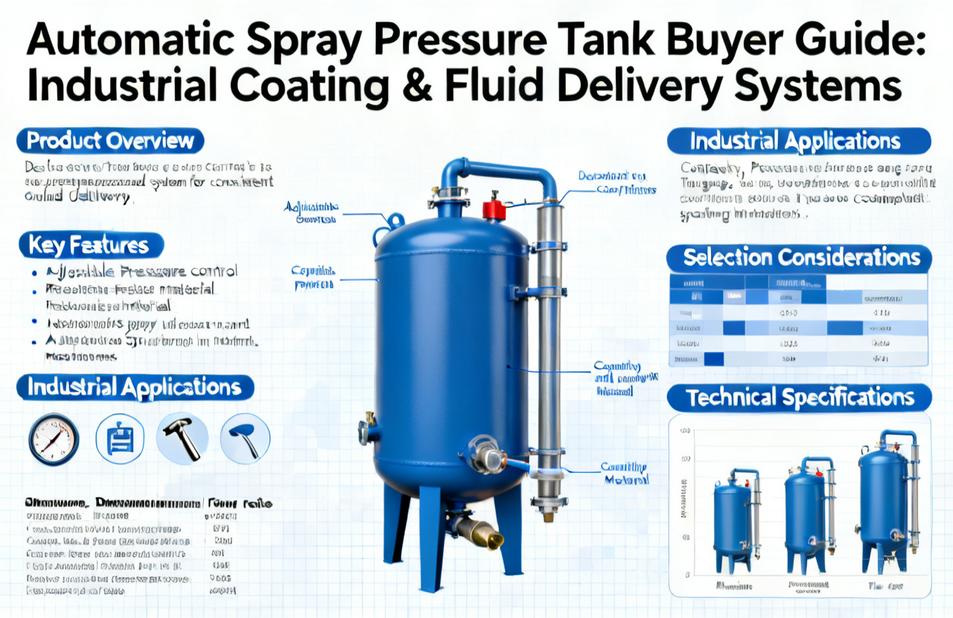
An automatic spray pressure tank is a pressurized fluid delivery vessel used to feed spray guns, automatic spray systems, coating lines, and dispensing equipment with a steady, controlled flow of liquid material. Instead of relying on a pump for every spray cycle, the tank stores coating, solvent, adhesive, or other fluids under air pressure and releases them through a regulator, hose, and spray device. This makes it a practical choice for finishing workshops, furniture factories, metal coating lines, and automated production cells where consistent atomization and uninterrupted material supply matter. For overseas buyers sourcing this equipment, understanding how the tank works, what it is made of, and how to match it to an existing spray system is more important than simply comparing catalog photos.
What an Automatic Spray Pressure Tank Actually Does
In a typical setup, the pressure tank connects to a compressed air line. Air pressure pushes down on the fluid inside the tank, forcing material through an outlet and along a delivery hose to the spray gun or automatic spray head. A pressure regulator and gauge let the operator set and monitor the working pressure, while safety valves protect the vessel from over-pressurization. The word automatic here usually refers to how the tank integrates with automatic spray guns, reciprocating machines, or robotic arms that trigger spraying without manual gun operation. The tank itself may be a simple pressure vessel, but its role is central: it stabilizes flow, reduces pulsation, and keeps multiple spray points supplied from one source.
Key Features Buyers Look For
Most industrial pressure tanks share a similar working principle, but the details vary. Common design points include a clamped or bolted lid for fast refilling and cleaning, a fluid outlet positioned to minimize dead zones, an air inlet with filter and regulator, and a pressure relief valve. Some units include agitators for materials that tend to settle, such as metallic coatings or filled adhesives. Others offer level indicators, drain ports, or quick-release fittings. For automatic spraying, the ability to maintain stable pressure across long hoses and multiple guns is a practical advantage. Buyers should also check the maximum working pressure and tank volume against their spray gun consumption rate, but actual specifications should always come from the supplier datasheet rather than assumptions.
Materials and Construction
Pressure tanks are commonly available in carbon steel, stainless steel 304, and stainless steel 316. Carbon steel is often chosen for solvent-based coatings where corrosion is less aggressive, while stainless steel is preferred for water-based materials, chemicals, and applications requiring easier cleaning. Internal surface finish matters: a smooth, polished interior reduces material buildup and simplifies changeover between colors or products. Weld quality, lid sealing, and gasket material also affect performance, especially when the tank is used with solvents or aggressive fluids. A reliable manufacturer will specify the tank material, wall thickness, seal type, and compatible media so the buyer can confirm suitability before ordering.
Typical Industrial Applications
Automatic spray pressure tanks appear in many coating and fluid handling environments. Furniture and woodworking factories use them to supply automatic spray lines for lacquer, primer, and topcoat. Metal finishing operations use them with paint, anti-rust fluid, and release agents. Automotive parts suppliers may use pressure tanks to feed robotic spray cells or reciprocating coating machines. Other applications include glass coating, ceramic glazing, mold release, adhesive dispensing, and printing-related fluid delivery. Because the tank separates the fluid from the air source, it can handle a range of viscosities, though very thick materials may require an agitator or a different feeding method. The key is matching the tank to the material, the spray device, and the production rhythm.
How to Choose the Right Tank for Your Spray System
Start with the spray equipment. Automatic spray guns and robotic heads have specific fluid consumption rates and pressure requirements. The tank should be able to maintain pressure at the gun inlet without excessive drop, especially if multiple guns operate at the same time. Consider the material: corrosive or water-based fluids point toward stainless steel, while solvent-based coatings may suit carbon steel if properly maintained. Tank volume affects refill frequency. A small tank is easier to handle and clean, while a larger tank supports longer production runs and fewer interruptions. Portability is another factor. Some factories prefer a tank mounted on a cart or frame so it can move between workstations, while fixed installations may prioritize stability and plumbing. Finally, check the fittings, hose connection size, and regulator range to ensure the tank will work with existing lines rather than requiring a complete rebuild.
Customization and OEM Options
Many suppliers offer OEM and custom pressure tanks for automatic spray systems. Customization can include tank volume, material grade, lid design, agitator installation, outlet configuration, cart or bracket mounting, and branding. OEM production is common for distributors and equipment builders who need tanks matched to a specific spray machine or private-label program. When requesting a custom solution, provide the fluid type, required working pressure range, spray gun model, number of guns, hose length, and available air supply. Clear technical input helps the factory propose a suitable configuration without over- or under-specifying the vessel.
Buying Considerations for Importers
Importers and procurement teams should evaluate more than price. Ask for dimensional drawings, material certificates where available, and a clear description of the pressure control and safety components. Confirm whether the tank is pressure-tested and what documentation accompanies shipment. Consider spare parts availability, especially gaskets, seals, and regulators, because these wear items affect long-term operation. Packaging and shipping matter too: a pressure tank is a bulky item, and proper protection prevents dents or fitting damage during transit. If the tank will be integrated into an automatic spray line, discuss the interface points with the supplier early so that hoses, valves, and controls arrive compatible.
Selecting a Reliable Supplier or Manufacturer
A capable manufacturer or supplier should be able to explain the working principle, recommend a suitable model, and provide technical documents rather than only a product photo. Look for experience in spray equipment or fluid handling, since pressure tank design is closely tied to coating and dispensing systems. Communication quality is a useful signal: a supplier that asks about your fluid, pressure, and spray setup is more likely to deliver a workable solution. Factory audits, sample orders, and video inspections can help verify production capability. For buyers developing a private-label or OEM line, discuss minimum order quantities, customization scope, lead times, and after-sales support before committing.
Frequently Asked Questions
What is the difference between a pressure tank and a pump for automatic spraying?
A pressure tank uses compressed air to push fluid to the spray gun, which provides steady flow and reduces pulsation. A pump may be used for higher flow or continuous circulation, but it can introduce pressure fluctuations. Many automatic spray systems use a pressure tank because it is simple, compact, and easy to integrate with existing air lines.
Can an automatic spray pressure tank handle water-based coatings?
Yes, but the tank material matters. Water-based materials are better suited to stainless steel tanks with suitable seals and a smooth interior. Carbon steel may corrode over time if used with water-based fluids unless it is properly coated or maintained. Always confirm compatibility with the supplier.
How do I know what tank size I need?
Tank size depends on fluid consumption, acceptable refill frequency, and available floor space. Calculate how much material your spray guns use per hour, then decide how often refilling is practical. A larger tank reduces interruptions but is heavier and takes more space. The supplier can help match volume to your production rate.
Do suppliers offer OEM or custom pressure tanks?
Many factories provide OEM and custom options, including volume, material, fittings, agitators, and mounting. To get an accurate proposal, share your fluid type, spray equipment, working pressure, number of guns, and any branding requirements. Custom production usually involves a sample or drawing approval step.
Conclusion
Choosing an automatic spray pressure tank is mainly about matching the vessel to the fluid, the spray equipment, and the production environment. Material, volume, pressure control, and safety features all influence performance, while OEM and custom options allow the tank to fit specific automatic spray lines. Buyers should work with a supplier or manufacturer that can discuss technical details, provide drawings, and support integration. If you are reviewing options for a coating, dispensing, or finishing project, contact the supplier with your application details and ask for a configuration recommendation based on your actual working conditions.